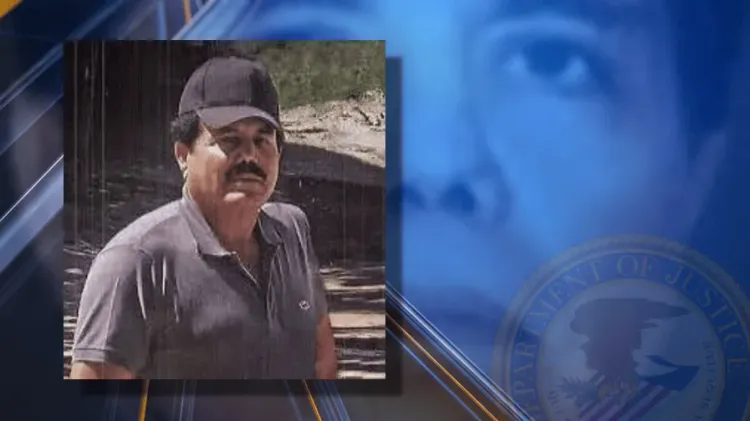
Félix Gallardo dies after emergency hospital transfer
Jalisco's Secretariat of Public Security said Félix Gallardo died of multiple organ failure around 2 p.m. on Sunday, November 15, at a Guadalajara hospital. He had been taken there from Puente Grande prison on Friday for emergency treatment. According to franceguyane.fr, state authorities reported that he had "poor oxygenation, altered level of consciousness and disorientation" before his death.
Known as the "Boss of Bosses," Félix Gallardo had spent 37 years in custody following his 1989 arrest. Born in Culiacán, Sinaloa, in 1946, he worked as a police officer and a local governor's bodyguard before becoming a drug trafficker.
He founded the Guadalajara Cartel with Rafael Caro Quintero and Ernesto Fonseca Carrillo, known as "Don Neto." The BBC credited him with forging an alliance between his Mexican organization and criminal groups in Colombia.
The Camarena case, arrest and prison sentences
The torture and killing of U.S. Drug Enforcement Administration agent Enrique "Kiki" Camarena in 1985 intensified efforts to capture Félix Gallardo, according to the BBC. Europe 1 reported that Camarena was abducted outside the U.S. Consulate in Guadalajara on February 7 that year. His body and that of pilot Alfredo Zavala Avelar were found in Michoacán in March.
The New York Times reported that the DEA accused Félix Gallardo of Camarena's kidnapping, torture and murder. Federal police arrested him on April 8, 1989, at a house on Cosmos Street in an affluent Guadalajara neighborhood. El País said the operation lasted about five minutes and ended without gunfire. Described at the time as the world's most wanted drug trafficker, he allegedly later offered as much as $20 million for his release.
Europe 1 reported that Mexico's attorney general acknowledged that corrupt police officers had protected Félix Gallardo's shipments and supplied information about investigations.
His prison terms totaled 77 years: a 40-year sentence imposed in 2000 for drug trafficking, weapons possession and bribery, followed in 2017 by another 37 years for the murders of Camarena and Zavala. Courts required him to serve the terms consecutively, putting his release date in 2066.
Félix Gallardo spent his final years seeking to leave prison for house arrest, DW reported, but never made the move. The BBC said a court granted house arrest in 2022, only for problems with electronic ankle monitoring to prevent his transfer. El País also reported that he had sought a sentence reduction on health grounds four years earlier. He denied his criminal role, saying: "There were never cartels in Guadalajara. I dedicated myself to agriculture and livestock since I was a child."
Life sentence for Dublin school attack
At Dublin's Central Criminal Court, Judge Tony Hunt sentenced Riad Bouchaker to life in prison for attempting to murder a five-year-old girl during the November 23, 2023, Parnell Square attack. Bouchaker, 52, an Algerian native with no fixed address, was convicted in July 2026 of eight offenses arising from the attack, The Irish Times reported.
Thirteen children, ages five and six, were waiting outside Gaelscoil Choláiste Mhuire to attend an after-school program when Bouchaker attacked shortly after 1:40 p.m. A girl stabbed in the heart suffered permanent brain damage. The court heard that, in effect, she had died for 40 minutes: her heart was not beating, and no oxygen reached her brain during that time.
Alongside the life sentence, Hunt imposed two 15-year terms for the attempted murders of two other children and a 20-year term for the assault on childcare worker Leanne Flynn. All run concurrently.
The remaining concurrent sentences were seven years for assault causing harm to two other children, five years for assaulting teenage chef Alan Lorena Guille, who disarmed Bouchaker, and five years for producing the weapon, a 36-centimeter kitchen carving knife with a 24-centimeter blade.
Lasting injuries and a mother's appeal against hate
The girl who suffered brain damage is now eight and communicates only by blinking. She uses a wheelchair and cannot swallow safely, so she receives food through a tube into her stomach. Flynn survived life-threatening injuries, including a collapsed lung and the loss of her spleen. Hunt said the loss of her work with children was another profound consequence of the attack.
Detective Superintendent Colm Murphy of the Garda, Ireland's police service, praised Flynn and said the people who intervened "saved lives." Hunt described an unprecedented and highly unusual case in which a sudden, sustained and ferocious knife attack targeted young children and their caregiver.
Bouchaker's defense team told the court that brain surgery in 2021 had left him with impairments affecting cognition, memory, concentration, communication and decision-making.
The girl's mother expressed relief at the life sentence while saying the affected children would be "forever changed." Describing the difficulty of hearing the attack recounted in court, she said, "Today was tough." She also urged: "We do not want hate to be the narrative of what happened to our daughter."
Rioting spread through many parts of Dublin after the attack. Eleven police vehicles were destroyed, 13 stores suffered severe damage and others were looted. The BBC reported that authorities deployed more riot police than at any previous point in Irish history. Drew Harris, then Ireland's police chief, attributed the unrest to a "lunatic, hooligan faction driven by a far-right ideology."
Inquiry into Brand's message from prison
Britain's Ministry of Justice is investigating whether Russell Brand violated prison rules through a statement his wife, Laura Brand, read on their Sunday Service show on YouTube. In the message, he said: "I am not guilty of the offences I have been jailed for."
Brand is serving 10 and a half years for rape and three counts of sexual assault. He is being held at HMP Littlehey, a category C prison in Cambridgeshire, after a transfer from category B HMP Wandsworth in south London.
Downing Street called the message "clearly appalling" and said it expected action if a rules breach was established. Justice Secretary Alex Norris described the broadcast as "completely unacceptable."
According to No. 10, prisoners may speak to the media only in exceptional circumstances and must not issue statements that distress victims. Having a relative publish the comments does not bypass those restrictions: a prisoner breaches the rules by giving a family member remarks they know will be made public.
If investigators find a breach, prison governors could limit Brand's social visits or withdraw privileges such as television access or extra gym time. They could also impose proportionate communication restrictions, including blocking particular phone numbers or monitoring calls more closely.
Officials' reaction and calls to change consent law
Foreign Secretary Ed Miliband condemned Brand's statement in an interview with Sky News: "No remorse, no sympathy for the victims. Just disgusting comments." London's victims' commissioner, Andrea Simon, said the claims would "certainly retraumatise his victims and other survivors of rape who have to hear it".
Brand's conviction has also prompted calls for a change in the law to prohibit sexual relationships between adults and 16- or 17-year-olds. Mia Latter, who alleges Brand raped her when she was 16, has waived her anonymity and is campaigning for ministers to introduce a staggered age of consent.