The attack and the federal response
Manzo was attending the opening of Uruapan's Candle Festival on November 1, 2025, when the attackers closed in. The square was crowded for Day of the Dead, and the mayor was carrying his son. At 7:50 p.m., the local Jalisco New Generation Cartel (CJNG) leader known as "El Licenciado" sent an order to an encrypted chat: "I REPEAT, IT DOESN'T MATTER IF HE HAS THE KID WITH HIM, DO IT ANYWAY."
Six or seven minutes later, a 17-year-old gunman shot Manzo. The child was no longer in his father's arms. Manzo died while being taken to a hospital, and recordings of the attack circulated across Mexico.
The killing struck a politician who had built a large following while personally joining police patrols and publicly displaying detainees. Manzo won Uruapan's 2024 mayoral election as an independent, taking 66% of the vote against five opponents. He had represented Michoacán's 9th district as a Morena federal deputy since 2021, but resigned in 2024 after the party declined to nominate him for mayor.
His protection had already been reinforced. According to Security Minister Omar García Harfuch, Manzo had received federal protection since December 2024; in May 2025, 14 National Guard soldiers and two vehicles were assigned to supplement his trusted municipal police detail. The Associated Press counted his assassination among at least 13 killings of mayors since President Claudia Sheinbaum took office in October 2024.
On November 4, 2025, Sheinbaum announced the "Michoacán Plan for Peace and Justice," providing for National Guard deployment, additional federal personnel and a special unit within the state prosecutor's office. Reuters reported that she deployed more than 10,500 security personnel to the state under the plan to fight extortion and dismantle criminal gangs.
The murder inquiry brought together Michoacán investigators and the federal Security Ministry. According to EL PAÍS, their work has led to 34 arrests, with at least five more suspects still being pursued. Ramón Álvarez Ayala, known as "R1" and identified as the alleged mastermind, was arrested in July 2026. Investigators had captured El Licenciado the previous November.
How investigators identified El Licenciado
Investigators first pieced together the movements of the attack team from 14 recordings drawn from social media and security cameras. They identified the gunman, 17-year-old Víctor Ubaldo; a backup shooter, 16-year-old Fernando Josué; and their coordinator, Ramiro, known as "El Jaguar."
None survived. A bodyguard shot Víctor Ubaldo shortly after he attacked Manzo. Investigators found no evidence for early rumors that the bodyguards had killed the teenager to advance the conspiracy. Ramiro and Fernando Josué were found murdered on a highway outside Uruapan on November 10. Clothing from a store they had visited before the assassination helped establish their identities.
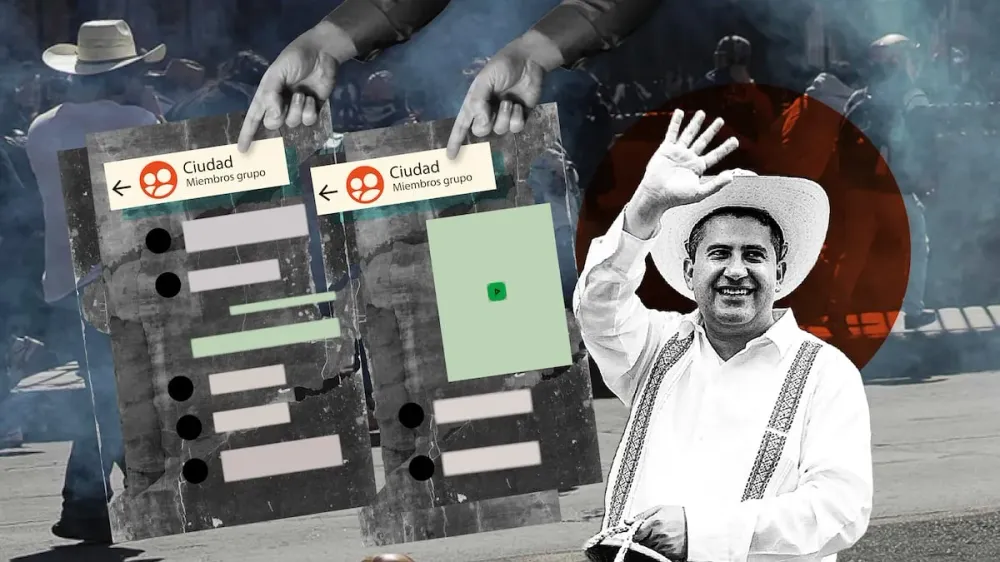
Ramiro's cellphone provided access to "Ciudad," a Threema chat with nine members. A source familiar with the inquiry told EL PAÍS that El Licenciado had set up the group one or two days before the killing to coordinate surveillance and preparations.
A letter Ramiro left for his wife supplied another route to the organizer. It identified the participant using the name "Lic" as Jorge Armando Gómez and described his alleged role, giving investigators a cellphone number and Threema ID. Ramiro also warned that anything that happened to him would be connected to the Manzo case.
An anonymous caller reportedly gave Michoacán prosecutors a second alias, "El Conta," and details of a white Suzuki Jimny. Investigators recognized the alias from their work on a CJNG figure around Lake Cuitzeo. The two accounts also shared a distinctive avatar showing a suited man seated on a throne. Investigators began watching Gómez's downtown Morelia home on November 17 and arrested him when he left the following day.
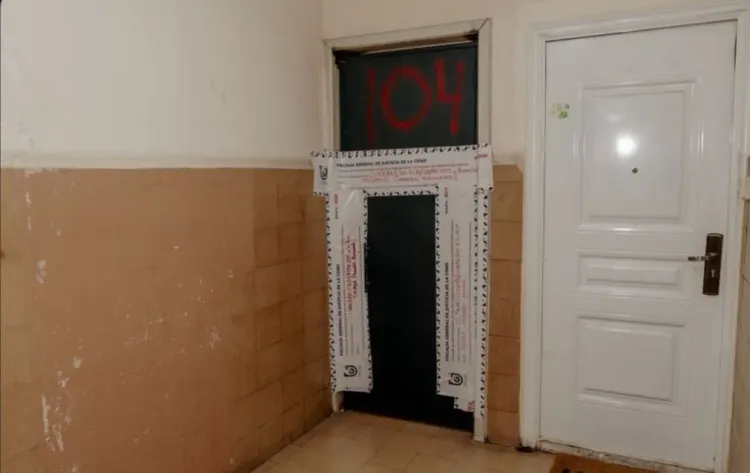
Inside the house, officers found a two-terabyte Toshiba hard drive containing organizational records, payrolls and information about the group's products and operations in Uruapan and the surrounding hills. It also held a 2021 report by the Michoacán Attorney General's Office describing the CJNG hierarchy. Investigators could not explain how a cartel leader had obtained that report, but regarded its presence as an indication of collaboration with security personnel.
The Ciudad messages also pointed above El Licenciado. On the evening of the murder, he told the group to prepare "to tear him up like the boss wants." Investigators identified the boss as R1, a powerful Michoacán figure close to CJNG leader Nemesio Oseguera Cervantes, known as "El Mencho." Protected witnesses said El Licenciado answered directly to R1.
A screenshot from the mayor's own chat
One message suggested that the attackers had more than lookouts watching the festival. At 7:07 p.m., El Licenciado shared a photograph of a cellphone displaying the Uruapan municipal council's chat. Visible on the screen was Manzo's own message telling officials where to assemble for the candle-lighting ceremony.
Investigators traced Ramiro's contacts to a taxi driver and CJNG drug seller known as "Viejito." Among his customers was Samuel García, Uruapan's public relations director. A source close to the inquiry said investigators had already been suspicious of García because of conflicts with Manzo and his absence from the square on the night of the attack.
Their reconstruction remains an allegation: García sent the screenshot to Viejito, who passed it to "La Pava." Investigators believe La Pava then sent it to his boss, who forwarded it to El Licenciado. That intermediary remains a priority for arrest.
Authorities announced the arrests of García and Viejito in January 2026; La Pava was captured later. Viejito acknowledged that La Pava had told him about plans to attack Manzo and that he had connected La Pava with García. According to the account obtained by EL PAÍS, the public relations director agreed to assist for "two bags of cocaine."
The teenage recruits and an alleged motive
Phone location records helped investigators reconstruct what happened to Ramiro and Fernando Josué after the shooting. Fernando fled that night to La Basilia, outside Uruapan, where Ramiro had previously taken both teenagers for firearms practice. Ramiro arrived there eight days later. Their bodies were discovered the next day.
Phone evidence and witness accounts led authorities to Alejandro Baruc Castellanos, known as "Comandante Caos," a trusted El Licenciado lieutenant in the area. Arrested in November 2025, he was charged with killing Ramiro and Fernando. He was one of seven regional commanders under El Licenciado.
El Caos and another detained commander, Salvador Belmontes Aguilar, known as "Comandante 26," offered investigators an alleged motive for Manzo's assassination: the mayor's treatment of Comandante 26's brother, René Belmontes, or "Comandante Rhino."
Manzo and his officers arrested Rhino in August 2025. The mayor filmed him handcuffed in a police pickup, his face covered by his shirt, while berating him. Investigators said the grievance concerned not simply the arrest but the public way Manzo handled it.
Authorities also identified Jaciel N as the recruiter who connected the two teenagers with Ramiro. He had recruited Víctor Ubaldo and Fernando Josué while they were in rehabilitation centers in Uruapan.
State information and family connections
A separate line of inquiry developed after the March arrest of Gerardo Rodríguez, another commander known as "Kongo." His seized phone revealed a second Threema group and exchanges with a lawyer named Wendy. She was providing information about the Manzo investigation that investigators determined could only have originated in internal Michoacán databases.
Wendy was arrested in mid-May. Authorities subsequently detained the two men identified as her sources: a serving member of Michoacán's Forest Guard and a former investigator from the state Attorney General's Office.
Meanwhile, investigators were struggling to identify another Ciudad participant, "Brilloso." His message at 8:03 p.m. on the night of the shooting relayed that Manzo was in critical condition, raising suspicions that he had access to people close to the mayor. Later that evening, he and El Licenciado congratulated the group as reports of Manzo's death emerged.
A July 26, 2026, report of armed men at a Uruapan bar provided a lead. According to a source cited by EL PAÍS, the owner told state police that two men had boasted of being local bosses and identified themselves as Brilloso and Vikingo. Investigators reviewed footage and established that Brilloso was Alexis Medina.
Medina had family ties to the mayor's circle: he was a cousin of a detained bodyguard known as "Macas" and a nephew of municipal welfare secretary Rosa Alejandra Vargas. Authorities arrested Medina and his brother Cristian, known as "El Vikingo," on August 7, shortly after R1's arrest in Jalisco at the end of July.
Sources familiar with the investigation said both brothers reported directly to R1. They also said investigators had confirmed communications between Brilloso and both Macas and Vargas, but were still trying to establish whether those relatives supplied him with information. Manzo was also close to the brothers' mother and was godfather to their sister.
On October 29, authorities arrested Vargas on an obstruction-of-justice charge after a year in which she refused to appear for questioning by prosecutors. The alleged connections between the conspiracy and people around Manzo have deeply affected his widow and successor, Mayor Grecia Quiroz.
The anniversary and the unresolved suspects
Hundreds marched in Uruapan on November 1, 2026, the first anniversary of the assassination, in a mobilization Quiroz called the "Marcha por la Justicia y la Paz." A statue of Manzo was unveiled in the square where he died. AP reported that Quiroz now has round-the-clock protection from 60 federally appointed bodyguards and travels with three armored cars and two military trucks.
Manzo's political movement has continued under Quiroz. According to Latin Times, the "Movimiento Independiente del Sombrero," or Hat Movement, is positioning her for the 2027 Michoacán gubernatorial election. In November 2025, she registered both "Carlos Manzo" and the movement's name with Mexico's IMPI. In August 2026, Manzo's brother Juan publicly accused her of using the murder for political advantage and obstructing the investigation.
Weeks before the anniversary, the Michoacán Attorney General's Office described the case as 90% solved. The outstanding work concerns unidentified or unaccounted-for Ciudad participants. Of six suspects whose status remained unresolved, investigators believe one may already be in custody on fuel-theft and other allegations connected to his work under El Licenciado.
Three of the other five have been identified, while investigators have no information about another. The fifth is the suspected intermediary between La Pava and El Licenciado. Investigators told EL PAÍS they believed his arrest was close.