A photograph accepted, then rejected
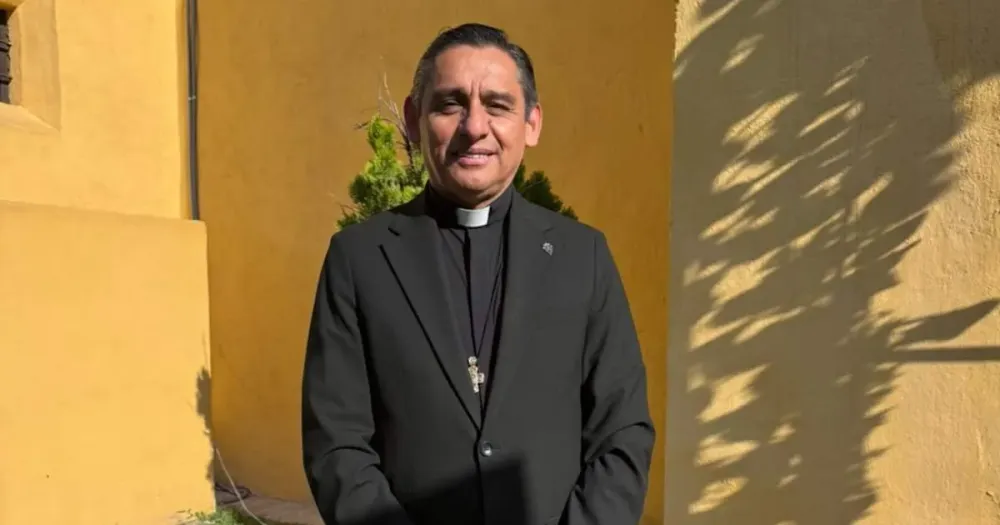
Medel described the Nov. 4 encounter at the Coyoacán passport office in a post on X. The priest, who coordinates the theological committee for the college of exorcists of the Primatial Archdiocese of Mexico, said he refused an employee's initial request to remove his clerical attire. He argued that he could dress according to his state of life as long as his face was fully visible.
After consulting a supervisor, the employee took his photograph without requiring him to change. But while Medel waited for the passport, he said, a different official told him the Secretariat of Foreign Affairs (SRE) would not process the application because of his clothing.
According to Medel, the official did not identify herself by name or position and was hostile from the outset. When he asked for the legal basis for the refusal, she showed him an internal rule barring religious symbols in photographs. He said he also perceived the presence of a police officer behind her as intimidation.
Medel called the demand discriminatory and said it infringed the Mexican Constitution's protections for religious freedom and nondiscrimination. "Today, I was subjected to discrimination; my human rights were violated, and I was humiliated through clear expressions of anticlericalism and Christianophobia," he said.
Velasco announced his instructions on X. Medel later told EWTN News Español that SRE staff had followed up by email and telephone to help him renew the passport, but he had not yet returned because of pastoral commitments.
Those commitments included his parish's 500th anniversary celebration, scheduled for Saturday, Nov. 7. Archbishop Joseph Spiteri, the apostolic nuncio to Mexico, was due to attend the event at Santa María de la Visitación in the Indigenous town of Santa María Tepepan. Medel said he needed the passport for a planned trip to Rome on Monday, Nov. 9.
Public photo rules contain no general religious clothing ban
Article 14 of Mexico's Regulations for Passports and Identity and Travel Documents requires a front-facing color photograph with a white background. It calls for an uncovered head and prohibits clothing or objects, including eyeglasses, from obscuring any part of the face. It does not impose a blanket ban on religious clothing or symbols.
UnoTV's analysis of the SRE's public rules reached a similar, qualified finding. Its review, which included the guidelines governing passport and identity and travel document applications within Mexico, identified no specific requirement to remove a clerical collar, cassock or other religious garment for the photo. Nor did the reviewed documents establish authority to reject a photograph solely because it showed religious attire.
The Supreme Court's hijab ruling
A Dec. 11, 2025, ruling by Mexico's Supreme Court of Justice of the Nation (SCJN) addressed passport applicants' right to wear religious clothing. The court allowed two Muslim women who had been told to remove their hijabs to keep them on for their photographs, provided their attire did not prevent identification.
The cases were amparos en revisión 499/2024 and 418/2025, brought by women living in Chihuahua and Mexico City, according to UnoTV and Proceso. Milenio reported that they were the first cases of their kind decided in Mexico.
The court said passport rules must be read in a way that respects freedom of religion, ideology and conscience, allowing religious garments or symbols when identification remains possible. It warned against sacrificing religious freedom altogether.
Político MX reported that the justices distinguished facial features from hair when explaining how identity is verified: the eyes, nose, mouth and skin provide identifying features. The court also pointed to fingerprints, which are already collected during the passport process, as another means of confirming identity.
The decision passed 8 to 1. Proceso and Milenio identified Justice Lenia Batres Guadarrama as the sole dissenter; she cited national security concerns. The two proposals were presented by Chief Justice Hugo Aguilar Ortiz and Justice Yasmín Esquivel Mossa. Esquivel urged a gender-sensitive analysis and favored interpreting the passport provision to protect Muslim women rather than declaring it unconstitutional.
Although the individual amparo protections applied only to the two women who brought the cases, Proceso reported that the eight-vote majority established jurisprudence binding on every court in Mexico.
A request for instructions to all passport offices
Medel said he still hoped to complete his renewal, but wanted the SRE to address more than his own application. Other priests and religious sisters had told him of similar experiences, he said.
"I don't need an apology," he said, expressing hope that the dispute would prompt "firmer steps" to prevent a recurrence.
For Medel, clerical attire "is not a uniform; it is my way of life." He said wearing it had brought insults but also "a great deal of good": people approach him for blessings, and he has heard confessions in airports, aboard planes and buses, and on the street.
He is seeking a written commitment from the authorities, along with instructions to every SRE office, to ensure that no other priest or member of a religious order faces the same treatment.