Agreement reached before trial
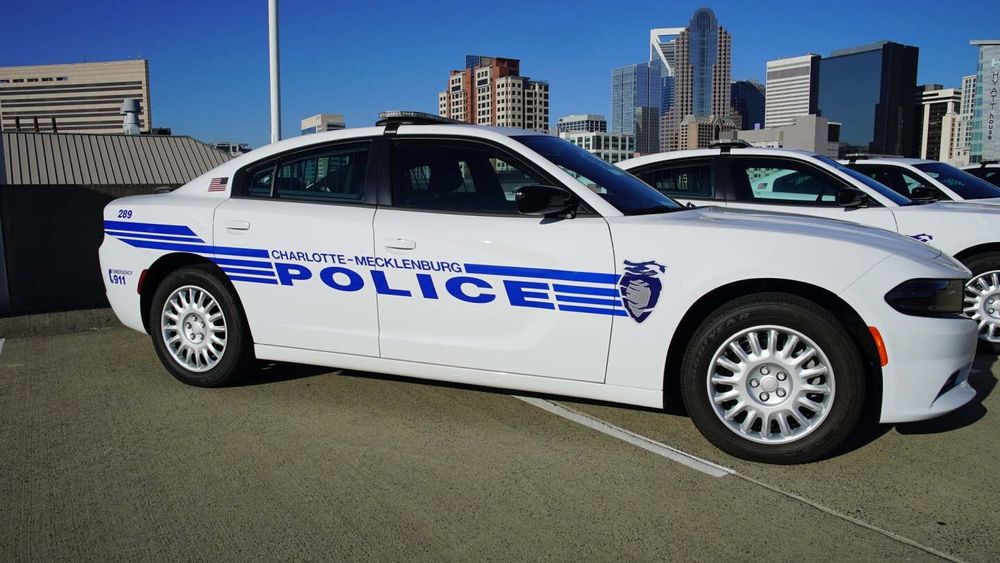
Council members approved the payment in a closed session Monday, according to The Charlotte Observer. A settlement had been reported the previous week, but its value had not been made public. The city paid the money to resolve claims arising from the June 2, 2020, confrontation in uptown Charlotte.
Filed in 2021, the lawsuit spent six and a half years in Mecklenburg County Superior Court. The parties reached an agreement on the eve of a jury trial scheduled for last week.
City spokesperson Jack VanderToll addressed the decision in an email to reporters Monday evening: "While this resolution avoids the significant expense and uncertainty of prolonged trial proceedings, it does not constitute an admission of liability or wrongdoing by the City or the Charlotte-Mecklenburg Police Department."
The settlement amount was announced through a city spokesperson's news release. Current Mayor Rob Harrington has not commented on either the protests or the litigation.
The Fourth Street confrontation
The case centered on the now-banned tactic known as kettling. More than 400 demonstrators were funneled along Fourth Street, trapped and subjected to tear gas, smoke grenades, pepper balls and other chemicals. The lawsuit accused Charlotte-Mecklenburg Police Department personnel, from officers and sergeants to majors and chiefs, of acting unlawfully.
The confrontation came after nearly a week of demonstrations in Charlotte over the Minneapolis police killing of George Floyd. Similar protests were taking place across the country.
According to Yahoo News, the plaintiffs brought North Carolina claims for negligence, assault and battery, and false imprisonment. Their attorneys argued that police could use force only to prevent imminent harm, carry out a lawful arrest or stop an escape, and that none of those circumstances existed that night. In a court motion, the plaintiffs alleged that officers discharged more than 1,400 pepperball rounds along with multiple chemical munitions.
CMPD initially characterized the demonstrators as rioters who had disregarded dispersal orders and defended its response. Then-Chief Kerr Putney said there was "nothing to indicate whatsoever that there was intentional abuse on the part of our officers." NC Newsline, citing WCNC reporting, also reported CMPD's account that the protests escalated into assaults on more than 50 officers. Police arrested 16 people that night.
Body-camera recordings later contradicted the department's initial account. Sgt. Scott Sherwood could be heard instructing officers to "wave goodbye" to protesters as they approached units led by Lt. Christopher Rorie and Maj. Robert Dance. Sherwood described those units as "platoons" positioned "out of sight."
"We're gonna push their ass straight up Fourth," Sherwood said in the footage. "As soon as we get up on Fourth, we got 'em bottlenecked now. Rorie's squad is gonna step out and hammer their ass. Dance's squad is gonna step out and hammer their ass with gas ... We're gonna f------ pop it up."
Among the public criticisms of the response was then-Mayor Vi Lyles' statement that "that's not the kind of department we want to have for policing."
A separate settlement changed protest rules
The same police response had already led to another agreement. In July 2021, Charlotte and CMPD settled a separate civil rights case filed by the ACLU of North Carolina, the Charlotte chapter of the NAACP, Charlotte Uprising, Team TruBlue, the Southeast Asian Coalition Village and four Charlotte residents, according to WBTV and NC Newsline.
That agreement banned CS tear gas at protests and prohibited police from using chemical weapons to trap demonstrators through kettling. It also required clear, repeated dispersal instructions in both English and Spanish, with at least two exit routes identified.
Other provisions prohibited aiming pepper balls at protesters' heads or necks and using bicycles as weapons unless someone posed a safety threat. The agreement included a mechanism for enforcing CMPD violations and was set to last four years.
Payments in other protest cases
Three years ago, New York and Philadelphia resolved lawsuits involving similar police tactics used during the same week as the Charlotte confrontation. New York's settlement totaled $6.5 million for about 300 protesters; Philadelphia paid $9.25 million to about 350. Individual payments in those cities ranged from $21,000 to $27,000.