
How tipping culture has evolved
Long-term foreign residents recall a simpler time decades ago when restaurant bills were paid in cash and customers simply rounded up, adding a few pesos for service. By the pre-pandemic years, tipping 10% to 15% had become standard practice.
The COVID-19 pandemic marked a turning point. As frontline workers — including restaurant servers, delivery drivers and hospital staff — faced daily risks while others worked from home, tipping became a way to express gratitude. What began as solidarity evolved into permanently higher baseline expectations.
Simultaneously, digital payment technology proliferated across small businesses. Credit card terminals began prompting tips of 20%, 25% or more, even for transactions with minimal service. As approximately 1.5 to 1.6 million U.S. citizens now live in Mexico — representing a 70% increase since 2019 — these American-style tipping practices have expanded southward, particularly in expatriate-heavy communities.
The widening gap in tipping practices
Recent survey data from Mexico News Daily shows most foreigners tip between 10% and 20% at restaurants, with 15% being the most common amount. Nearly one in three respondents reported typically tipping 20% or more.
Mexican diners generally tip 10% in restaurants, reserving 15% for exceptional service at fine dining establishments with highly trained staff. In neighborhoods without significant tourist traffic, these practices remain widely observed.
This divergence creates tension. Some Mexicans view 20% tips as excessive and contributing to inflation in their everyday lives. Others note they cannot afford such generosity on modest wages and resent the social pressure to tip more in venues catering to foreign customers.
In tourist destinations like Colonia Americana in Guadalajara, San Miguel de Allende and Puerto Vallarta, U.S.-style tipping has become normalized and widely expected from foreigners. Upscale restaurants in Mexico City, Tulum and Los Cabos now commonly expect 15% as the baseline.
Understanding what waiters earn
Official Mexican government statistics from the first quarter of 2026 show the nation's 618,000 waiters earned an average monthly salary of 6,830 pesos (about $404). This figure masks significant regional variation — waiters in Baja California Sur averaged 12,200 pesos monthly, while those in Nayarit earned 11,200 pesos and Baja California 10,400 pesos.
For context, Mexico's minimum wage increased to 315.04 pesos per day effective January 1, 2026 — a 13% raise that translates to roughly 9,582 pesos monthly for full-time work. The minimum wage has surged approximately 207% since 2019, representing one of the most aggressive wage expansion programs among OECD nations.
Despite base salaries exceeding minimum wage in most cases, these amounts remain insufficient for comfortable living in many parts of Mexico. Waiters rely heavily on tips to make ends meet, with self-reported total monthly income ranging from 12,000 pesos in casual cantinas to 50,000 pesos at fine dining establishments.
Working primarily for tips means inconsistent, unpredictable income. More than 55% of Mexico's occupied population — approximately 33.1 million workers — labor in the informal economy, according to the second quarter 2026 data from INEGI's National Occupation and Employment Survey. Most waiters fall into this category, working without employment contracts or government benefits.
Where tipping is customary
Beyond restaurants and bars, tips are commonly expected for valets, hotel cleaning staff, tour guides, Uber drivers, grocery store baggers and food delivery personnel. These roles receive minimal or no pay from employers, particularly grocery baggers who work entirely for tips.
Legal protections for consumers
Under Mexico's Federal Consumer Protection Law, restaurants and bars cannot impose mandatory tips or service charges without prior express consumer authorization. PROFECO, the federal consumer protection agency, has explicitly stated that tipping is voluntary and cannot be required under any circumstances.
Despite these protections, mandatory tips occur regularly in tourist towns. Customers can politely but firmly request removal of unauthorized tips from their bill. If a restaurant refuses, avoid tipping again when presented with the credit card terminal. Customers may also decline suggested tip amounts and enter custom amounts — or skip the electronic tip entirely and leave cash instead.
Best practices for tipping
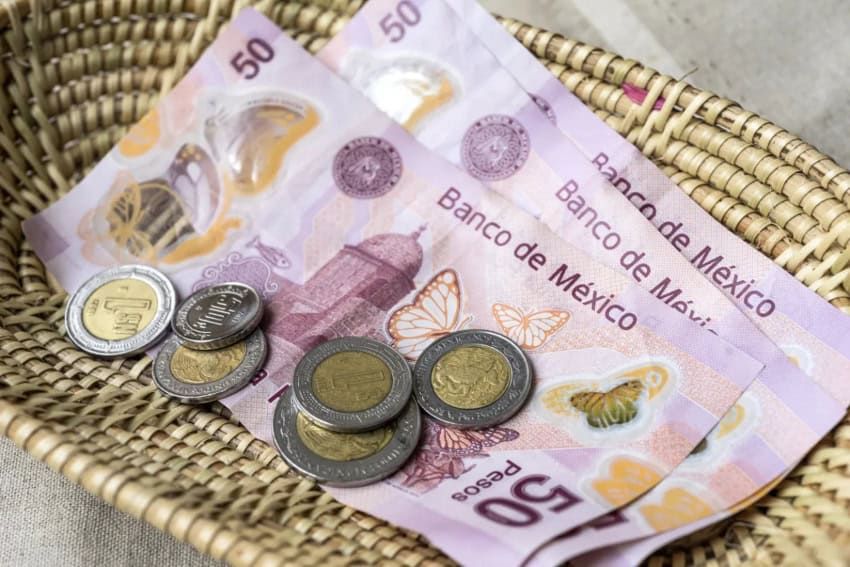
Tipping in cash and pesos is strongly preferred by Mexican waiters. Converting foreign currency requires a passport and carries high exchange commissions — making it nearly impossible for many workers without passports to convert tips. Foreign coins cannot be exchanged at all.
Whenever possible, tip in cash to ensure the service provider receives the money. Some restaurant managers withhold electronic tips from servers at shift end. Hand tips directly to the intended recipient so money left on empty tables isn't taken by others.
These practices help ensure tips reach the workers who depend on them while respecting the complex economic and cultural landscape shaping tipping culture in modern Mexico.