Guadalajara residents receiving contaminated water will get an 80% discount on their bills
The Jalisco state Congress approved an 80% discount on water bills Monday for Guadalajara households verified as affected by the contaminated water crisis plaguing the state capital. The measure will apply until December 15 to approximately 600 neighborhoods, potentially benefiting as many as 750,000 residents supplied by the Intermunicipal System of Potable Water and Sewerage Services (SIAPA).
The decision came after Guadalajara Morena party Councilman José María Martínez delivered a citizen petition to the local Congress on July 13, signed by 31,508 people and titled "If there is no clean water, no payment." The measure aims to support families who have not received the water quality and hygiene standards they are entitled to by law.
According to Congresswoman Gabriela Cárdenas Rodríguez, president of the Finance Commission, Congress will consult with the state Human Rights Commission to determine which neighborhoods have been affected. The commission will report neighborhoods from which it has received complaints during 2026, with areas being added to the list throughout the year upon request and with approval from the SIAPA governing board.
Crisis rooted in aging infrastructure and pollution
The water contamination crisis stems from multiple infrastructure and environmental failures. One quarter of Guadalajara's water distribution pipes are over 50 years old, with some sections reaching 100 years old, contributing to sediment contamination and system failures. The deteriorating Chapala-Guadalajara aqueduct, which carries water from Lake Chapala, the city's main water source, suffers from leaks, internal corrosion and loss of capacity, allowing sediments and contaminants into the distribution network.
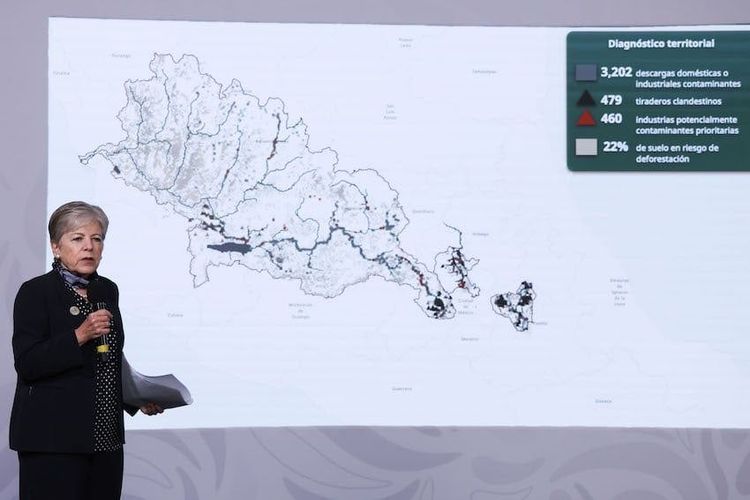
Industrial discharges polluting the Lerma River have also been identified by Mexico's Environment Ministry as a contributing factor to the contamination, with heavy metals and toxic products entering the water system.
Citizen water monitoring documented the severity of the problem: 93% of 184 samples collected from 90 neighborhoods between March and June contained no detectable residual chlorine, the basic disinfectant for protecting drinking water from microbial contamination. Citizen groups have documented over 900 complaints since March 2026, including reports of gastrointestinal, respiratory and skin ailments that residents have linked to the contaminated water.
Administrative response and financial constraints
Governor Pablo Lemus Navarro, who took office on December 6, 2024, representing the Citizens' Movement party, replaced SIAPA director Antonio Juárez Trueba with Ismael Jáuregui Castañeda in March 2026 amid mounting public complaints about contaminated water. The governor has outlined an investment of 100 million pesos (US $5.7 million) for portable water treatment plants, which will rotate across different areas of the city to provide clean drinking water to affected neighborhoods.
SIAPA's capacity to address the crisis has been hampered by significant financial constraints. The agency currently holds nearly 17 billion pesos (approximately US $982 million) in debt, limiting its ability to make critical infrastructure improvements. In 2025, SIAPA responded to only 6 out of every 10 service requests from an estimated 75,000 annual complaints about water issues, due to staffing and budget shortfalls.
Discount conditions and additional measures
The 80% discount eliminates all charges for water supply, with the remaining 20% of user fees covering non-water services such as drainage, sewage and other sanitary infrastructure operations. To receive the discount, users must:
- Live in a neighborhood included on the affected areas list
- Have been receiving poor-quality or cloudy water
- Have monthly consumption up to 25 cubic meters
- Be a residential or small business user
- Not belong to the industrial sector or be classified as a large consumer
During the same legislative session, the Finance Committee approved another initiative to eliminate 100% of late fees generated by outstanding water bills.
The crisis has intensified as Guadalajara prepares to host 2026 FIFA World Cup matches, with the tournament opening in the city on June 11, 2026, adding international attention to the city's ongoing water quality challenges.