No reason given for resignation
The timing of Vieyra Valdés's departure has drawn suspicion in Chihuahua and the State of Mexico, according to Infobae. Her resignation reached the Senate through a notification from the Judicial Administration Body to Senate president Higinio Martínez. La Jornada reported that the document neither explained her decision nor said whether it was connected to cases she had handled.
Vieyra Valdés served at the Federal Criminal Justice Center in Almoloya de Juárez, State of Mexico. Her previous cases included the acquittal of alleged kidnapper Israel Vallarta, leader of the Los Zodiaco gang, following nearly two decades in preventive detention. She also handled proceedings in a fuel-theft, or huachicol, case involving Vice Adm. Manuel Roberto Farías Laguna.
Infobae's account cites judicial officials who questioned some of her earlier decisions and alleged ties to political power. She has faced accusations of favoring prosecutors or the government in her rulings and yielding to political pressure.
The operation behind the charges
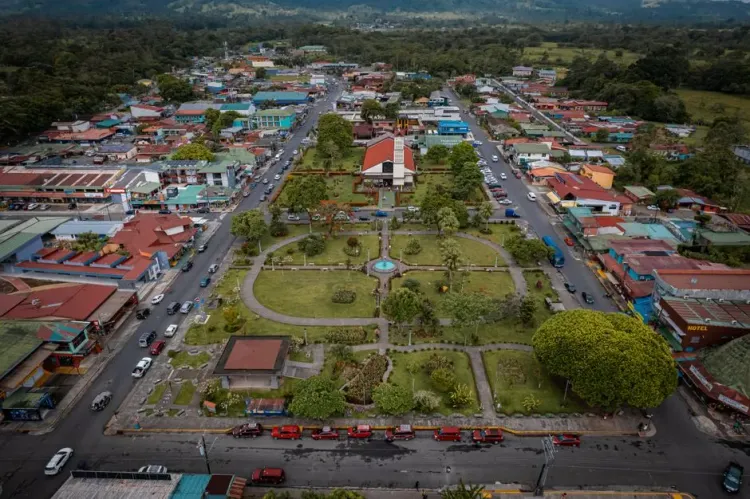
The case centers on an April 17-19, 2026, operation against drug labs in El Pinal, a community in the municipality of Morelos, Chihuahua. State Investigation Agency personnel participated alongside four foreign agents identified by authorities as CIA members. Reports about the mission indicated that the chain of command knew of the CIA's involvement.
On the return trip, a vehicle in the convoy went off the road, fell down an embankment and burned. The crash killed State Investigation Agency director Pedro Román Oseguera Cervantes, his bodyguard Manuel Genaro Méndez Montes and two CIA agents.
Federal prosecutors allege that Jáuregui and Guillermo Arturo Zuany Portillo, the Chihuahua prosecutor's former head of Strategic Operations, coordinated and allowed the operation involving four foreign nationals while concealing their presence from the nation. Zuany Portillo is a co-accused in the federal treason case and was also named in the state arrest warrants. The federal Attorney General's Office, known as the FGR, presented about 150 pieces of evidence against Jáuregui.
State and federal warrants
Jáuregui was detained twice on October 17. That morning, the Chihuahua State Prosecutor's Office acted on a local warrant that Judge Luis Alberto Simental Ortega had signed a day earlier in case 3055/2026. It concerned alleged illegal exercise of public service and coalition of public servants.
That night, FGR head Ernestina Godoy announced a separate federal arrest warrant alleging treason against the homeland in matters of national security. Vieyra Valdés had authorized that arrest on October 17.
Jáuregui was taken to the Altiplano maximum-security prison in Almoloya de Juárez, roughly 1,500 kilometers from the location of the alleged events. People close to his defense say the distance complicates contact with his family and preparation of his legal strategy.
Political divisions and Jáuregui's response
Infobae reported that Chihuahua Gov. María Eugenia Campos Galván handed Jáuregui over to national authorities after the operation while facing pressure from political rivals in the state. The arrest also divided President Claudia Sheinbaum's government: one faction favors keeping him at Altiplano for an extended period, while another contends that he is being punished for confronting drug-trafficking groups.
Officials close to Jáuregui say he holds sensitive information and allege that authorities want to make an example of him to others who challenge drug traffickers.
The FGR gave its account of Campos's role in communiqué 745/26, dated October 23. It said she requested a meeting with Godoy and blamed the former prosecutor for the events involving foreign nationals. Godoy said Campos characterized Jáuregui as corrupt and alleged that he had casinos and front men, prompting a new line of investigation. The meeting followed a tense conversation between Campos and Sheinbaum at the Ciudad Juárez airport on September 19, 2026.
During an Altiplano hearing, Jáuregui accused the federal government of keeping confidential a report that U.S. authorities had delivered to Mexico about the CIA agents' participation in the April operation. He alleged that the classification prevented disclosure of information the government did not want established. He also argued that fighting drug trafficking did not amount to betraying the homeland.
Detention upheld as appeal awaits hearing
After taking over the case, federal control judge Ricardo Alfonso Santos Dorantes upheld Vieyra Valdés's actions. On October 25, 2026, he formally bound Jáuregui over for trial on the treason charge, a procedural decision known as vinculación a proceso. He also maintained preventive detention at Altiplano and allowed two months for the complementary investigation. The decision is neither a conviction nor a finding of criminal responsibility.
Article 123 of Mexico's Federal Penal Code provides for five to 40 years in prison and fines of up to 50,000 pesos for treason against the homeland. Defense attorney Héctor Villasana likewise said the charge against Jáuregui carries a prison term of five to 40 years.
People close to the defense describe Santos Dorantes as a career judge. Infobae also reported a perception in Chihuahua that he could come under pressure over the case.
The defense has challenged the October binding-over order. The First Collegiate Appeals Tribunal accepted the appeal and scheduled a videoconference hearing for January 20, 2027, to decide whether to uphold or revoke Santos Dorantes's ruling.