Mexico's 2027 election cycle opens amid questions over electoral authority's independence
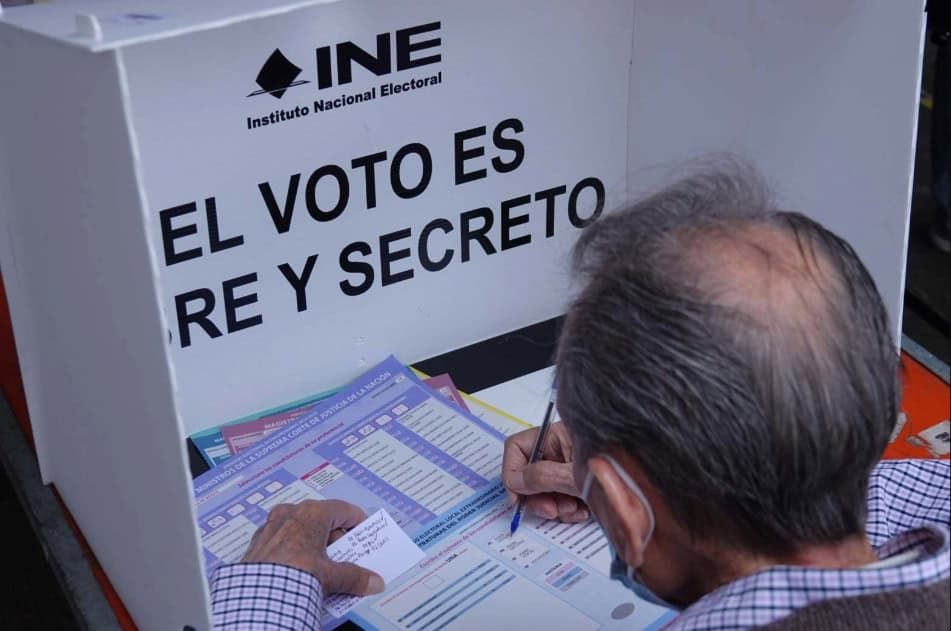
Mexico's 2026-2027 election cycle officially began on Thursday, setting the stage for a pivotal vote that will determine control of the Chamber of Deputies, 17 state governorships, and all 16 borough leaders in Mexico City. A record 102 million Mexicans are eligible to participate in the June 6, 2027, election, with the National Electoral Institute (INE) planning to establish 176,141 polling places—some 6,000 more than were deployed during the 2024 federal elections.
However, the opening session at INE headquarters in Mexico City was marked by sharp internal criticism and accusations that threaten to undermine confidence in the electoral process. INE Councilor Arturo Castillo challenged the institution's credibility during the ceremony, declaring that "the INE seems to have abdicated its role of overseeing and arbitrating elections." He described a scenario of premature campaigning and irregularities that could compromise trust in the outcome.
Castillo also criticized INE President Guadalupe Taddei, who was appointed in 2023 for a nine-year term, for appointing 12 new executive directors over the past year without the consensus of the General Council. Some appointees allegedly did not meet legal requirements for their positions. Two other INE councilors raised additional concerns about new procedures and past oversights, while representatives of opposition political parties complained about what they characterized as failures to enforce electoral regulations.
These denunciations stood in stark contrast to Taddei's assertion that the INE was prepared to organize the election and that the playing field remained level. The INE was created in 2014 to replace the Federal Electoral Institute, expanding its mandate to include oversight of all electoral processes at federal, state, and local levels.
High stakes for governing party and opposition
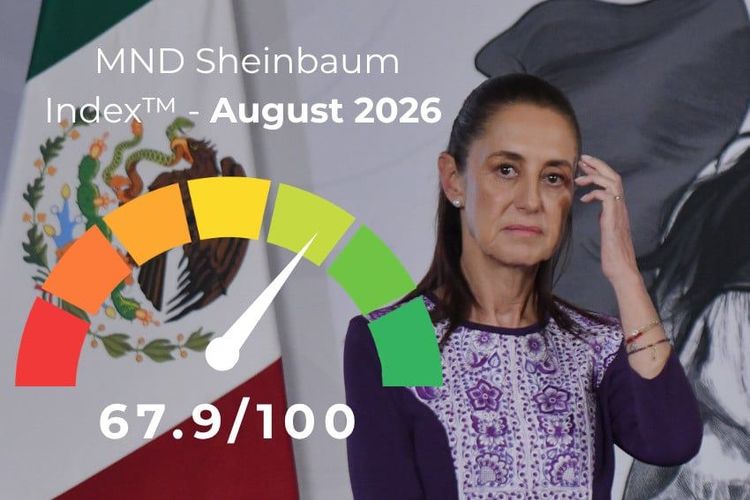
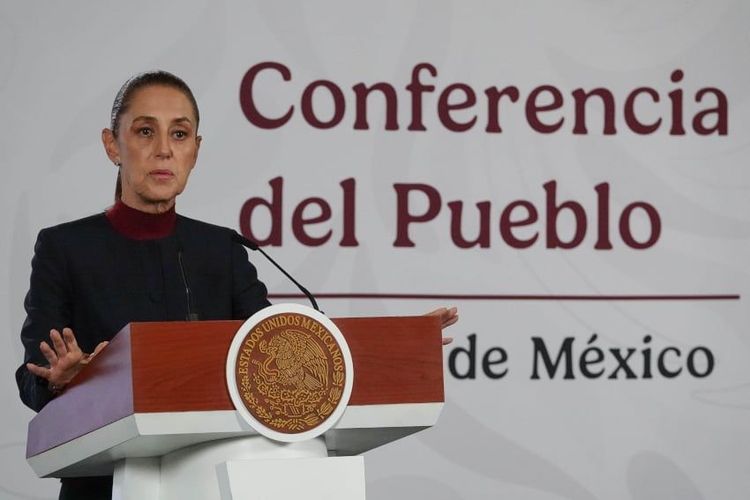
Beyond selecting more than 20,000 public officials, the vote will function as a national referendum on the governing project of Morena and President Claudia Sheinbaum's performance. The election will also determine the relative strength of opposition forces ahead of the 2030 presidential race.
Morena seeks to protect its commanding legislative majority—the party and its coalition partners PVEM and PT currently hold 364 of 500 seats in the Chamber of Deputies, representing approximately 73% of the total. All 500 Chamber seats are on the line in 2027. With more than 11.6 million registered members, Morena holds roughly 75% of all party affiliations across Mexico's eight registered parties, giving it a massive organizational advantage.
For opposition parties, the stakes could not be higher. The once-dominant Institutional Revolutionary Party (PRI), which ruled Mexico continuously for 71 years before losing the presidency in 2000, is fighting for political survival. The party must demonstrate at least 260,106 affiliated members to maintain its national registration, and recent defeats have raised questions about its viability. In 2023, the PRI lost the governorship of the State of Mexico for the first time in 94 years, marking a historic defeat in one of its strongest regional bastions.
The conservative National Action Party (PAN) is desperate to preserve its hold on three governor's mansions and maintain its status as the second-largest party in the Mexico City Congress. States including Chihuahua, Querétaro, Aguascalientes, and Nuevo León are expected to emerge as principal battlegrounds, though Morena has demonstrated organizational strength even in these opposition-controlled territories.
Two new political parties will make their electoral debuts: PAZ, a party linked to the evangelical church, and Somos México, a center-left party that emerged from opposition to reforms of the INE championed by Morena.
Campaign timeline and enforcement concerns
While the election cycle has formally begun, the candidate selection process will not start until January 4, with parties permitted to hold primaries through February 12. The formal campaign season is scheduled to run from April 4 through June 2.
Criticism of the INE primarily centers on alleged violations of campaign schedule regulations. Morena has designated state coordinators ahead of gubernatorial elections who critics say are inevitably nominated as candidates, meaning their activities as coordinators should be regarded as campaign violations. Office-holders seeking re-election or new posts have also staged public events and rallies before the official campaign season, proceedings that could violate election law.
Historical data suggests that midterm elections in Mexico typically see lower turnout than presidential contests. The 2021 midterm elections recorded approximately 52.66% participation, higher than the 47.72% turnout in 2015 but substantially below presidential election rates. Whether the 102 million eligible voters will turn out in similar proportions remains to be seen.