Beyond Labels: Measuring Mexico's First Female President Through Performance Data
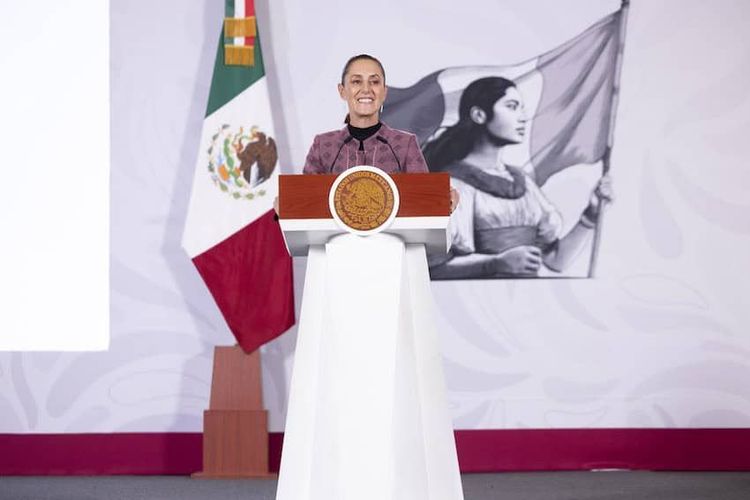
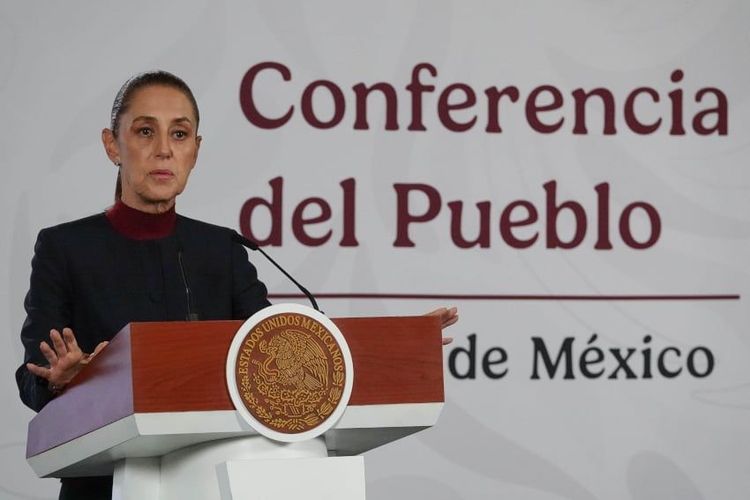
Political discourse often reduces complex leaders to single-word labels that obscure more than they reveal. Mexico's current president exemplifies this challenge. Claudia Sheinbaum, who assumed office on October 1, 2024 as Mexico's 66th president and the first woman to hold the position, brings credentials that resist easy categorization.
Sheinbaum holds a Ph.D. in energy engineering and conducted her doctoral research at Lawrence Berkeley National Laboratory in California between 1991 and 1994, analyzing energy use in the Mexican transport system. Her academic career produced over 100 articles and two books on energy, environment, and sustainable development. As a contributing author to the Intergovernmental Panel on Climate Change, she was part of the organization that shared the 2007 Nobel Peace Prize with Al Gore for climate change work.
Her political trajectory began in 2000 when she served as Environment Secretary of Mexico City under then-mayor Andrés Manuel López Obrador. She later became mayor of Mexico City herself, serving from December 2018 to June 2023 as the first woman elected to that position. Shortly before assuming the presidency, she became a grandmother, adding another dimension to her identity as Mexico's first Jewish head of state.
Performance Over Personality
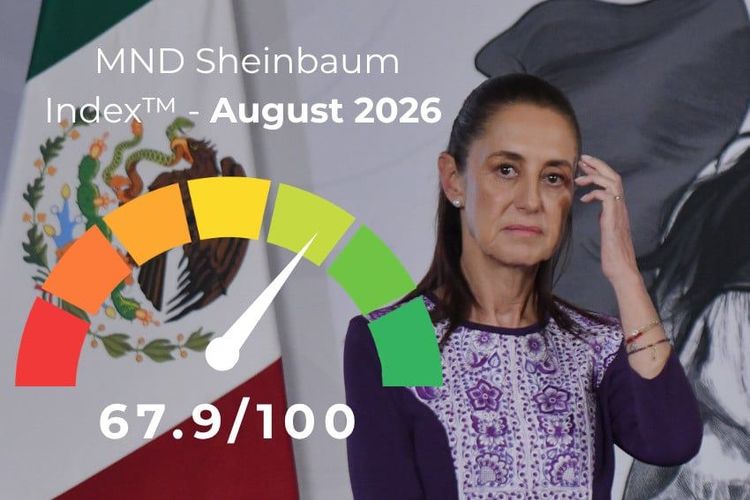
Rather than relying on ideological labels or personality assessments, the MND Sheinbaum Index attempts to evaluate the administration through concrete metrics. For July 2026, the index assigned a score of 69.3 out of 100, examining what is improving and what remains problematic across multiple policy areas.
The administration faces substantial challenges: cartel violence, economic headwinds, intense pressure from Washington, and the weight of expectations from 130 million citizens. Evaluating progress requires looking beyond rhetoric to examine whether government initiatives are producing tangible results.
Healthcare Reform at Scale
On April 7, 2026, President Sheinbaum signed a presidential decree formally creating Mexico's Universal Health Service (Servicio Universal de Salud). Registration began on April 13, 2026, with full implementation scheduled for January 2027. The initiative aims to integrate Mexico's three main public health institutions—IMSS, ISSSTE, and IMSS-Bienestar—into a single coordinated network covering approximately 120 million Mexican citizens.
The scale of this healthcare transformation represents one of the administration's most ambitious undertakings, attempting to create unified access to medical services across a complex institutional landscape that has historically operated in separate silos.
Security Cooperation with the United States
The administration has intensified security cooperation with the United States beyond levels seen in recent years. In January 2026, the two countries held their third Security Implementation Group meeting, agreeing to intensify cooperation on counternarcotics, extraditions, and disrupting illicit finance networks.
On January 20, 2026, Mexico transferred 37 criminals and narcoterrorists to U.S. custody in what U.S. officials described as a historic transfer demonstrating bilateral security cooperation. Three days later, on January 23, both governments met in Washington to further coordinate efforts against fentanyl trafficking and organized crime.
This enhanced collaboration marks a notable shift in how Mexico engages with its northern neighbor on security matters, moving beyond diplomatic tensions that have characterized previous administrations.
The Case for Data-Driven Assessment
The question facing observers is not whether Sheinbaum fits a particular ideological category, but whether her government is functioning effectively. The MND Sheinbaum Index represents an attempt to answer that question through measurable indicators rather than political allegiances or simplified narratives.
Mexico is undergoing significant changes across healthcare, security cooperation, and economic policy. Understanding these transformations requires looking at implementation timelines, institutional integration, bilateral agreements, and outcome data—not just the political theater that dominates headlines.
For those seeking to understand Mexico's trajectory, the approach emphasizes evidence over labels, recognizing that leadership cannot be accurately assessed through partisan frameworks alone. The administration's success or failure will ultimately be determined by whether policies translate into improved conditions for Mexican citizens, not by how well the president conforms to predetermined political categories.