Former Guerrero Governor Ángel Aguirre ordered to stand trial in Ayotzinapa disappearances case
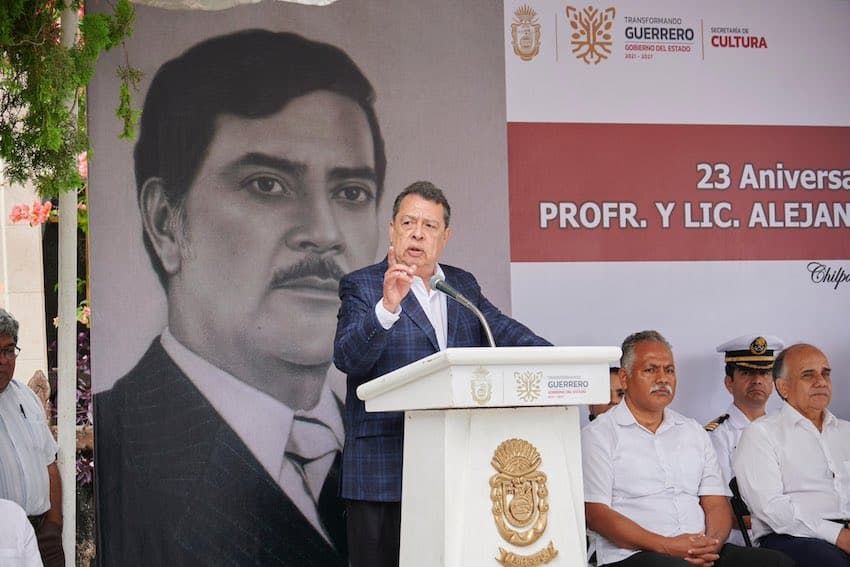
A federal judge has ordered former Guerrero Governor Ángel Aguirre to stand trial over his alleged role in concealing evidence related to the 2014 disappearance of 43 students from the Ayotzinapa Rural Teachers College in one of Mexico's most notorious human rights cases.
Aguirre, who governed Guerrero from 2011 until resigning approximately one month after the students vanished on Sept. 26, 2014, was arrested in México state last week. He faces charges of enforced disappearance for allegedly ordering the destruction of critical security camera footage.
The students from the rural teachers college had commandeered buses to travel to Mexico City for a protest commemorating the Oct. 2, 1968 Tlatelolco massacre, an annual tradition at the school that had tacit government authorization according to independent experts. The night they disappeared in Iguala, Guerrero, resulted not only in the mass abduction but also in six deaths, including three bystanders, with many more injured.
Evidence and witness testimony
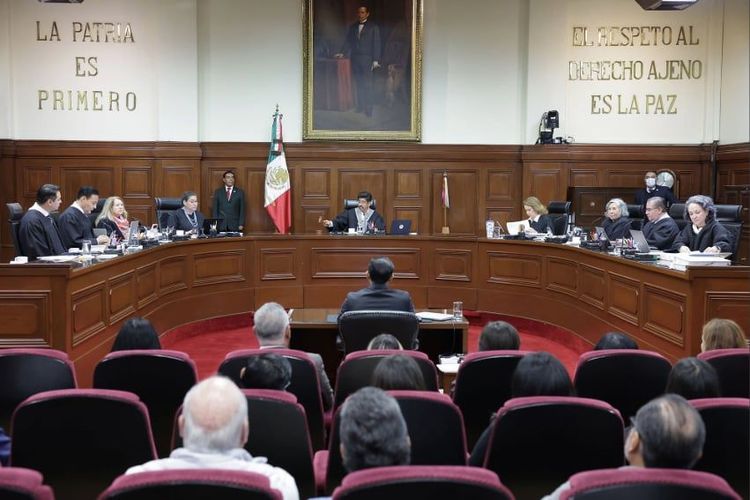
During a 15-hour hearing that extended from Tuesday into early Wednesday morning, pre-trial judge Mario Elizondo Martínez at the Altiplano federal prison ruled that the Federal Attorney General's Office (FGR) had presented sufficient evidence to warrant a trial.
Attorney General Ernestina Godoy indicated that prosecutors possess testimony from cooperating witnesses who identified individuals involved in removing video recordings from security cameras outside the State Palace of Justice in Iguala and delivering them directly to Aguirre. One witness, former Guerrero Superior Court official Blanca María del Rocío Estrada Ortega, reportedly told authorities she stole a disk containing the footage and handed it to Aguirre at 8:30 p.m. on Sept. 29, 2014.
According to prosecutors, Aguirre then allegedly passed the footage to former Guerrero Attorney General Iñaki Blanco for destruction. The recordings reportedly showed armed individuals forcing the students to transfer to another bus that fled in an unknown direction, containing what investigators believe was fundamental evidence for identifying who was on board and their route.
The FGR's case is further supported by testimony alleging that Aguirre ordered top government officials to conceal any evidence related to events at the Iguala Palace of Justice, allegedly because his nephew and adviser, Ernesto Aguirre, had ties to the Guerreros Unidos criminal organization and knowledge of what happened to the students from the beginning. The cartel, which emerged from the dissolution of the Beltrán Leyva Organization, allegedly spent close to $45,000 monthly bribing local police in Iguala alone, according to testimony from a captured financial chief in October 2014.
Defense arguments rejected
Aguirre's defense team presented 31 pieces of evidence arguing their client was not in Guerrero when he allegedly received the footage. They claimed he was traveling back to Chilpancingo, the state capital, after attending a meeting in Mexico City with then-Interior Minister Miguel Ángel Osorio Chong.
Judge Elizondo determined the defense arguments were insufficient to exonerate Aguirre, noting that at this procedural stage, prosecutors need only establish a likelihood that the crime was committed. The FGR maintained it had evidence confirming the instruction to conceal evidence was issued directly by the former governor.
Broader pattern of state involvement
The Ayotzinapa case has been officially designated as a crime of state according to a 2022 government report, which confirmed that members of the Guerreros Unidos cartel and various state institutions jointly participated in the disappearances. A 2023 report from the Interdisciplinary Group of Independent Experts found that the Mexican army, navy, police and intelligence agencies all collaborated in making the students disappear. DEA-intercepted text messages published on the 11th anniversary of the disappearances revealed extensive corruption and complicity by the Mexican military in the attacks.
The remains of only three students have been identified: Alexander Mora Venancio in December 2014, Christian Alfonso Rodríguez Telumbre in July 2020, and Jhosivani Guerrero de la Cruz in June 2021. All 43 young men are presumed murdered.
Trial timeline and other prosecutions
Judge Elizondo allocated four months for continued investigation and defense preparation, meaning Aguirre could face trial as early as December. If convicted, he could receive up to 60 years in prison. The judge ordered he remain in preventive detention at the Altiplano prison while awaiting trial.
Aguirre's arrest represents one of the most prominent detentions in the case. Scores of individuals have been arrested in connection with the disappearances, including soldiers, police and former Attorney General Jesús Murillo Karam, though no one has been convicted and some suspects have been released. In July 2026, a judge modified Murillo Karam's detention conditions, changing his preventive detention to house arrest with electronic monitoring.
The case exists within Mexico's broader crisis of enforced disappearances, with more than 127,000 missing persons and over 72,000 unidentified bodies in morgues as of 2025. Enforced disappearance carries an impunity rate of approximately 99 percent in the country.
The 2014 disappearances sparked massive protests across Mexico and international outrage, becoming a defining crisis of the 2012-18 presidency of Enrique Peña Nieto, though he survived widespread calls for resignation.