Born in the USA to a Mexican parent? There's help for clarifying your dual nationality
A streamlined nationality registration program has begun in Tijuana and San Felipe, Baja California, offering U.S.-born children of Mexican parents a simplified path to obtaining Mexican documentation. The 'Soy México 2026' campaign, which runs through September in these municipalities before expanding to Tecate, Ensenada and Playas de Rosarito in October, addresses a critical documentation gap affecting binational families along the Mexico-U.S. border.
The initiative targets children and adolescents under 17 who have at least one Mexican parent and either reside or attend school in Baja California. More than 180,000 children in Mexico lack Mexican birth certificates, with nearly 97% of them born in the United States, according to the Identity and Education Group. This nationwide problem is particularly acute in border communities where cross-border mobility is a daily reality.
The program eliminates traditional bureaucratic obstacles that have made nationality registration costly and time-consuming. Through electronic validation of U.S. birth certificates, families no longer need to submit apostilled documents, official translations, or letters certifying the absence of a Mexican birth record. These requirements have historically made the process so onerous that some families were unable to obtain the necessary paperwork to prove their Mexican lineage to authorities.
Participants will receive both a Mexican birth certificate and a Unique Population Registry Code (CURP), an identification number essential for accessing healthcare, education, banking and government programs in Mexico. The CURP functions similarly to a Social Security number in the United States and is required for everything from enrolling in public schools to opening bank accounts and purchasing property.
Cross-border families face unique documentation challenges
The intensive movement between the two countries underscores why proper documentation is critical for border residents. More than 125,000 people cross the border daily between San Diego and Tijuana in both directions for work, school and daily activities. Cross-border students who live in Mexico but attend school in the United States are mainly U.S.-born and concentrated in Tijuana and Ciudad Juárez, with the phenomenon positively associated with household income and having family members born in the U.S.
The documentation issue affects a substantial population: half a million U.S.-born children under 18 were living in Mexico in 2020, often linked to return migration and sometimes deportation of a parent. This demographic reality has created urgent demand for accessible nationality registration services.
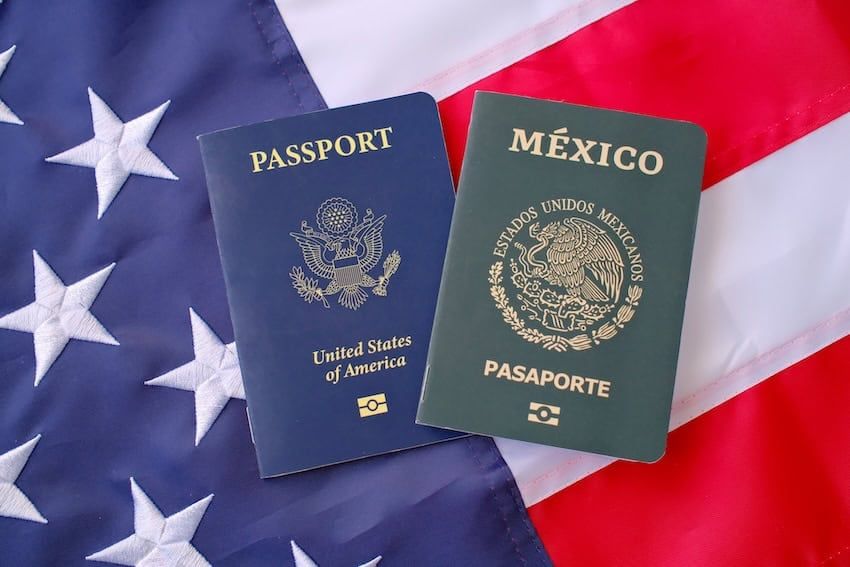
Since Mexico's constitutional amendments took effect in 1998, Mexican nationals by birth can maintain dual nationality, meaning children born abroad to Mexican parents can claim Mexican nationality without losing their U.S. citizenship. The law recognizes as Mexican nationals all persons born abroad who are children of a Mexican father or mother, whether by birth or naturalization, with no minimum or maximum age limit for processing the registration.
Free or discounted registration available across municipalities
In Tijuana, the registration process is completely free of charge. San Felipe applies a 50% discount on associated fees. These cost reductions represent significant economic savings for families compared to the traditional process involving consulates and U.S. agencies. Civil Registry offices in both municipalities provide guidance as part of a coordinated effort involving the state government, local governments and the National Population and Identity Registry (Renapo).
To initiate registration, parents must submit an application, a legible copy of the minor's U.S. birth certificate, the parents' Mexican birth certificates with QR code, official identification documents, and the certified CURP of one or both Mexican parents.
The program has generated substantial interest in previous years. Tijuana processed 14,345 applications during the last campaign, a 600% increase over the previous edition and an all-time record. In comparison, Ciudad Juárez concluded its 2025 edition with 3,816 applications, double the figure from the year before.
Baja California's high concentration of foreign-born residents makes the program particularly significant for the region. In 2020, 142,707 people born outside Mexico resided in Baja California, the highest figure among Mexican states in that count, surpassing Mexico City, Chihuahua and Jalisco. This demographic reality, combined with the region's intense cross-border mobility, explains the exceptional demand for dual nationality services in the state's border municipalities.