
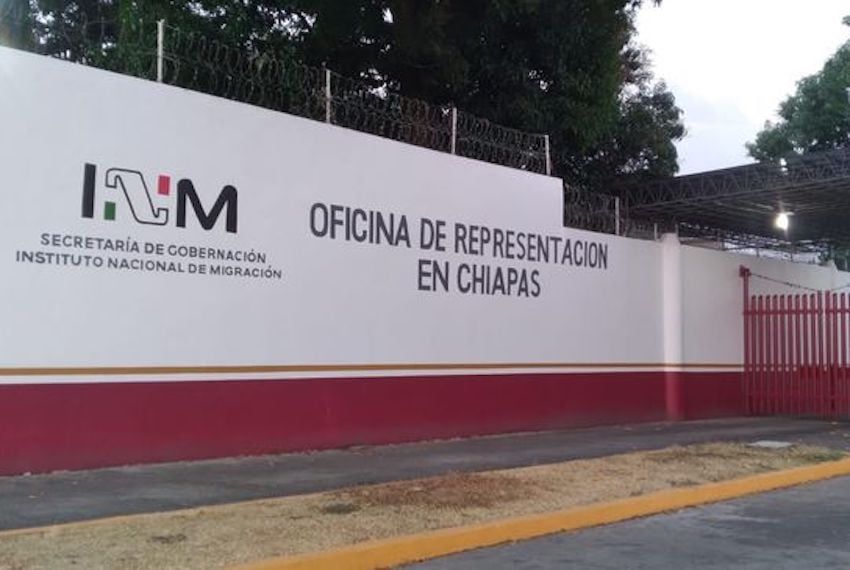
Riot erupts at Tapachula detention center after alleged arson attempt by Venezuelan migrants
Two migrants were arrested and face deportation after allegedly inciting a riot at the Siglo XXI Migration Station in Tapachula, Chiapas, on Saturday night. The men, identified as Venezuelan nationals, were transferred to Tuxtla Gutiérrez for processing following the disturbance at Latin America's largest immigration detention center.
The incident began when approximately 40 migrants being processed at the facility started displaying aggressive behavior, according to the National Migration Institute (INM). The two Venezuelan men allegedly attempted to ignite a mattress during the commotion, which escalated into a broader uprising as detainees demanded immediate release and claimed they were victims of systematic abuse and incommunicado detention.
Security forces, including INM agents, state and municipal police, and emergency services, required more than two hours to restore order. Officials reported no injuries among the detainees.
Context of Venezuelan migration
The involvement of Venezuelan nationals in the incident reflects broader migration patterns in the region. An estimated 7.9 million Venezuelans have migrated abroad in recent years, with 85% residing in Latin American and Caribbean countries, making it one of the largest displacement crises globally.
Between January 2025 and May 2026, approximately 18,000 third-country nationals—including citizens of Cuba, El Salvador, Guatemala, Haiti, Honduras, Nicaragua, and Venezuela—were deported by the United States to Mexico, according to data from Mexico's National Migration Institute. Tapachula's airport received around 11,000 deportees from the U.S. in 2025 alone, making it an increasingly common destination for deportation flights.
Chronic overcrowding and legal violations
The Siglo XXI facility, built in 2005, was designed to hold approximately 960 people. However, the center has historically operated well beyond capacity, with residents reporting it sometimes holds as many as 3,000 people—representing overcrowding of over 300%.
Luis García Villagrán, a human rights activist with the Center for Human Dignity AC, expressed skepticism about the INM's account of the incident. He told La Jornada that the agency often holds migrants incommunicado for periods of up to 10 days and denies them access to legal defense. This practice violates a March 2023 ruling by Mexico's Supreme Court, which established that people should not be held in migrant detention centers for more than 36 hours before being released.
There is a terrible lack of transparency about what is happening at this Immigration Station.
Approximately 65,000 migrants are currently stranded in southern Mexico awaiting resolution of their cases. Many are processed at facilities in Tapachula or Villahermosa, Tabasco, and are eventually released but prohibited from traveling outside the area.
History of unrest
Saturday's riot marks at least the sixth incident of unrest at Siglo XXI. In April 2019, approximately 1,300 migrants, predominantly from Cuba, fled the facility after threatening to set it on fire to protest overcrowding. While about 700 returned voluntarily shortly after, some 600 others remained unaccounted for.
The attempted arson particularly alarmed observers given its similarity to a tragic fire on March 27, 2023, at a migrant facility in Ciudad Juárez that killed 40 migrants and injured 27 others. In that incident, migrants set mattresses on fire in protest of deportation.
The disturbance has reignited complaints about overcrowding, lack of due process, and alleged human rights violations at the facility, which continues to operate under severe strain as migration flows persist in the region.