How carbon revenue reaches communities
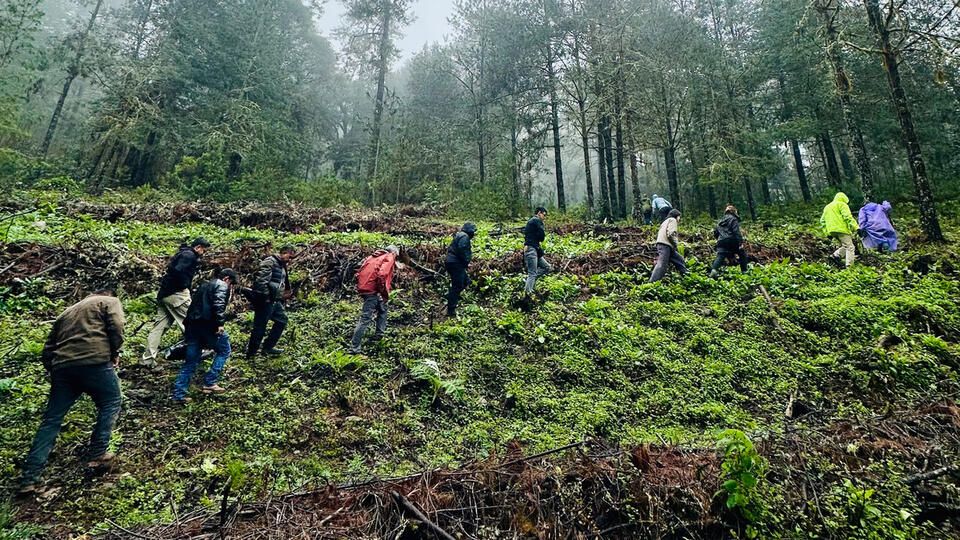
Participants from multiple disciplines across ASU joined the Rob Walton School of Conservation Futures and Conservation International for the Community Benefit Sharing in Nature Credit Projects practicum. Conservation International is one of the school's closest partners.
Oaxaca's carbon market history provides examples of how that revenue has been shared. According to a 2012 Ecosystem Marketplace report, the nonprofit Environmental Services of Oaxaca (SAO) pioneered Mexico's voluntary carbon market in 2008 by selling credits from 10 rural communities. In the arrangement the report described, communities received 80 percent of the revenue, while SAO and Pronatura retained 10 percent each.
The report also detailed spending within San Bartolomé Loxicha, an Oaxacan community: it directed 70 percent of its carbon-sale revenue back into the forest, devoted 20 percent to community projects and used 10 percent to cover community authorities' expenses.
A separate example comes from Colombia's Cispatá Bay. Conservation International says its Vida Manglar blue carbon project returns 92 percent of carbon credit proceeds to local people, who determine how to allocate the money.
A growing education partnership
The Oaxaca practicum follows other fieldwork involving ASU and Conservation International. During summer 2026, the organization hosted six ASU delegates in Kenya's Tsavo, Amboseli and Chyulu landscapes, according to ASU News. The Taita Taveta Wildlife Conservancies Association also hosted some of the Rob Walton School of Conservation Futures' first interns.
The partners have worked together on coursework as well. ASU News reported on Sept. 22, 2026, that they jointly built 13 courses for the Conservation Futures Academy, the school's professional learning arm. In its first year, the academy developed more than 30 courses and logged more than 1,500 enrollments.
The school is part of the Rob Walton College of Global Futures and the Julie Ann Wrigley Global Futures Laboratory. Its establishment was funded by a $115 million investment from the Rob Walton Foundation, announced in September 2025 at Climate Week NYC. ASU News identifies the investment as the largest gift in the university's history.
The school's degree offerings are scheduled to begin in spring 2027 with a Bachelor of Science in conservation and three master's pathways covering conservation, environmental management, and innovation and leadership. ASU News reported that online programs are anticipated for fall 2027.
Turning the exchange into research
According to ASU News, the Oaxaca cohort is now helping document lessons from the exchange in a report. Participants are also contributing to a joint action research agenda that identifies priority questions and opportunities for further collaboration among ASU, Conservation International and the communities at the center of the carbon project.