Discovery of a Critically Endangered Species
Botanists conducting field surveys in the xerophytic scrubland of Querétaro, Mexico, have formally described a new plant species so distinct it now stands alone in the scientific record. Physalis mahindae, a perennial herb from the nightshade family Solanaceae, represents a significant addition to a genus that Mexico dominates almost entirely. The discovery, published in the journal Discover Plants, comes with an urgent conservation warning: the species appears critically endangered, documented from just two small populations within a single Mexican state.
Mexico as a Center of Physalis Diversity
The genus Physalis, which originated in South America at least 52 million years ago during the Eocene Epoch, has since shifted its center of diversity to Mexico. The country now harbors more than 60 native species, with roughly 59 percent found nowhere else on Earth. Mexico's exceptional botanical richness extends far beyond this genus, with an estimated 10,000 to 15,000 endemic vascular plant species representing approximately 40 to 60 percent of the country's total vascular flora.
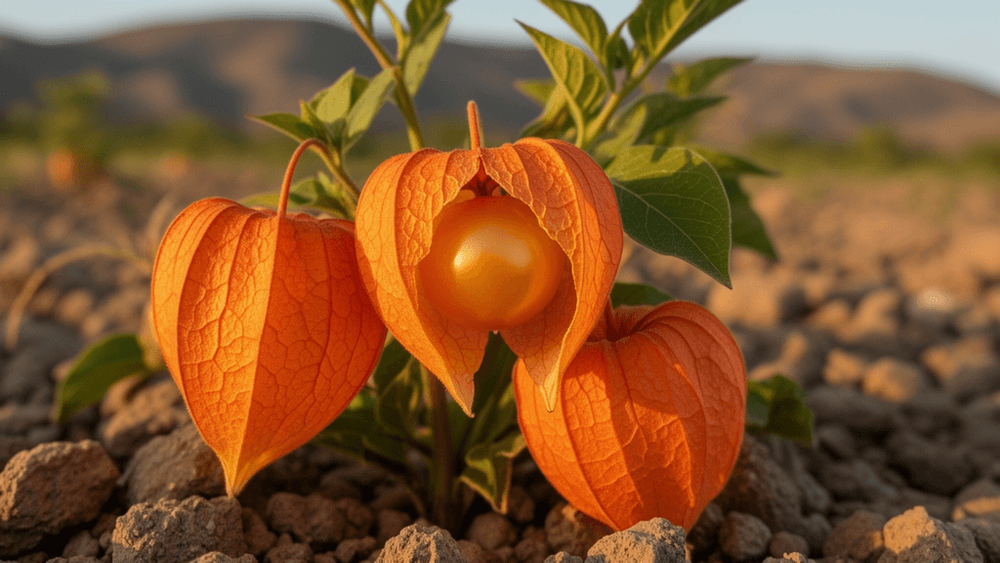
Members of Physalis are instantly recognizable by their signature inflated fruiting calyx, a papery lantern-like envelope that completely encloses the fleshy berry within. The genus belongs to Solanaceae, a family comprising approximately 99 to 102 genera and 2,500 to 2,700 species worldwide. This botanical family includes some of humanity's most valuable crops: potato, tomato, eggplant, peppers, and tobacco. Within Physalis itself, species such as the husk tomato and golden berry carry substantial economic and cultural importance globally.
Habitat and Initial Observations
Researchers encountered the new species growing in secondary vegetation and disturbed patches of xerophytic scrub, often sheltered beneath the canopy of Neltuma laevigata trees. Xerophytic scrub, characterized by drought-adapted vegetation, is Mexico's most abundant ecosystem, occupying approximately 28 percent of the country's surface area, more than 56 million hectares. These habitats harbor exceptionally high proportions of endemic species, with 60 percent endemism documented in xerophytic and steppe vegetation types.
Initial observations suggested affinity with known species such as Physalis longifolia or Physalis caudella. Closer examination, however, revealed a remarkable combination of traits. The plants bear leaves that attach directly to the stem without petioles, a sessile arrangement, and stems clothed in exceptionally long multicellular trichomes, hair-like structures reaching up to 3.5 millimeters. Detailed morphological comparisons against herbarium specimens and specialized literature, reinforced by molecular evidence, confirmed these populations represent a previously undescribed species.
Distinguishing Characteristics
The formal diagnosis distinguishes Physalis mahindae on multiple fronts. Where P. longifolia stands erect with glabrous or short-haired stems and petiolate leaves up to 12 centimeters long, the new species adopts a slightly prostrate habit, bears densely pubescent stems with trichomes extending to 3.5 millimeters, and carries sessile, lanceolate to linear-lanceolate leaves stretching to 18 centimeters. Reproductive structures diverge equally sharply: the corollas feature broad interpetalar tissue absent in relatives, and flowering calyx lobes spread conspicuously behind the corolla as five elongated, narrowly triangular tips. Berries measure roughly 15 millimeters in diameter compared with 10 millimeters in P. longifolia, while seeds are smaller at about 1.5 millimeters versus 2 millimeters.
The complete description portrays a stout, rhizomatous herb standing 60 to 70 centimeters tall, with longitudinally angled stems and geminate leaves, paired leaves of unequal size with the smaller roughly a quarter the size of its partner. Flowers emerge solitary in leaf axils, bearing campanulate-rotate corollas 9 to 12 millimeters across, yellow and marked with five brown-purplish spots at the base. Anthers are yellow with purple filaments. The fruiting calyx measures 25 to 35 millimeters long and nearly 18.5 millimeters wide, bearing ten ribs with acuminate lobes almost filiform that entangle among themselves. The globose berry matures from green to yellow or orange, entirely enclosed by the expanding calyx, holding numerous kidney-shaped yellow seeds. Flowering and fruiting occur from September to January.
Verification and Molecular Analysis
To verify taxonomic novelty, researchers conducted exhaustive comparative review, examining physical herbarium specimens from three institutions and supplementing with high-definition digital images from additional collections. They constructed a detailed comparative table contrasting the new species against five morphologically similar relatives. The holotype, collected in October 2021 at Parque El Batán in the municipality of Corregidora at 1,844 meters elevation, was deposited at the Luz María Villarreal de Puga herbarium at the Universidad de Guadalajara, with duplicate specimens sent to the Jerzy Rzedowski herbarium at the Universidad Autónoma de Querétaro.
Molecular phylogenetic analysis added an unexpected dimension. Researchers extracted DNA from silica gel-dried tissue and herbarium specimens, amplified the second intron of the nuclear LEAFY gene, a marker widely used in Solanaceae systematics, and sequenced three individuals alongside 51 sequences from GenBank. The phylogeny, inferred under Maximum Likelihood with 1,000 ultrafast bootstraps, placed Physalis mahindae as sister species to P. gracilis with strong support, a bootstrap value of 95. That pair shares its most recent common ancestor with a clade containing P. peruviana, and the whole group is sister to P. longifolia. The biogeographic surprise: neither P. peruviana, native to South America, nor P. longifolia, distributed in the United States and Canada, occurs naturally in Mexico, making the evolutionary neighborhood of this Querétaro endemic unexpected.
The authors emphasize the reconstruction rests on a single nuclear marker, and single-gene trees can sometimes fail to reflect true species relationships. They frame the grouping as a preliminary hypothesis rather than definitive evolutionary placement. Future phylogenomic studies with expanded population-level sampling are expected to resolve the history more fully. The LEAFY sequences nonetheless demonstrate the new species carries a divergent molecular signature complementing morphological evidence used to delimit the taxon.
Critical Conservation Status
Conservation prospects are dire. Only two populations of Physalis mahindae are currently documented, and while the species may occur in other xerophytic scrub patches in surrounding regions, further exploration is needed. Using the GeoCAT geospatial assessment tool, researchers calculated an Area of Occupancy of just 4 square kilometers, based on standard 2-by-2-kilometer grids, and an Extent of Occurrence of 82 square kilometers, drawn as a minimum convex polygon around known occurrence points. Under criterion B of IUCN Red List guidelines, which concerns geographic range, both values fall below thresholds of 10 and 100 square kilometers respectively, placing the species in the Critically Endangered category, coded CR B1+B2ac(ii, iii).
The conservation classification reflects a broader crisis facing Mexican endemic plants. Recent comprehensive assessments found nearly 60 percent of Mexican endemic and near-endemic tree species are threatened with extinction, almost double the global average for threatened trees. According to the IUCN Red List, more than half of all critically endangered species globally are plants, with 6,445 plant species listed as critically endangered worldwide. In Mexico's xerophytic ecosystems, threats are particularly acute: within the Cactaceae family, which shares these habitats, 179 species are endangered and 100 critically endangered, with illegal collection affecting 31 percent of all cactus species.
Querétaro state itself represents a biodiversity hotspot worthy of conservation attention. The state harbors 51 percent endemic herpetofauna species, and xerophilous scrub in the mountains of the Central Plateau, including areas like Peñamiller, represents critical habitat for endemic species preservation. The discovery of Physalis mahindae underscores this regional importance.
Significance of the Discovery
The species honors Mahinda Martínez y Díaz de Salas, an eminent Mexican botanist recognized for outstanding contributions to Physalis taxonomy. Beyond the honorific, the discovery carries a broader message: even in a genus as thoroughly studied as Physalis, dedicated fieldwork in Mexico continues to yield undescribed species, reinforcing the country's status as the primary center of diversification for the group. The description of Physalis mahindae increases known species diversity and underscores urgent need for floristic and systematic research in the region, before the two fragile populations anchoring this new branch of the nightshade family tree disappear unnoticed.