Seven-hour blackout hits Yucatán Peninsula; CFE blames vandalism as skepticism mounts
The Federal Electricity Commission (CFE) restored electricity to more than 10 million residents across Yucatán, Quintana Roo, Campeche and Chiapas early Tuesday morning, approximately seven hours after a regional blackout that the state-owned utility attributed to vandalism targeting high-voltage transmission lines.
The outage began Monday evening as temperatures reached 34 degrees Celsius (93 F), plunging major cities including Mérida, Cancún, Playa del Carmen and Chetumal into darkness. In Mérida, a city of nearly 1 million people, the blackout crippled commercial activities, leaving hundreds of businesses unable to process electronic payments, operate refrigeration systems or run air conditioning. The power failure also partially affected neighboring Belize, which imports approximately 40-55 MW of electricity from CFE and depends on the same southeastern Mexican grid.
CFE blames vandalism, public expresses doubt
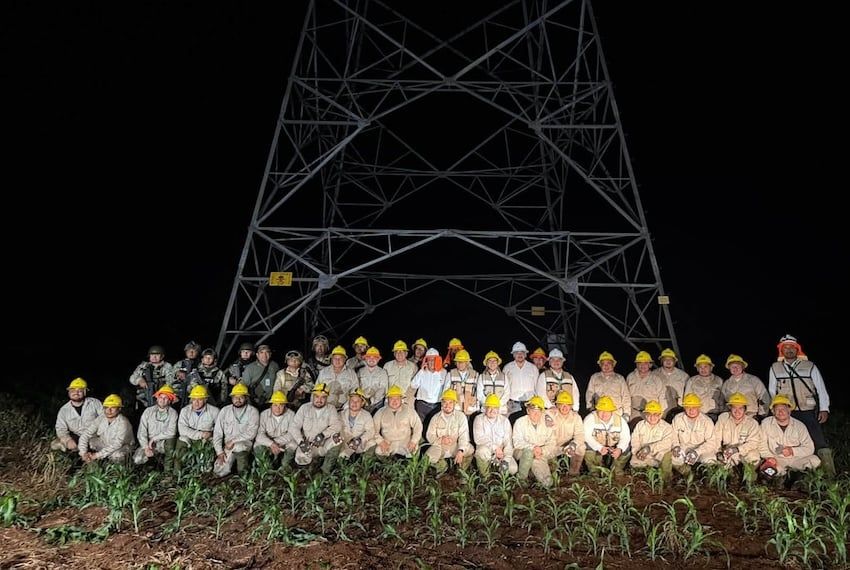
In a statement posted on social media at 3:08 a.m. Tuesday, CFE reported that specialized personnel identified the problem as "damaged insulation strings" on one of the transmission structures. The utility said the outage resulted from "acts of vandalism" targeting two 400 kV high-voltage lines, and that power was fully restored following "uninterrupted repair and restoration work."
The vandalism explanation met immediate skepticism from the public, with dozens responding critically on social media platform X. Many recalled that former CFE director Manuel Bartlett, who led the agency from 2018 to 2024, frequently blamed vandalism, illegal connections and sabotage for widespread grid failures. The credibility gap widened following a 2020 scandal in which CFE forged official documents to blame a Tamaulipas brushfire for a blackout affecting 10 million people. Investigation revealed the purported fire never occurred, no emergency calls were registered, and the Tamaulipas state government filed a formal criminal complaint against CFE for fabricating documents.
While CFE regional officials have documented vandalism to electrical infrastructure as an ongoing operational challenge in the region—particularly theft and tampering with low and medium-voltage networks from Tulum to Cancún—Monday's incident allegedly involved high-voltage transmission lines, raising questions about the plausibility of the official account.
Peninsula's unique electrical vulnerabilities
The Yucatán Peninsula faces unique electrical vulnerabilities that amplify the impact of transmission line failures. The region is isolated from Mexico's National Interconnected System with limited high-voltage connections, consuming roughly 2,416 megawatts daily while generating only 1,818 megawatts locally. This forces the peninsula to import nearly 600 MW through a single 400 kV transmission line, making the grid exceptionally susceptible to cascading failures when that critical infrastructure is compromised. The National Center for Energy Control (CENACE) has identified the Yucatán Peninsula as the national electrical system's most vulnerable point.
The region's infrastructure challenges extend beyond transmission capacity. The Mayakan natural gas pipeline, which serves the peninsula, has a transportation capacity of 250 MMcf/d but currently operates below 50% of that capacity, creating dependency on electricity transmission to meet energy demand. This natural gas deficit contributes to the region's chronic electricity insufficiencies, particularly during extreme heat when demand surges.
Recent infrastructure investments fail to prevent outage
Monday's blackout occurred despite recent infrastructure investments designed to strengthen regional supply. In May 2026, CFE opened the 499 MW Elvia Carrillo Puerto combined-cycle power plant in Mérida, a facility intended to benefit more than 1.53 million inhabitants across the peninsula. The timing of the blackout, just months after this major upgrade, raises questions about whether transmission vulnerabilities persist even as generation capacity improves.
The region has experienced repeated major outages in recent years. One year ago, a blackout left more than 2.2 million residents without power for six hours, while rolling blackouts affected the area in May 2025. In March 2025, CFE attributed a massive regional blackout affecting the same states to poor quality natural gas with high moisture content in the Mayakan Pipeline, which caused generation failure at the 300 MW Nuevo Pemex power plant. The varying official explanations for successive blackouts—from natural gas quality to vandalism—have fueled public skepticism about CFE's accountability.
Economic impact on tourism-dependent region
The economic impact of electrical failures in the region extends beyond residential inconvenience. Quintana Roo receives approximately 33 million tourists annually, and the hot, humid climate creates sustained high demand for air conditioning. Power outages severely disrupt the tourism-dependent economy, affecting hotels, restaurants and commercial operations across major destinations.
Industry analysis indicates the Yucatán Peninsula requires over $30 billion in energy infrastructure investments within three to five years, with energy demand projected to surge 15% over the next five years largely due to the economic impact of the Tren Maya railway project. The scale of investment needed underscores the magnitude of infrastructure challenges facing the region as it attempts to keep pace with rapid economic growth while maintaining electrical service reliability.