Mexico evaluates pilot fracking projects in northern border states amid growing energy dependency
President Claudia Sheinbaum is evaluating pilot fracking projects in the northern border states of Coahuila and Tamaulipas, with initial operations potentially beginning as early as September, according to sources familiar with government discussions who spoke to Reuters.
The news agency reported Wednesday that four unnamed sources indicated state oil company Pemex could commence work on the first pilot projects next month, following the president's receipt of findings from a panel of specialists in geology, water, engineering and environmental issues several weeks ago.
The potential move comes as Mexico faces mounting energy challenges. In 2025, the country's pipeline natural gas imports from the United States reached a record 6.638 billion cubic feet per day, covering approximately 77% of national demand and marking the third consecutive annual increase. Meanwhile, Mexico's domestic natural gas production has fallen dramatically by 51% since 2010, dropping from about 5.0 billion cubic feet per day to 2.4 billion cubic feet per day in 2024.
Expert panel completes assessment
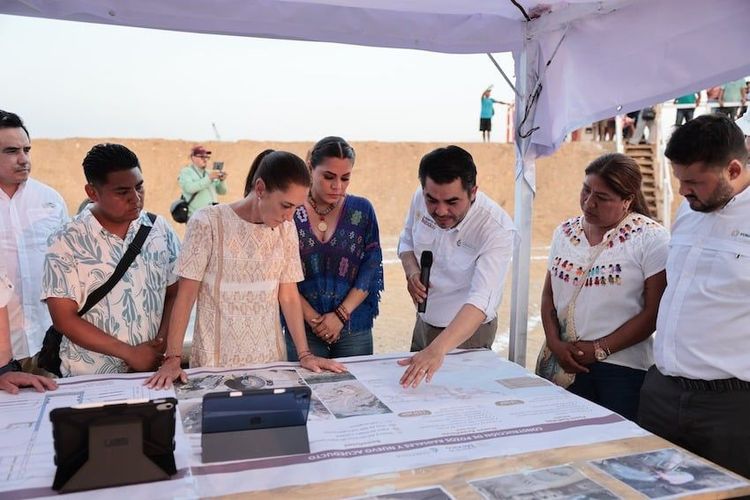
In April, Sheinbaum presented a group of scientists tasked with assessing the viability of so-called "sustainable fracking" in Mexico. The president has acknowledged her previous opposition to the practice but now maintains it can be conducted safely using new technologies that reduce water consumption and environmental impacts.
On July 28, Sheinbaum told reporters the expert group had been expanded to incorporate additional perspectives, slightly delaying their public presentation. However, Reuters sources confirmed she received the panel's conclusions in recent weeks. Neither the president's office nor Pemex responded to Reuters requests for comment.
Sheinbaum indicated last week that an announcement on the committee's guidance would come soon, stating she believed the conclusions would be "satisfactory for everyone," though a decision favoring fracking would likely trigger criticism from environmental organizations.
Target areas and operational challenges
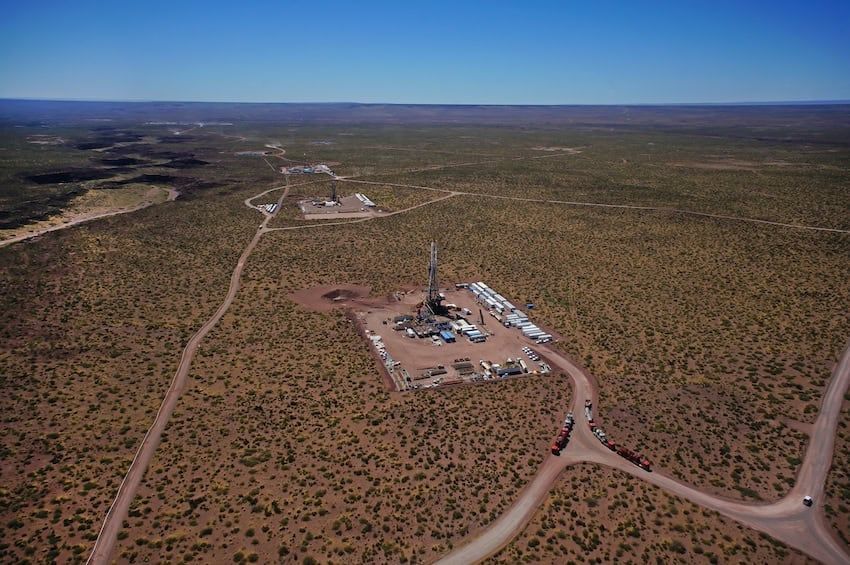
According to Reuters sources, the government is studying an area near the U.S. border in Coahuila within the Burro-Picachos platform. This region borders Texas's Eagle Ford formation, which the U.S. Energy Information Administration forecasts will produce 7.0 billion cubic feet per day of natural gas in 2026.
The Tampico-Misantla basin, spanning Veracruz, Tamaulipas and Puebla, holds Mexico's largest fracking potential. Industry estimates suggest the basin contains approximately 140 billion barrels of hydrocarbons in place, comparable to the Permian Basin's 150 billion barrels, yet currently produces only about 1% of the Permian's output.
Across the Burgos Basin, Sabinas-Burro Picachos, and Tampico-Misantla basins, Mexico's unconventional reserves are estimated at 64 billion barrels of oil equivalent, with an additional 141.5 trillion cubic feet of gas in unconventional reservoirs requiring fracking technology.
Each development area presents distinct challenges. Coahuila is governed by opposition parties, Tamaulipas faces security risks linked to organized crime, and water scarcity remains a concern throughout the resource-rich regions. Reuters noted that intensive unconventional development would require hundreds of wells and continuous operations, with any interruption proving costly as such wells typically decline rapidly and demand constant investment.
Current production and future projections
In the first quarter of 2026, Pemex's liquid hydrocarbons production reached 1.652 million barrels per day, while natural gas production reached 3.925 billion cubic feet per day, representing a 12.1% increase compared to the same period in 2025. However, this production level remains far below national demand.
Ahead of potential pilot projects, Pemex has drilled 25 exploratory wells in the Sabinas-Burro Picachos, Burgos and Tampico-Misantla basins. The company has also employed fracking in the Chicontepec project spanning Veracruz, Puebla and Hidalgo.
Pemex's 2025-35 strategic plan projects cumulative production through 2030 of 197 million barrels of crude oil and 303 billion cubic feet of gas from unconventional fields. The state company anticipates unconventional oil and gas fields will make a modest contribution to overall production between 2026 and 2028, with significant volumes forecast from 2029.
Policy shift from previous administration
The fracking evaluation represents a policy shift from the administration of former President Andrés Manuel López Obrador. While López Obrador repeatedly stated opposition to fracking and sent an initiative to prohibit it in 2024, the ban was never codified into law. Pemex continued using fracking in two existing projects throughout his term: Aceite Terciario del Golfo and gas in shales.
Between 2019 and March 2026, the Mexican federal government provided MX$1.8 trillion (approximately US$103 billion) in support to Pemex, with 78.9% consisting of capital contributions, 17.7% fiscal incentives, and 3.4% other instruments.
Growing import dependency
One Reuters source described Mexico's current dependence on gas imports from the United States as "alarming," noting there was no alternative if the country wanted to boost oil and gas production. U.S. pipeline natural gas exports to Mexico are projected to reach 9.8 billion cubic feet per day in 2026 and 10.0 billion cubic feet per day in 2027, driven by Mexico's growing power generation demand.
Virtually all of Mexico's gas imports arrive via pipeline from the United States, creating what some energy analysts describe as a national security risk. The country currently imports around 75% of the natural gas it uses, according to Sheinbaum's February statement.
Pemex currently produces an average of 4.869 billion cubic feet of gas per day in addition to 1.658 million barrels of oil and condensate. Despite modest production increases, domestic output remains insufficient to meet national demand, underscoring the pressure on the administration to develop unconventional resources or continue deepening energy import dependency.