A City Built from Scratch
Mexico's fourth-largest city, Puebla de Zaragoza, holds more beneath its colonial facades than most visitors realize. The historic center, declared a UNESCO World Heritage Site in 1987, preserves 2,619 monuments — more than any other city in the Americas. This distinction came a decade after Mexico itself recognized the area's importance, establishing it as a Historic Monuments Zone by presidential decree in 1977.
The city's architectural treasures include Puebla Cathedral, whose twin bell towers soar 69 meters (226 feet) into the sky — the tallest cathedral bell towers in Mexico. The cathedral itself ranks as the country's second-largest, surpassed only by Mexico City's Metropolitan Cathedral. These well-preserved colonial structures have made Puebla a sought-after filming location, standing in for 18th- and 19th-century Mexico and Spain in productions including "Frida" and "Man on Fire."
Founded on April 16, 1531, Puebla holds a unique place in colonial history as the first city in central Mexico that Spanish colonizers built from the ground up, rather than constructing it atop the ruins of a conquered Indigenous settlement. The city's early name, Puebla de los Ángeles, traces to a 1531 account of a bishop's vision guiding settlers to the site. Today, the city bears the name Puebla de Zaragoza, honoring General Ignacio Zaragoza, who led Mexican forces to an improbable victory here.
That victory came on May 5, 1862, when approximately 4,000 Mexican troops faced a French army of roughly 8,000 soldiers under General Lorencez. Against the odds, Mexican forces prevailed, inflicting around 462 French casualties while suffering only 83 losses themselves. The battle's significance extends beyond military history — it became a defining moment in Mexican national identity, celebrated annually as Cinco de Mayo.
The city's revolutionary legacy continued into the 20th century. On November 18, 1910, the Serdán family home became the site of the first armed clash of the Mexican Revolution, two days before Francisco Madero formally launched the uprising. The bullet-scarred house now operates as a museum, preserving this crucial moment in the nation's transformation.
Culinary Innovation and Tradition
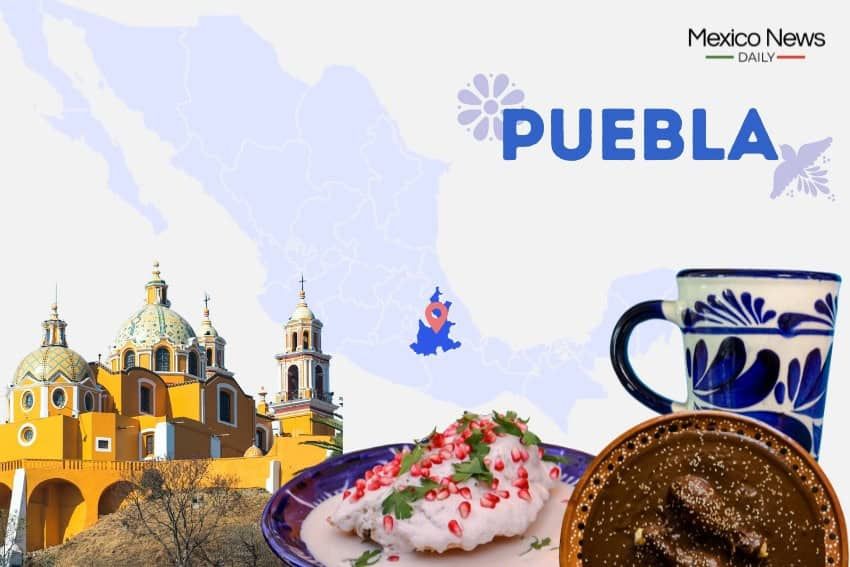
Puebla's reputation extends beyond architecture and history into Mexico's gastronomic landscape. The city claims credit for three dishes central to Mexican cuisine. Mole poblano, said to have been improvised by nuns at the Convent of Santa Rosa in 1680 when an archbishop arrived unannounced, remains the most famous of Mexico's 300-plus regional moles. Chiles en nogada, with its patriotic red, white and green color scheme, originated at an 1821 feast honoring independence figure Agustín de Iturbide. Tacos árabes, born from Middle Eastern shawarma techniques brought by 1930s immigrants, evolved into the iconic pastor preparation known throughout Mexico.
The Palafoxiana Library, founded in 1646, adds another layer to Puebla's cultural legacy. One of the oldest public libraries in the Americas, it earned recognition on UNESCO's Memory of the World Register in 2005, highlighting the city's long-standing commitment to learning and preservation.
The Tehuacán-Cuicatlán Biosphere
Beyond the colonial city lies a landscape that appears otherworldly. Just outside Tehuacán, the state's second-largest city, the Tehuacán-Cuicatlán Biosphere sprawls across 490,186 hectares of protected desert spanning Puebla and Oaxaca states. Designated a biosphere reserve in 1998, the area achieved UNESCO World Heritage status in 2018 under the name "Tehuacán-Cuicatlán Valley: originary habitat of Mesoamerica."
The designation recognizes both natural and cultural significance. This valley stands among the earliest sites of plant domestication in the Americas, where ancient peoples first cultivated maize, beans, squash and chili peppers more than 7,000 years ago. Today, the biosphere shelters more than 2,500 species of cacti in forms ranging from tall candle-thin columns to round specimens and shapes that seem pulled from science fiction.
Visitors encounter 2,000-year-old salt flats still worked by hand at Zapotitlán Salinas, sample cuisine built around cactus flowers and hibiscus water, and explore pottery workshops in Los Reyes Metzontla where ancient clay deposits get shaped into hand-thrown crockery.
Living Traditions
Puebla's cultural calendar includes distinctive celebrations found nowhere else. In Chignahuapan, a small town two hours north of the capital, an entire industry revolves around Christmas spirit. The town produces an estimated 70 million hand-blown glass ornaments annually, with craftspeople transforming glowing-hot glass tubes into silver-coated, hand-painted baubles through processes that can take a year to master.
The town of Huaquechula hosts a unique Day of the Dead tradition: the trueque, an ancient barter market where locals swap goods for altar materials. During the festival, families trade peanuts, sugar cane and homemade bread for marigolds, cockscomb flowers and various forms of pan de muerto. The celebration extends beyond commerce — cooks prepare meals around the clock for hundreds of participants, and visitors find themselves welcomed into strangers' homes to view elaborate altars.
Even contemporary customs carry historical weight. The annual Carrera de la Tortilla, a 5-kilometer race through Tehuacán, retraces the daily walk local women make to market, tortillas in hand. Most runners come from Santa María Coapan, the self-proclaimed "Tortilla Capital" of Mexico, competing in traditional Mixtec dress in an event that honors the women who maintain this enduring tradition.
Getting There
Puebla International Airport, located 45 minutes from the city center, connects to major Mexican destinations plus Newark, Houston and Los Angeles. From Mexico City, travelers can choose between Benito Juárez International Airport (two hours by road, traffic permitting) or Felipe Ángeles International Airport (2.5 hours away). The 135-kilometer drive from Mexico City takes between 90 minutes and three hours depending on traffic conditions, with national holidays often creating significant delays but weekday morning departures allowing for quicker journeys.