The birth of Mexican muralism
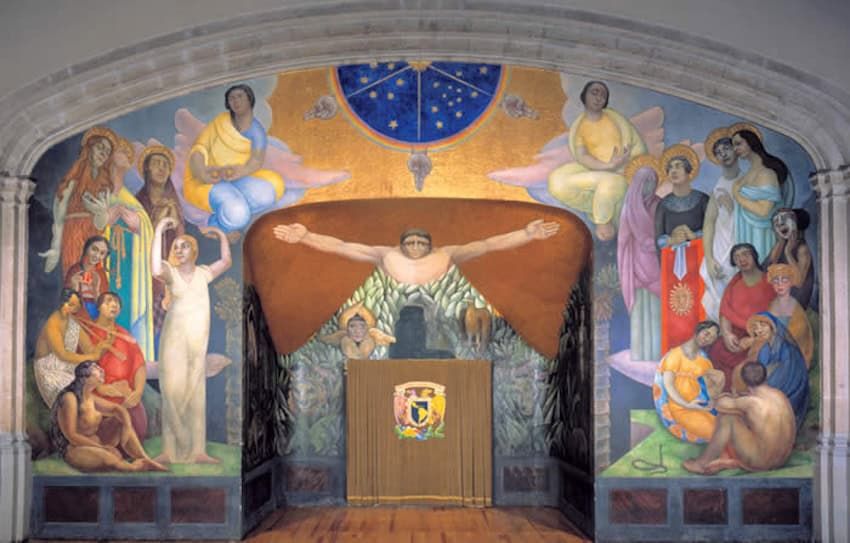
A decade-long scientific investigation has concluded that Diego Rivera's famous mural "La Creación" contains no beeswax, contradicting the artist's longstanding claims that he used an ancient Greek encaustic painting technique in the work.
The finding, announced by researchers at the National Autonomous University of Mexico (UNAM), dismantles a century-old assertion about one of Mexico's most significant cultural treasures and raises new questions about the artist's methods and motivations.
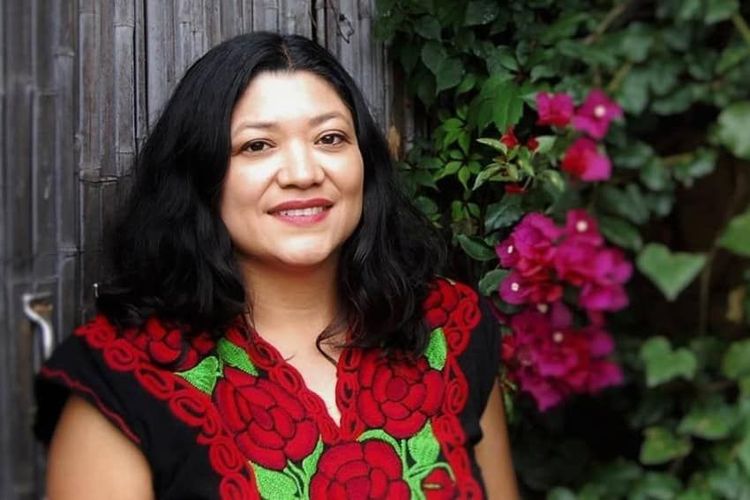
"It's in the books," says Sandra Zetina Ocaña, an art historian at UNAM's Institute of Aesthetic Research who led the investigation. "I'm not the one saying it; his own colleagues from that time are saying that he lied to them."
The birth of Mexican muralism
Rivera painted "La Creación" between March 1922 and March 9, 1923, at the Antiguo Colegio de San Ildefonso in Mexico City. The massive work, measuring 4.80 by 11.45 meters, depicts the Biblical creation story while incorporating elements of Greek mythology and featuring Latin American-featured muses.
The mural was commissioned by José Vasconcelos, Mexico's first Secretary of Public Education, who served from September 1921 to July 1924 under President Álvaro Obregón. Facing a literacy crisis affecting approximately 90 percent of the population, Vasconcelos turned to visual art as a tool for mass education.
Rivera had returned to Mexico in June 1921 after more than a decade in Paris, where he had developed his own version of Cubism alongside artists like Picasso and Modigliani. For "La Creación," he enlisted assistants Jean Charlot, Xavier Guerrero, and Carlos Mérida, who helped with the application of what Rivera claimed were waxes and resins for an encaustic technique.
"La Creación" is widely considered the starting point of Mexican muralism, though Vasconcelos himself disliked the work, arguing it failed to capture the Mexican spirit. Rivera later acknowledged the mural's strong European influences.
The encaustic claim
Encaustic painting, described by Roman scholar Pliny the Elder in his first-century "Natural History," involves mixing beeswax with resin and pigments, then applying heat to layer the mixture onto a surface. The technique, which declined after the seventh century, is renowned for its durability. The Fayum mummy portraits from Egypt, dating from 100 to 300 AD, remain among the oldest surviving examples, demonstrating the medium's remarkable longevity across nearly two millennia.
Renaissance artists attempted to revive the technique, though Leonardo da Vinci famously failed in his attempt to use it for "The Battle of Anghiari."
In conversations with fellow artist Juan O'Gorman, later published by the Colegio Nacional, Rivera claimed he had successfully restored true encaustic painting for the first time since the Greco-Roman period. He further asserted that he had innovated a uniquely Mexican version by incorporating resin from the copal tree as a binding material.
A forensic investigation
The research team employed optical, digital and electron microscopy, chromatographic analysis and nuclear magnetic resonance spectroscopy to examine samples from the mural. While all samples showed traces of copal, none revealed beeswax.
Pablo Aguilar-Rodríguez, a chemist at UNAM who developed specialized techniques for analyzing painting materials, conducted additional testing using chemical mapping methods he had successfully employed to identify beeswax in another Rivera work, "El Matemático."
"No, there isn't any beeswax," Aguilar-Rodríguez confirms. "There never was. It didn't degrade. It simply wasn't added in the first place."
The researchers tested whether heat application or degradation over time could have eliminated traces of beeswax. They burned beeswax samples to various degrees and analyzed other encaustic murals from the era by artists including David Alfaro Siqueiros and Jean Charlot. In all cases, beeswax remained detectable.
Siqueiros and Rivera, along with José Clemente Orozco, formed "Los Tres Grandes" — the three great figures of Mexican muralism who defined the movement from the 1920s through the 1950s.
Materials and meaning
The investigation's significance extends beyond simple fact-checking. Materials and techniques carry ideological weight in Mexican muralism, where artists like Siqueiros incorporated industrial paints to break with elitist traditions and reflect technological progress.
"What I find so compelling about Mexican art in the early- to mid-20th century is its focus on thematic and material reinvention," Zetina Ocaña explains.
Aguilar-Rodríguez points to the work of Rafael Coronel, Rivera's son-in-law, who used dental filling material in his mural "Paisaje Abstracto." Chemical analysis revealed this unexpected choice. "Understanding it from this chemical perspective tells me that Coronel innovated not only in his content, but also in his materials," he says.
Why would Rivera lie?
Zetina Ocaña suggests Rivera may have announced his intention to use encaustic before actually beginning work. Newspaper articles about the technique appeared before he started painting, indicating he may have changed his approach but never corrected the public record.
Dr. María de las Mercedes Sierra Kehoe, an art historian at UNAM who analyzed Rivera's "Sueño de una tarde dominical en la Alameda Central" using similar techniques, offers another perspective. "A very important part of Diego Rivera is that we have to understand that he was a great painter who understood the art market — he knew how to sell himself, he knew how to work the media."
Zetina Ocaña notes that Rivera was known to misrepresent his techniques deliberately, protecting his artistic process much like a chef guarding a secret recipe. "He is a very talented artist, but he is a very erudite artist — an artist who studied a lot, who practiced a lot, who researched a lot," she says.
Implications for conservation
The research extends beyond historical curiosity. Understanding the true materials in artworks is essential for their conservation. The UNAM team's work on Frida Kahlo's "Dos Fridas" identified lactic acid as a key factor in the painting's degradation, leading to improved conservation strategies.
Similarly, identifying the dental filling material in Coronel's "Paisaje Abstracto" enabled conservators to develop appropriate treatment methods.
"Bringing the humanities and science together has allowed us to discover and recognize elements, processes and projects that would not have been possible to uncover without these instruments," Mercedes Sierra Kehoe says. "It is a historian's dream."
After a decade of investigation, Zetina Ocaña says the project has raised more questions than it answered. "It became an even greater mystery," she reflects. "It is also like a good novel, a good poem — something always remains. And that is what I feel with this mural: That it is a conversation that opened up, and that we continue to have, and that I believe will give rise to other conversations."