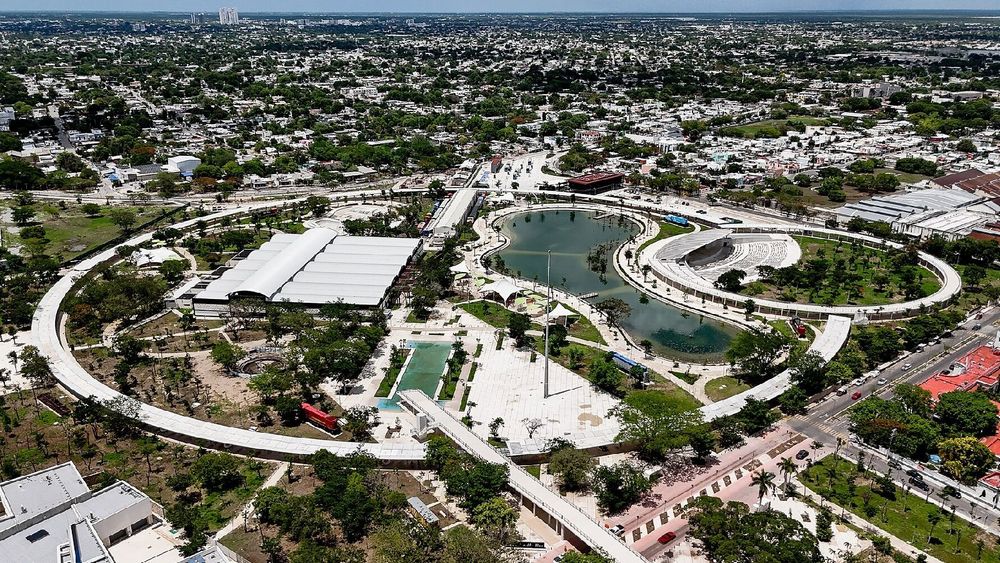
Deadly Brain-Eating Amoeba Case Prompts Restrictions at Six Artificial Lakes in Mexico's Mérida
Yucatán health authorities have imposed restrictions on water contact at six artificial lakes in Mérida following the detection of Naegleria amoebae at multiple sites, after a 34-year-old water sports instructor died from primary amoebic meningoencephalitis caused by the pathogen Naegleria fowleri.
The measures, announced on 14 October, follow laboratory testing at nine man-made lakes across the city. Mexico's national epidemiological reference laboratory confirmed Naegleria fowleri as the cause of the instructor's death, with Plaza La Isla's artificial lake identified as the probable exposure site, though not definitively proven as the infection point.
State health authorities detected Naegleria amoebae at six of the nine tested locations but did not confirm that the dangerous N. fowleri species was present at all positive sites. The restrictions apply specifically to water contact rather than to the surrounding parks and recreational areas.
The affected water bodies include the lake at Plaza La Isla, two lakes at Cabo Norte (eastern and main), the lake at Centenario Zoo, the lake at Gran Parque La Plancha, and the lake at Parque Ecológico del Poniente. Tests returned negative results for Cabo Norte's central lake, Acuaparque, and the lake at Animaya Zoo.
Mexico ranks as the third most affected country globally by Naegleria fowleri cases, with 11 scientifically documented cases and approximately 30 cases described in local epidemiological alerts, accounting for roughly 9 percent of global case exposures. The country has faced this pathogen before, notably in 1990 when five fatal cases occurred in Mexicali, marking the first time the organism was isolated from both patients and environmental samples in Mexico.
Understanding the Pathogen and Its Lethality
Naegleria fowleri causes primary amoebic meningoencephalitis, a rapidly progressing infection of the brain and surrounding tissues. The disease carries an exceptionally high mortality rate, with only seven confirmed survivors globally out of 381 reported cases through 2018, representing a survival rate of approximately 1.8 percent.
The organism thrives in warm freshwater, with optimal growth occurring at temperatures between 25°C and 46°C. Mérida's warm climate creates conditions particularly conducive to the amoeba's proliferation in artificial water bodies. Despite the organism's widespread presence in warm freshwater environments globally, actual human infections remain extraordinarily rare. In the United States, only 167 cases were reported between 1962 and 2024, with fewer than 10 people typically infected per year.
Infection occurs exclusively when water containing the organism enters the nose, allowing the amoeba to reach the brain. The disease cannot be contracted by swallowing contaminated water and does not spread from person to person. This distinction is particularly relevant to public water supplies, as the Yucatán government confirmed in September that Plaza La Isla's artificial lake is not connected to the drinking water network.
Public Health Response and Monitoring
Authorities monitored 361 individuals who visited the lake at Plaza La Isla following the instructor's death. All completed their observation period on 4 October without developing symptoms. The typical incubation period for the infection ranges from one to seven days, with symptoms appearing with a median of five days after exposure to contaminated water.
Government officials have ordered barriers and warning notices around the affected waters. Lake operators have begun sanitation work under the supervision of authorities, with assistance from specialists at the Autonomous University of Yucatán and the research institute Cinvestav. The organism can be inactivated through heating water to 50°C for five minutes, and does not survive in adequately chlorinated water. Combined ultraviolet light and chlorination treatment has been shown to completely eliminate N. fowleri from recreational water facilities.
The nine inspected lakes are described by officials as ornamental features not intended for swimming, though Plaza La Isla had hosted water sports activities. Parks and zoological grounds remain open to visitors, with operations continuing at facilities such as Animaya, where catamaran trips proceed without passengers entering the water.
Each lake operator must meet specific operating requirements before affected waters can be used again for permitted activities, with laboratory confirmation required. An inter-agency group involving university researchers and water authorities is developing longer-term regulations for artificial lakes. The state government has expanded surveillance to other artificial bodies of water in Mérida and will publish additional test results as they become available.
Anyone who has had water enter their nose at an affected lake and experiences severe headache, fever, nausea, vomiting or stiff neck should seek urgent medical attention. The seven confirmed global survivors of the infection all received amphotericin B treatment, with most also receiving combinations of azoles, rifampin, azithromycin, miltefosine, and dexamethasone. Early identification and treatment were identified as key factors in their survival.