Violence prevention and support for victims
The Executive State Commission for Comprehensive Victim Care accounted for 56,090 services, including more than 43,000 directly supporting women, girls and teenage girls who were victims. It also assisted 42 search collectives and carried out 1,238 field operations, reporting 563 positive findings of missing persons.
The administration reported 2,097 preventive actions addressing domestic or gender-based violence, reaching 94,590 women and 6,514 children affected by such violence. Ventanilla Violeta, or Violet Window, and other specialized service points provided direct assistance to 7,164 women.
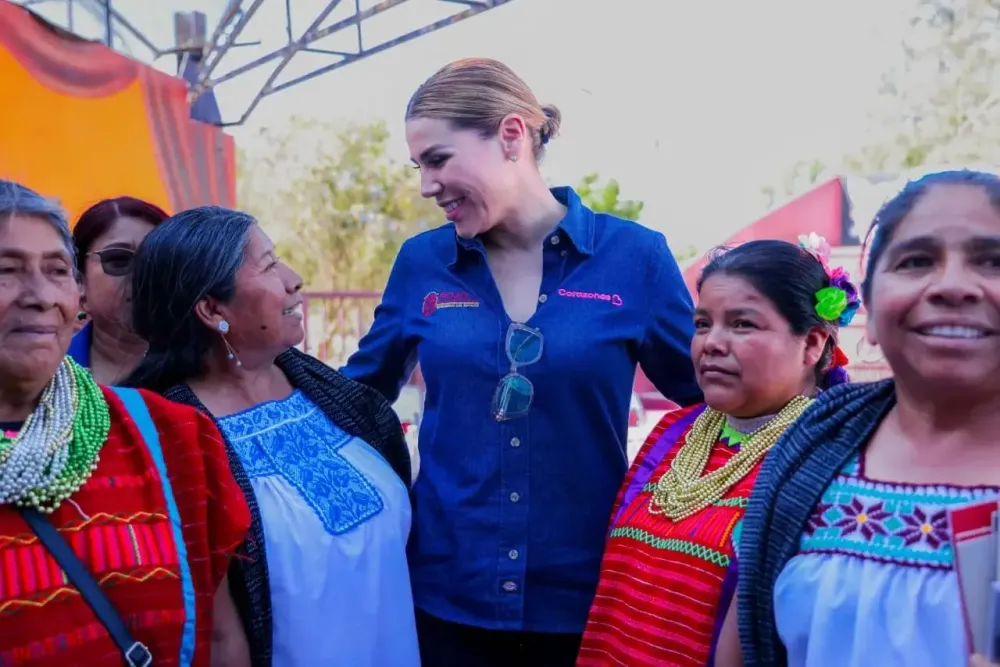
Legal and psychological counseling is available through 12 LIBRE Women Centers established by the state. Another initiative, the 11 Women's Equality Networks, is intended to support community organizing and violence prevention. Anti-trafficking efforts included training for 85,000 people and 37 awareness campaigns under the international Corazón Azul, or Blue Heart, initiative.
State planning documents provide context for the violence-prevention work. A gender-violence alert prompted by feminicidal violence was declared on July 25, 2021, for Ensenada, Mexicali, Playas de Rosarito, San Quintín, Tecate and Tijuana, as well as Baja California as a whole.
The 2021 National Survey on the Dynamics of Household Relationships, known as ENDIREH, estimated that 69.2% of Baja California women age 15 and older had experienced violence at some point in their lives. The measure includes psychological, physical, sexual, economic and patrimonial violence.
Mobility services and street outreach
Within the state's broader total of more than 45,000 services for people in the context of mobility, the Baja California Multi-Service Center in Tijuana assisted 11,851 people from 14 nationalities. The center worked with specialized international organizations and civil society groups to provide comprehensive assistance.
In Tijuana, the Apapachar la Calle program, whose name translates as "Caring for the Street," surveyed 1,376 people experiencing homelessness. Officials also organized 35 outreach events providing food and public health services.
The program's reported assistance included food and medical care, with 650 people receiving mental health services. It also provided 350 birth certificates and 60 CURP registrations.
Community networks and access to services
The state established 60 Inclusion Networks involving 460 community representatives across its seven municipalities. Training on social inclusion, interculturality and gender perspective was completed by 8,930 public servants.
The administration also facilitated administrative gender identity updates for 135 people. Financial assistance went to 50 Indigenous interpreters and translators to support access to legal services and language assistance.
The programs guiding inclusion and equality
Two policy frameworks underpin the initiatives: the State Program for Social Inclusion for 2025–2027 and the State Program for Substantive Equality for 2026–2030. Their stated aims are to remove systemic barriers, extend human rights protections and improve living conditions for vulnerable communities.
The Baja California government describes the social inclusion framework as the state's first program of its kind and its first institutional effort to design programs that put social inclusion policy into practice.
It identifies seven priority groups: Indigenous peoples and communities; women experiencing violence; people of diverse sexual and gender identities; people with disabilities; people experiencing homelessness; people who use psychoactive substances; and people reintegrating into society after incarceration.
During the program's citizen-validation process, officials presented the draft on October 1, 2025, to participants from the public, private, social and academic sectors. The meeting took place in the Sala Presidentas at DIF Municipal Tijuana, where organizers collected comments and observations from 46 attendees.