A ceremony following her return
Sheinbaum had completed a five-day official visit to China for the APEC 2026 forum, according to Mexico News Daily. Tribuna reported that she reached Mexico City in the early hours of Friday.
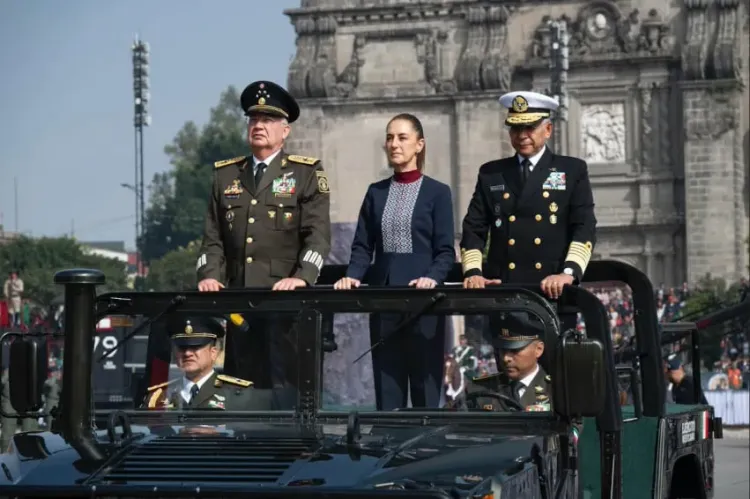
Gen. Fernando Colchado Gómez asked for the president's authorization to start the procession. Historical reenactments, horseback contingents and musical performances formed part of the program, Milenio reported.
Among the ceremony's attendees were Sheinbaum's husband, Jesús María Tarriba; Mexico City Mayor Clara Brugada; prosecutor Ernestina Godoy; Supreme Court president Hugo Aguilar Ortiz; Senate president Higinio Martínez; and Chamber of Deputies president Raúl Bolaños, according to Meganoticias.
Born in Mexico City in 1962, Sheinbaum became Mexico's first female president and its first president of Jewish heritage when she took office in 2024. She previously led Mexico City's government from 2018 to 2023.
A political message ahead of 2027
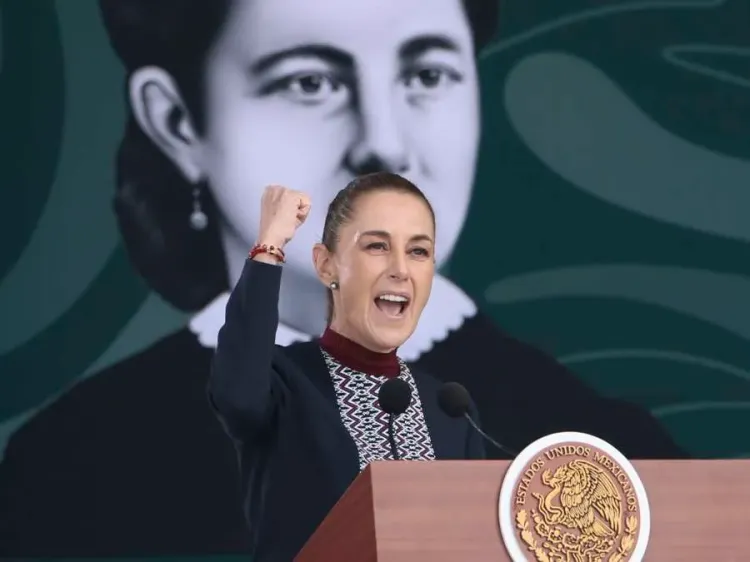
In a speech covering grievances under the Porfiriato and present-day political disputes, Sheinbaum accused opponents seeking to recover privileges of trying to weaken her transformation project. She said their efforts to defeat the popular will over the past two years had failed and warned that attempts to delegitimize the 2027 elections would also fail.
She referred to the disputed elections of 1988 and 2006 and recalled demands for electoral transparency through a recount of every vote at every polling place.
According to EFE, Sheinbaum said the 2027 midterm elections would set a historic example of respect for the vote. The contests will put 500 seats in the federal Chamber of Deputies and 19,609 local positions across the country before voters.
Defense Secretary Ricardo Trevilla Trejo also addressed the ceremony. He described the 1910 uprising as a turning point that brought popular aspirations together with forces opposing the Porfirian regime, ultimately establishing the modern Mexican Army and Air Force.
Revolutionary history along the parade route
Floats traced episodes from the years surrounding the revolution: the 1908 Creelman interview, Madero's 1910 Plan de San Luis, the 1913 Plan de Guadalupe, the 1914 Aguascalientes Convention and the 1917 Constitution, according to Mexico News Daily.
More than 200 women took part in a contingent honoring female revolutionaries in Mexican history, EFE reported. Marchers also wore tricolor armbands on their left arms, recalling a marker used by fighters loyal to presidents Francisco I. Madero and Venustiano Carranza when uniforms were in short supply.
The official parade report counted 2,969 personnel from the Army, Air Force and National Guard, along with 100 charros, 23 children and 15 civilians. Its inventory also included 486 horses, three eagles and three canes, as well as 62 ground vehicles, 16 vintage vehicles, six motorcycles and 14 aircraft.
Military athletes joined the procession as well. According to the National Commission for Physical Culture and Sports, their participation highlighted a record of 600 medals earned in international competitions from 1936 through 2026.
Street closures and transit disruptions
The procession traveled from the Zócalo through the Historic Center to the Monument to the Revolution. Closures affected 5 de Mayo, Avenida Juárez, Eje Central Lázaro Cárdenas and part of Paseo de la Reforma. Metrobús service was also suspended along portions of lines 3, 4 and 7.