
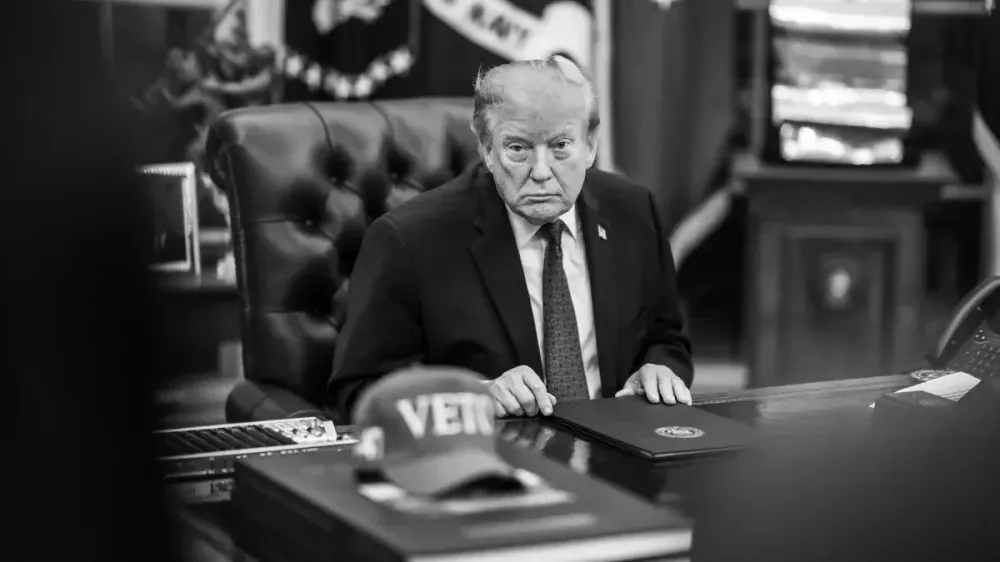
A leadership change after the election
Miller, 41, will move up from deputy chief of staff to replace Susie Wiles, the first woman to hold the top White House staff position. Trump removed Wiles on Friday after she submitted her resignation Thursday night, according to the accounts from SinEmbargo, CNBC and AFP. Miller is scheduled to take over Monday, November 9.
The change followed Trump's repeated assurances before the election that there was "zero chance" he would replace Wiles, AFP reported. Wiles had also recently announced that she had received the all-clear from breast cancer; she disclosed her diagnosis in March 2026, according to AFP and AP.
The November 3 midterms gave Democrats wide majorities in both chambers of Congress, according to The New Yorker. AP reported that they flipped at least seven Senate seats: Kansas, Iowa, Texas, Ohio, Maine, North Carolina and South Carolina. Kansas had not elected a Democratic senator in nearly a century.
Democratic leaders condemned Miller's selection. Senate Minority Leader Chuck Schumer said Trump "learned nothing from his historic defeat" and described Miller as "the architect of the most barbaric, inhumane policies of this administration." House Minority Leader Hakeem Jeffries called him "a dangerous xenophobe and reckless extremist."
Miller's influence on immigration and military action
SinEmbargo describes Miller as the senior adviser who pressed hardest for aggressive use of executive authority after Trump returned to office. The New Yorker credits him with shaping the administration's immigration agenda, citing violent ICE operations, an order seeking to end birthright citizenship, the dismantling of legal immigration pathways, detention of tens of thousands of people without criminal records and disregard for court orders.
Miller stated his position last December: "We need a moratorium on immigration from Third World countries until we can heal as a nation."
His influence extends beyond immigration. The New York Times links him to increasingly hostile tactics used to capture immigrants nationwide and to the bombing of small boats in the Caribbean Sea and eastern Pacific Ocean, which Miller and Trump characterized as constituting a foreign invasion.
The New Yorker also traces the military strikes on alleged drug-trafficking boats to Miller. It notes that he has served as Trump's national security adviser and foreign policy chief, and that observers have likened his role in the administration to that of a prime minister.
Different approaches inside the White House
The Wall Street Journal portrays Miller, who has worked alongside Trump for more than a decade, as a politically adept supporter of governing without limits. In the newspaper's assessment, that approach energized Trump's MAGA supporters but met rejection from much of the electorate in the midterms. Wiles, by contrast, was regarded as a restraint on an occasionally impulsive president.
The Atlantic describes a similar difference: Wiles sought to ensure Trump had the information needed to understand a decision's risks and difficulties, while Miller encouraged him to press ahead.
One reported disagreement concerned efforts to make journalists identify government sources. According to The Atlantic, Trump has pressed the Justice Department to pursue criminal leak investigations on national security grounds. Three people familiar with the matter told the magazine that White House and Justice Department discussions had included possible arrests.
Two of those people said Wiles opposed that approach, while Miller supported it and argued that journalists would quickly disclose their sources. A Justice Department spokesperson responded that "this is absolutely false," without elaborating. The White House said unauthorized leaks "will NEVER be tolerated" and those responsible "must be held accountable."
Congressional scrutiny and further staff changes
The New York Times interpreted Miller's selection as evidence that Trump intends to maintain his approach during his final two years in office despite what the newspaper called his most resounding political defeat in half a century. Miller was already a focus for Democrats preparing to use their new congressional powers to constrain the administration.
The New Yorker cautioned that Democratic control of Congress would still leave Trump with substantial authority over immigration and foreign policy. It warned that Miller's promotion could make the administration's final phase more damaging and painful.
The White House transition also follows several departures from senior Justice Department posts since Election Day, CNBC reported. Those resigning include Harmeet Dhillon of the civil rights division; John Eisenberg, who led the national security division; and Jason Reding Quiñones, who oversaw conspiracy investigations involving Trump's political foes.
Further personnel changes may follow. In excerpts from a CBS News "60 Minutes" interview scheduled to air Sunday, November 8, Trump said he expected "a little bit" of additional staff turnover, according to AFP. He did not identify who might leave.