A broader rent cap
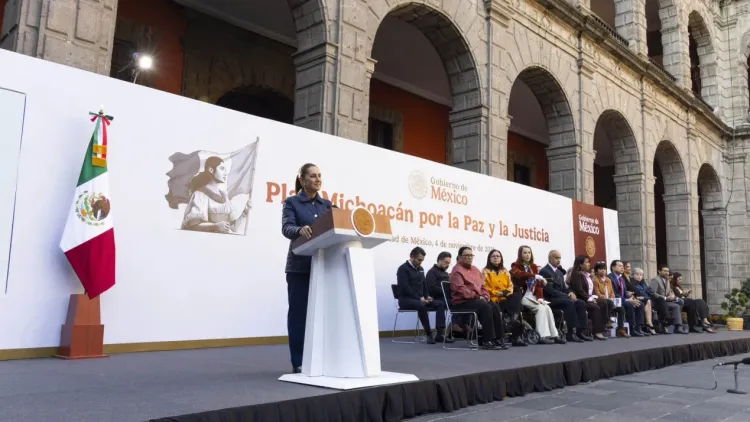
Brugada submitted the Law on Landlord-Tenant Relations and Fair, Reasonable, and Affordable Rents on October 14, 2026, while presenting her Second Government Report to the Mexico City Congress. Congress published the proposal in its Parliamentary Gazette that day.
The city's Civil Code has limited annual rent increases to the preceding year's inflation rate since 2024. The bill would extend that limit, measured by the National Institute of Statistics and Geography (INEGI), to new leases as well as renewals, including when a different tenant moves in. A landlord seeking an increase above the limit would need approval from the proposed Tenant Relations Defense Office and evidence that property improvements justify the higher rent.
If a landlord demanded an excessive increase at renewal, the tenant could instead pay the previous rent adjusted for INEGI inflation. That choice would extend the lease for one year on its original terms. Tenants could also seek repayment of excess rent, independently of any administrative penalty against the landlord.
Brugada has said the proposal neither freezes rents nor imposes a uniform price, according to Noticias C21 CDMX. But the existing inflation cap has not prevented broader market increases: El País México reported Inmuebles24 data showing rents rose 9.6% between July 2025 and July 2026. During the first half of 2026, rents increased 3.7%, compared with inflation of 3.42%.
Lease registration, deposits and tenant protections
Landlords would have 30 days after signing to enter each residential lease in a digital registry run by the Digital Agency for Public Innovation (ADIP). Required information would include the parties' identities, the property's location and floor area, rent, deposit, guarantees and lease term. A tenant could register the agreement if the landlord did not.
Residential leases would last at least one year. The bill would move that requirement into the new law and repeal Article 2309 of the Mexico City Civil Code. Each lease would specify a single rental price, with exceptions for maintenance fees or service charges agreed to beforehand.
A landlord could request only one form of security for a tenant's obligations, such as a deposit, guarantor or joint and several obligor. Brokerage charges, legal protection service fees, background checks and contract preparation costs could not be passed on to tenants. Deposits would be returned when the property is surrendered, except for outstanding utility or service charges or damage beyond ordinary wear and tear.
The proposal would also prohibit landlords from denying, restricting or attaching conditions to a lease because a prospective tenant lives with children, infants or pets. The prohibition would cover discrimination based on characteristics including ethnic origin, nationality, physical appearance, gender, age, sexual orientation and gender identity.
Enforcement and concerns about the rules
The Tenant Relations Defense Office would sit within the Social Attorney's Office, providing legal guidance and mediation while also inspecting properties and imposing administrative penalties. A separate Social Support Committee for Evictions, led by the Ministry of Government, would assess potential social or humanitarian risks and seek conciliation before evictions take place.
Landlords who exceeded the rent cap would face fines of 100 to 400 Units of Measurement and Adjustment (UMAs). Withholding the original lease from a tenant would carry a penalty of 25 to 50 UMAs; failing to register an agreement would cost one to three months of the agreed rent. Tenants could also be fined: 50 to 100 UMAs for using a home for non-residential purposes without consent, and 50 to 200 UMAs for unauthorized alterations.
Specialists interviewed by El País questioned parts of the approach. Daniela Sánchez, coordinator of Universidad Iberoamericana's Housing Rights Legal Clinic, considered the maximum rent-cap fine of about 47,000 pesos insufficiently significant. Valuation specialist Victor Pacheco warned that linking increases to inflation was risky because the measure could collapse during periods of high inflation.
White & Case identified a different set of concerns for residential developers and multifamily operators. Approval for above-inflation increases would depend on administrative judgment, potentially adding uncertainty and compliance costs. Keeping the cap attached to a property through tenant changes would also alter pricing strategies.
The firm said the registration deadline and penalties could increase the risk of inadvertent violations, especially across large rental portfolios. It also noted industry reports suggesting that timely registration might become a condition of a lease's validity, while stressing that this would need to be checked against the enacted text. Limits on security and the prohibition on passing certain costs to tenants could increase landlords' credit exposure.
The Real Estate Developers Association and the National Chamber of the Housing Development and Promotion Industry have warned that measures of this kind could deter private investment, slow construction and reduce rental supply.
Housing pressures and planned incentives
The initiative originated in the city government's Bando Uno strategy against gentrification, announced in July 2025 following protests over rising rents and displacement held between July 4 and 26, according to Proceso. Formal submission came nearly 15 months after the announcement.
City government data presented with the proposal put the number of residents in rented homes at about two million. Rental households increased 54% over the preceding 15 years, while rent frequently exceeded UN-Habitat's recommended threshold of 30% of household income. The government reported rent increases of up to 100% to 200% in central areas over the past decade.
To track housing conditions, the bill would establish a Public Housing Observatory. Noticias C21 CDMX reported that it would monitor land prices, changes in rent and territorial dynamics across all 16 boroughs, as well as assess how effectively the new rules work.
The initiative also seeks private investment to expand social rental housing alongside the city's Development Plan to 2030. That plan calls for 200,000 housing actions: 80,000 new homes and 120,000 improvements and expansions in working-class communities, according to Noticias C21 CDMX.
Brugada separately announced plans for incentives encouraging developers to build affordable homes for working families, along with construction of 2,000 rental units for young people. Transitional provisions in the bill would allow her to issue a general resolution offering benefits to landlords who sign multiyear leases or add affordable rental housing. The scope of those benefits remains undefined.
Committee review and the path to enactment
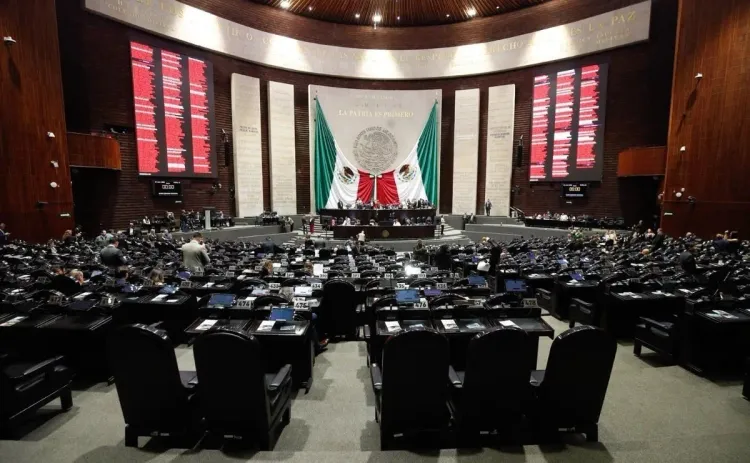
Congress referred the bill on October 20 to its Joint Committees on Housing and on the Administration of Justice and Prosecution. Their report is due December 23, 2026. A substantiated request, approved by the full Congress, could extend that deadline to March 1, 2027. The report would then go before the full Congress for debate and a vote.
An Open Parliament consultation began October 15 and was scheduled to run through October 29. It allowed the public to propose amendments that the reviewing committees must consider.
The proposal is proceeding separately from a constitutional amendment Brugada introduced on April 22, 2026, and Congress received the following day. That amendment seeks an express constitutional basis for rent limits and a tenant protection authority, but remains awaiting a committee report. White & Case warned that enacting the secondary law first could leave some provisions without that express basis and more vulnerable to legal challenges.
Morena, which holds a congressional majority, supports the bill and wants it approved during the current ordinary session. As of October 19, the PAN, PRI and Green Party (PVEM) groups had said they would oppose it unless its provisions changed. Movimiento Ciudadano also opposes the proposal, and the PAN has announced plans to offer amendments during committee review. Consultation and negotiations could change the text, while an extension of the review period could delay a vote.
If enacted, the law would become effective the day after publication in the Official Gazette of Mexico City. Brugada would then have 90 days to issue implementing regulations and establish the Tenant Relations Defense Office. ADIP would have the same period to put the digital lease registry into operation.