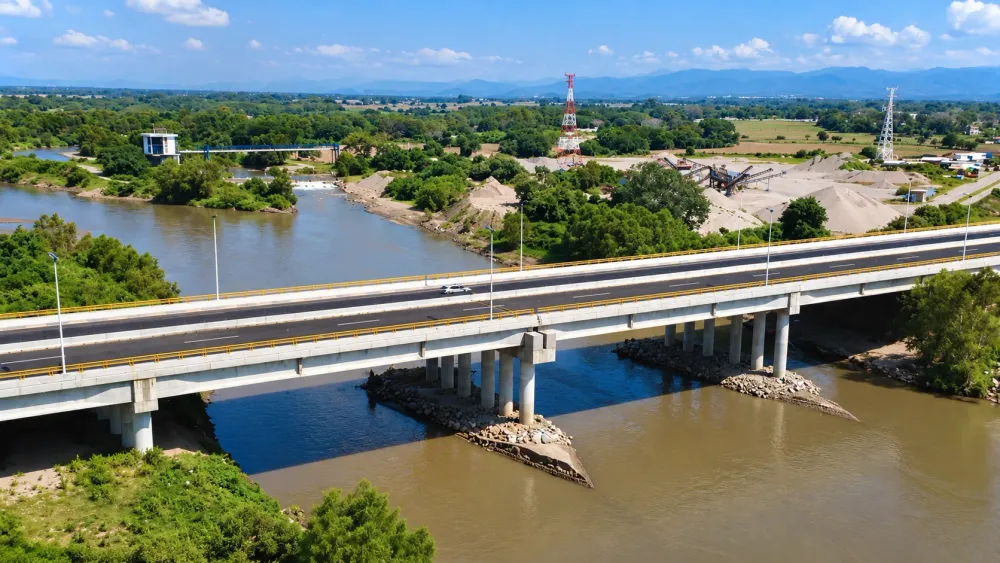
A new option for cross-state travel
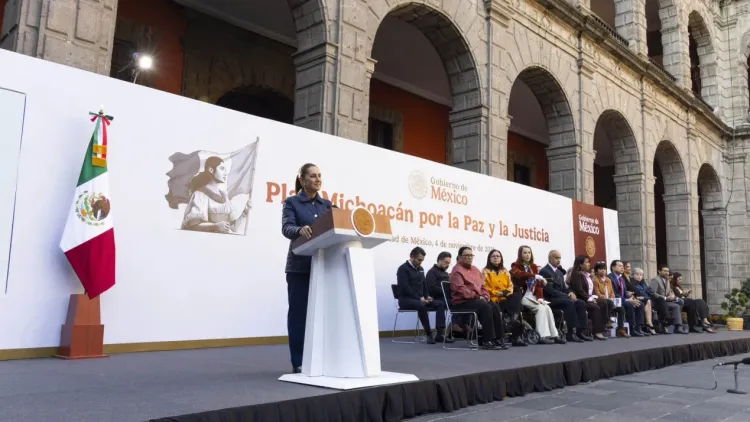
Sheinbaum presided remotely from the National Palace, with other authorities gathered at the bridge. La Crónica de Hoy reported that the crossing was previously known as Puente Federación; project documents also used the name Puente Río Ameca, or Ameca River Bridge.
The crossing joins Federación Boulevard across the state boundary, providing another route for people traveling for work, school, health care, shopping and tourism. The Secretariat of Infrastructure, Communications and Transportation (SICT) estimates that approximately 479,000 residents will benefit.
Officials intend the bridge to relieve Federal Highway 200, where SICT chief Jesús Antonio Esteva Medina said daily traffic reaches about 73,000 vehicles. Authorities estimate savings of up to 40 minutes on some journeys, not every trip. Results will depend on drivers' routes, their access points and how traffic shifts to the new crossing.
State governments emphasized the close employment, business and tourism ties between the two communities. Travel is frequent throughout the region, especially during holidays and other busy periods. The bridge's effect on congestion will need to be measured through actual journey times and traffic flows on Highway 200, with access operations, signage and maintenance also affecting its performance.
Construction costs and design
Authorities put bridge construction spending at 760 million pesos. The rest of the reported 963 million-peso investment covered right-of-way costs and complementary work.
The crossing has six traffic lanes, split equally between the two directions, and a bike path. The inauguration account described a structure more than 800 meters long within a road project of roughly two kilometers.
A more detailed breakdown appeared in SICT's September 7, 2026, construction-completion release, cited by Edificios de México. That release reported a total length of 2 kilometers, listing 800 meters for the structure and 1,220 meters for the approaches. Its structural inventory included 21 pile-column supports, 20 spans measuring 40 meters each, 126 piles with a diameter of 1.5 meters, and 160 girders.
The same release recorded 2,970 metric tons of structural steel and 18,500 cubic meters of concrete in the structure. The approaches used another 218 metric tons of steel and 12,200 cubic meters of concrete.
At the inauguration, Esteva Medina said the design addressed both seismic resistance and hydraulic capacity, including extreme events with return periods of up to 1,000 years. Foundations extend more than 15 meters deep, and the bridge has only three structural joints to improve its behavior during earthquakes. The foundation work was adapted to local terrain and river conditions.
Work finished ahead of the contract deadline
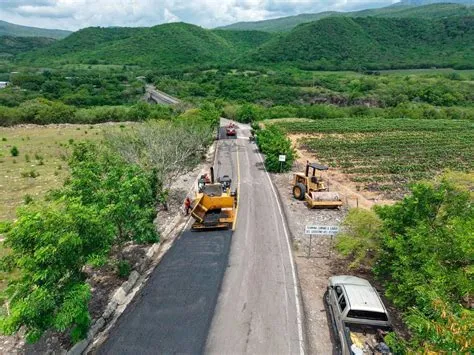
Construction started in July 2025 and generated approximately 2,790 jobs, according to SICT. Officials said at the inauguration that the work had finished four months before the contractual deadline.
Connecting the crossing to existing roads required additional work and coordination among the federal government and the governments of Jalisco and Nayarit.
SICT also identified the bridge as a priority within the National Highway Infrastructure Program 2025-2030, whose stated goals include social inclusion, sustainability and balanced territorial development.
A broader Puerto Vallarta-Bucerías plan
Jalisco Gov. Pablo Lemus placed the bridge within the wider Plan de Infraestructura de Conexión Puerto Vallarta-Bucerías. According to La Crónica de Hoy, that plan brings together state, municipal, federal and private projects with a combined investment exceeding 2 billion pesos.
The wider plan includes improvements to connections with the new Terminal 2 at Puerto Vallarta International Airport.