
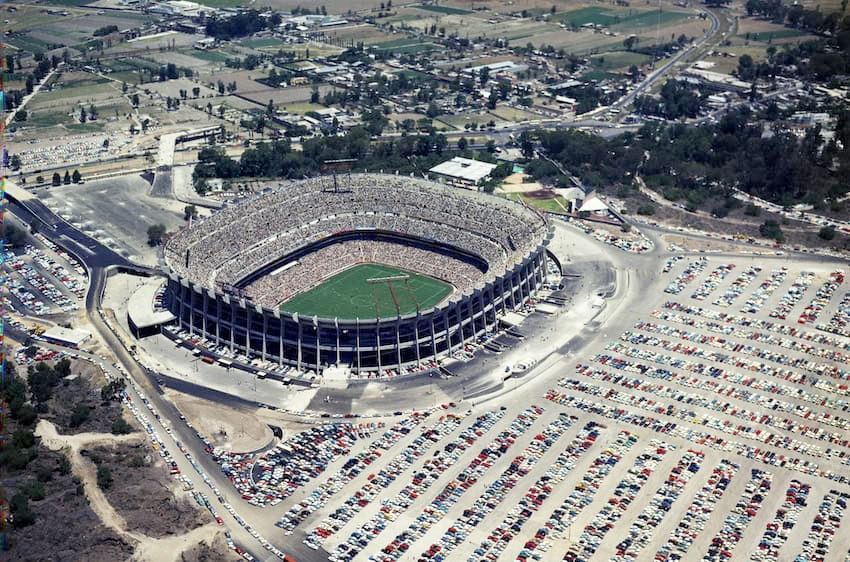
Google unveils interactive digital journey through Estadio Azteca's storied past
Google and the ICA Foundation historical archive have launched an interactive platform that takes users on a virtual tour through the six-decade history of Mexico's Estadio Azteca, now known as Estadio Banorte. The Google Earth-based project offers a digital exploration of the iconic stadium from its construction in the early 1960s to its current configuration for the 2026 FIFA Men's World Cup.
The virtual experience allows visitors to navigate the stands and other sections of the venue, which will become the first stadium in history to host matches in three World Cup tournaments: 1970, 1986, and 2026. During the upcoming tournament, it will be referred to as Mexico City Stadium.
Ambitious beginnings and engineering challenges
When Guillermo Canedo became Mexican Football Federation president in 1960, he outlined an ambitious vision.
"Mexico didn't want to just put on a World Cup — we wanted to put on the best World Cup the world had ever seen. And for that we needed the best stadium the world had ever seen."
Construction began in 1961 in Santa Úrsula, 16 kilometers south of Mexico City's center, on the volcanic lava fields of the Pedregal de San Ángel, then largely undeveloped terrain. The stadium was designed by architects Pedro Ramírez Vázquez and Rafael Mijares Alcérreca, whose proposal prevailed over competing designs from renowned architects Félix Candela and Enrique de la Mora.
The project's initial budget of 95 million pesos (approximately $7.6 million in 1961, equivalent to roughly $86 million today) proved insufficient. The final construction cost reached 260 million pesos as the team confronted unexpected geological obstacles.
The site's extremely hard volcanic rock presented the primary challenge. Ramírez Vázquez assembled a workforce of 10 architects, 17 technicians, 35 engineers, and 800 laborers to establish a viable foundation. The team removed 180 million kilograms of rock from 64,000 square meters of land, a process that consumed nearly one year and required extensive use of explosives.
The stadium officially opened on May 29, 1966, with a friendly match between Club América and Italian side Torino F.C. before approximately 105,000 spectators. At its inauguration, the venue's capacity of 105,000 made it the world's largest football stadium, later expanding to 115,000 at its peak before the 1986 World Cup. The stadium sits at an elevation of 2,200 meters (7,200 feet) above sea level, an altitude that affects player performance and ball dynamics during matches.
Historic moments documented
The Google platform chronicles several defining moments in sporting history that unfolded at the Azteca. These include the "Game of the Century," the legendary 1970 World Cup semifinal between Italy and West Germany, and the famous match between Mexico and Denmark at the unofficial 1971 Women's World Cup.
That September 5, 1971 final drew 110,000 spectators as Denmark defeated Mexico 3-0, establishing an attendance record that remains the most-attended women's sporting event on record as of 2024. The platform also features Diego Maradona's iconic "Hand of God" goal against England in the 1986 World Cup quarterfinal.
The stadium's football attendance record stands at 119,853 spectators, set during a Mexico versus Brazil match on July 7, 1968. Its all-time attendance record of 132,247 was established during a boxing match between Julio César Chávez and Greg Haugen on February 20, 1993.
Modern transformation
The venue underwent a brief renaming to Estadio Guillermo Cañedo from 1997 to 1998 before reverting to Estadio Azteca. In March 2025, it was renamed Estadio Banorte as part of a financing arrangement worth 2.1 billion pesos ($105-113 million) to fund renovations for the 2026 World Cup.
Following these renovations, the stadium's capacity is 87,523 seats, making it the largest stadium in Latin America and the eighth-largest association football stadium worldwide. For the 2026 World Cup, FIFA's tournament configuration lists the capacity at 72,766.
"There's just something very special about the Azteca. You need to be inside it, to feel it to understand. It's unique."Brazilian football legend Pelé once observed. The new Google platform now offers that experience in digital form, preserving the stadium's remarkable legacy for audiences worldwide.