Local appeal without complicated gameplay
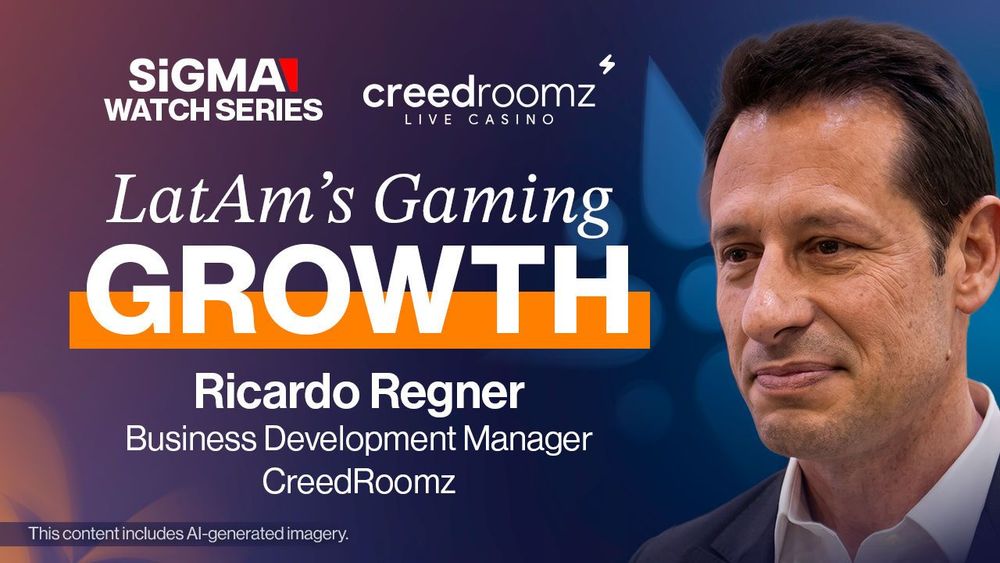
Regner pointed to the development of Mexico and Argentina, together with regulatory progress elsewhere, as reasons for Latin America's growing role in the global gaming industry. "We believe that, with the evolution and growing maturity of the Mexican and Argentine markets, we have a great opportunity for growth," he said.
For suppliers, he sees football and popular culture as ways to make games more relevant to the region's audiences. CreedRoomz's agreements involving Diego Maradona and Ronaldinho put familiar personalities at the center of that approach.
"We believe strategic agreements with football legends such as Maradona or Ronaldinho are key, as players begin to experience something that brings them much closer to the game," Regner said.
He argued that locally relevant themes should not come at the expense of straightforward play. "Players are not interested in memorising very complicated rule manuals," he said. "We therefore try to keep the basic game accessible to all players." CreedRoomz instead adds interaction through bonus rounds, cinematic sequences, multipliers and free games, giving players more ways to engage with a title's themes and personalities.
Football partnerships reach the studio
Maradona Run, which CreedRoomz launched in June 2026, illustrates that combination of familiar mechanics and football branding. The live game show uses officially licensed Maradona rights while retaining the supplier's existing game-show mechanics, according to LiveDealers.com.
Its redesigned visuals draw on football and World Cup imagery, including a 3D animated caricature of Maradona wearing his number 10 shirt. An endless-runner feature serves as the bonus round. CreedRoomz says the maximum potential payout is up to 10,000 times the original wager.
The company also announced its collaboration with Ronaldinho Gaúcho in June 2026. The agreement was formally introduced in Yerevan, where the Brazilian football legend visited CreedRoomz's headquarters and production facilities, toured its studios and participated in filming to incorporate his likeness into live gaming products.
The SiGMA North America Market Report provides broader context for this strategy: it found that a strong sports culture, smartphone penetration and digital adoption can help increase participation and monetization in regulated markets.
Operators want reliable, customizable launches
When choosing casino technology partners, operators put technical stability and speed to market first, Regner said. "They want to enter the market quickly with new solutions," he said.
Customization is another requirement, with operators seeking environments suited to their brands and audiences. Regner cited CreedRoomz's Virtual Studio and Chroma Key offerings as tools for creating customized online casinos and running dedicated tables.
Mexico's scale meets a higher tax burden
Mexico shows both the commercial scale of regulated gaming and the effects of policy changes. Using Blask data for July 2025 through June 2026, the SiGMA report ranked the country as North America's third-largest iGaming market. Its Blask Index measure of user interest peaked at about 9.49 million in December 2025, when estimated monthly revenue was $227.1 million.
Separately, Blask put Mexico's average estimated quarterly iGaming revenue for Q1 2026 at about $526.2 million, with an estimated range of $385.2 million to $949.2 million. The estimate represented 23.7% year-over-year growth and placed Mexico first among Latin America's regulated iGaming markets by revenue.
Operators also faced a larger federal tax bill from January 1, 2026. Mexico's 2026 Fiscal Package increased the IEPS gambling excise tax from 30% to 50%. Because the tax applies to revenues, it leaves operators significantly less money for player acquisition, bonuses and promotions, according to reporting by Yogonet International and Blask.
The package also required every platform to register with tax authorities and withhold applicable taxes in real time. Mexico's tax authority, SAT, gained access to real-time transaction data.
Blask data reported in April 2026 attributed a sharp demand decline to the IEPS increase. During January and February, Mexico's aggregated iGaming demand index fell 35% from its December 2025 peak, its steepest recorded drop. Local licensed brands lost 34% of their Blask Index, compared with less than 7% for international brands. A 4% recovery followed in March, which Blask co-founder Dmitriy Belianin called "a pause, not a pivot".
Mexican law reform remains pending
Mexico's legal framework still rests on the Federal Law of Games and Raffles, enacted in 1947. Implementing regulations followed in 2004 and have been amended three times, most recently in November 2023.
At SiGMA North America 2026, AIEJA industry association president Dr. Miguel Angel Ochoa Sanchez told SiGMA News that the law was "obsolete". He said five government working groups had prepared a draft legislative project since December 2024. That work is complete, but government action is still pending.
A separate proposal came from Congressman Ricardo Mejía Berdeja in October 2025. His proposed Federal Gaming Law would replace the 1947 legislation. Blask says the bill would establish a National Institute of Games and Sweepstakes, add responsible gambling tools and set a minimum age of 21. There is no confirmed timetable for passage.
Brazil underscores differences across the region
Brazil has moved in a different direction. Published on September 25, 2026, Provisional Measure No. 1,394/2026 prohibits operating, offering, intermediating or advertising fixed-odds betting nationwide. It extinguishes all federal, state and district authorizations within 30 days and required licensed operators to take their websites and apps offline starting October 6.
The measure remains provisional, subject to congressional review and pending constitutional challenges before the Supreme Federal Court. Congress must deliberate by November 23, 2026, with an extension possible to a total of 120 days.
These markets require distinct assessments. The SiGMA report found that regulation can support monetization and long-term investment, while demand may run ahead of legislation where frameworks are limited or still developing. Differences in licensing, taxes and consumer behavior also prevent Latin America from being treated as one uniform market.
SiGMA World scheduled for November
SiGMA World is scheduled for November 2-5, 2026, in Rome, with 30,000 delegates, more than 1,200 sponsors and exhibitors, and more than 550 expert speakers.