Mexico's Molten Momentum & Mittal's Mining Mandate
ArcelorMittal, the world's second-largest steel producer with annual output of approximately 58-60 million metric tons, intends to raise its Mexican steel production capacity from 3.7 million metric tons to nearly 5.3 million metric tons annually by 2029. The expansion represents a 43% increase and will be achieved primarily through equipment modernization and raw material investment rather than greenfield construction.
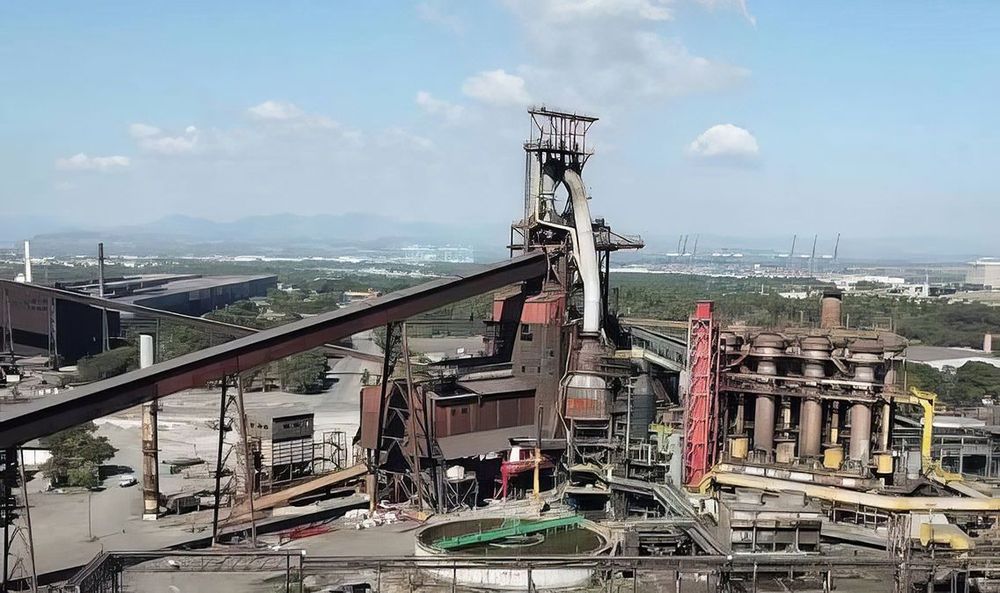
Victor Cairo, chief executive of ArcelorMittal Mexico, outlined the plan in remarks reported by Kallanish. The strategy centers on debottlenecking existing facilities at the Lázaro Cárdenas complex in Michoacán state, a coastal industrial site originally established in 1976 as the state-owned Siderúrgica Lázaro Cárdenas-Las Truchas (SICARTSA). The facility was privatized in 1991 when Grupo Villacero acquired it, before ArcelorMittal's eventual takeover.
The expansion targets a significant market opportunity. Mexico consumes approximately 28-30 million metric tons of finished steel annually while producing only 18-20 million metric tons domestically, creating an import dependency of 8-10 million metric tons per year. ArcelorMittal's additional capacity aims to displace foreign tonnage rather than compete against domestic producers, a commercially attractive proposition given the structural supply gap.
Organizational Restructuring Precedes Capacity Growth
Before expanding capacity, ArcelorMittal has reorganized its Mexican operations into three distinct divisions: ore mining, long products, and flat products. Each division now carries separate profit responsibility, capital allocation, and performance accountability.
"We are implementing a number of changes within the company, with a view to focusing more attention on individual plants," Cairo explained.
The restructuring addresses a fundamental operational challenge: mining, bar mills, and coil lines operate under fundamentally different cost structures, capital cycles, and customer requirements. Managing them through consolidated reporting can obscure underperformance in specific segments.
The reorganization establishes clear capacity targets for each division: 3.8 million metric tons of crude steel, 2.5 million metric tons of hot-rolled coil, and 1.5 million metric tons of long products once announced projects conclude. Publishing such granular targets creates external accountability that aggregate figures typically avoid.
Steelmaking Modernization Focuses on Continuous Casting
Within the steelmaking segment, planned work encompasses modernization of continuous casting lines and installation of new overhead cranes. These measures are expected to lift crude steel production capacity to 3.8 million metric tons while raising hot-rolled coil output to 2.5 million metric tons.
Continuous casting converts liquid steel into semi-finished slabs or billets. Throughput depends on casting speed, sequence length, mold performance, and automation reliability. Older casters frequently operate below theoretical capability due to metallurgical constraints that force conservative speeds or excessive turnaround time between sequences.
Modernization addresses these constraints through upgraded mold oscillation, improved secondary cooling, electromagnetic stirring, and advanced level control systems. These improvements permit faster, steadier casting while reducing internal defects that generate downgrades and consume capacity through reprocessing.
Overhead cranes, though seemingly mundane, frequently constitute binding constraints in melt shops. Every ladle of liquid steel travels by crane from furnace to secondary metallurgy to casting. Insufficient crane capability prevents exploiting faster casting because ladles queue and temperatures drop. Industry benchmarks indicate that debottlenecking investments like these deliver capacity at costs far below greenfield construction, which typically ranges from $1,000 to $1,500 per metric ton of annual capacity in recent global projects.
Mining Investment Secures Raw Material Supply
ArcelorMittal is constructing a new processing plant at the Las Truchas mining complex valued at $180 million, scheduled for mid-2027 commissioning. The facility will strengthen iron ore supply while supporting increased long products output.
Las Truchas provides captive magnetite-bearing ore processed into concentrate and pellets. Owning the mine insulates steelmaking margins from iron ore price volatility while capturing mining profits that would otherwise flow to third-party suppliers.
The new processing plant will improve both ore quantity and quality through enhanced beneficiation. Higher concentrate grade reduces blast furnace slag volume, lowers flux and coke consumption per ton of hot metal, and decreases carbon dioxide intensity as a commercial by-product rather than through dedicated climate expenditure.
The mid-2027 timing precedes the 2029 capacity target by two years, reflecting deliberate sequencing: raw material capability must arrive before expanded steelmaking can consume it. The $180 million commitment signals confidence in reserve adequacy and long-term Mexican demand.
Long Products Division Gains Regional Advantage
Strengthened ore supply will help raise annual output in the long products division by 500,000 metric tons to 1.5 million metric tons, a 50% increase. Long products include reinforcing bar, wire rod, merchant bars, and sections serving construction and industrial manufacturing.
These products exhibit high freight sensitivity due to relatively low value per ton, meaning transport costs consume margin rapidly over distance. Producers consequently serve regional rather than national markets, competing primarily against the nearest alternative supplier. This structure grants incumbents durable local advantages provided cost competitiveness holds.
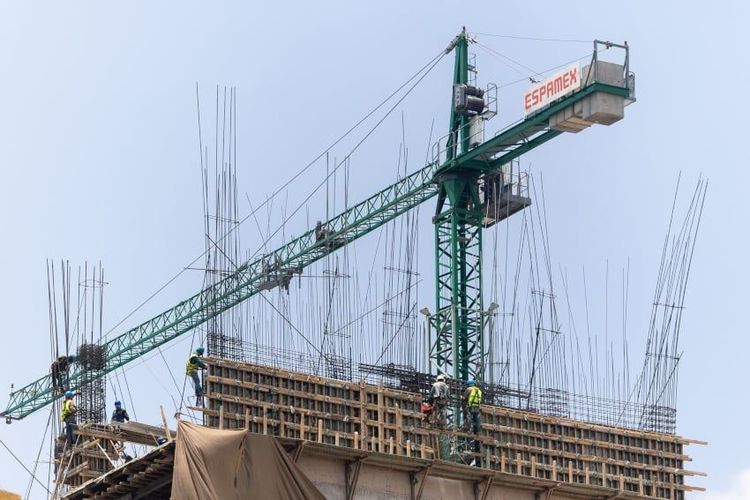
Mexican construction activity encompasses residential development, commercial property, industrial facilities serving relocated manufacturing, and substantial public infrastructure projects. Each category consumes reinforcing steel intensively, as Mexican building practices rely heavily on reinforced concrete due to seismic design requirements.
Industrial construction driven by nearshoring adds further volume. Mexico produced approximately 5.0-5.5 million vehicles in 2024, ranking as the world's sixth or seventh largest vehicle producer, with major assembly operations by General Motors, Ford, Stellantis, Volkswagen, Nissan, Toyota, Honda, BMW, Mercedes-Benz, Audi, and Mazda. Factory construction for these operations consumes structural sections, rebar, and wire products before any production equipment arrives.
The USMCA trade agreement reinforces this logic through rules of origin requiring that 70% of steel and aluminum used in automotive production originate from North America to qualify for preferential tariff treatment, creating structural preference for regionally produced steel over imported alternatives.
Trade Policy Uncertainty Coexists with Industrial Integration
Cairo acknowledged that closer industrial integration with the United States continues generating opportunities despite uncertainty surrounding Section 232 trade restrictions. These measures, introduced in March 2018 with 25% tariffs on steel imports justified on national security grounds, were significantly tightened in 2025 under the Trump administration with elevated tariff rates and expanded coverage of steel-containing derivative products.
Mexican producers occupy an awkward position within this framework. While Mexico participates in USMCA, Section 232 measures applied on national security grounds have repeatedly cut across that integration, generating disputes and periodic threats of escalation. Policy volatility itself imposes cost by complicating investment appraisal across asset lifetimes measured in decades.
Yet the underlying industrial logic remains compelling. Manufacturing serving North American consumption through supply chains developed over three decades continues expanding, particularly in automotive. Supplying this demand domestically shortens supply chains, reduces inventory requirements, and potentially mitigates exposure to cross-border measures, since steel consumed in Mexico by Mexican manufacturers avoids the border entirely.
The strategy hedges against multiple outcomes: if U.S. market access remains constrained, expanded Mexican capacity serves growing domestic demand while displacing imports. If access improves, the same capacity gains an additional outlet. Either scenario supports the investment case.
Brazilian Parallel Reveals Consistent Regional Strategy
Mexico represents one element in a broader Latin American programme. ArcelorMittal expects to reach a final investment decision before year-end regarding expansion of its Pecém facility in northeastern Brazil, carrying estimated cost of 5 billion reais (approximately $961 million) for construction of a hot-rolled coil production line rated near 1.5 million metric tons annually.
Pecém originated as a slab-producing operation serving export markets. Adding a hot strip mill will permit locally produced slab to be rolled locally and sold to Brazilian manufacturers, capturing conversion margin domestically instead of surrendering it to foreign rollers.
Strategic symmetry with Mexico is striking. Both projects extend existing assets rather than constructing new sites. Both prioritize downstream value capture over raw tonnage. Both target domestic markets exhibiting import dependence in flat products. Both leverage coastal locations offering logistical flexibility. Both proceed through disciplined capital allocation emphasizing returns on brownfield expansion rather than ambitious greenfield commitments carrying longer payback and higher execution risk.
Supply Gap Created by Domestic Producer's Collapse
Market conditions supporting the expansion include significant supply disruption. Altos Hornos de México (AHMSA) filed for bankruptcy protection in 2023 and suspended operations at its Monclova facility, which had production capacity of approximately 3.5-4.0 million metric tons annually. This removal of considerable domestic capability deepened import dependence precisely as demand expanded, creating commercial space that new investment seeks to occupy.
Mexican authorities have applied duties and tariff measures addressing imports judged unfairly priced or originating from jurisdictions without trade agreements, reflecting both domestic industry advocacy and coordination pressure from U.S. officials concerned about Mexico functioning as a conduit for third-country steel entering the integrated North American market.
Longer-term decarbonization considerations also factor into the investment. The European Union's Carbon Border Adjustment Mechanism entered its transitional reporting phase in October 2023, with the definitive regime including financial charges scheduled to begin in January 2026. This will affect steel imports into the EU based on carbon intensity. Improving ore grade, raising casting yield, and enhancing energy efficiency each reduce that intensity incrementally, delivering modest environmental benefit alongside commercial purpose.
Against this backdrop, raising Mexican capacity to nearly 5.3 million metric tons by 2029 represents measured capture of demand already present domestically, currently satisfied by imported metal that domestic capability, once debottlenecked and properly supplied with ore, stands positioned to replace.