Connecting research with industry
Rocket Revolution was part of Mexico's 2026 World Space Week, held October 4-10. According to El Economista, the initiative falls under Gov. Julio Menchaca Salazar's strategy to bring scientific expertise, workforce training and technological innovation together to broaden Hidalgo's economic and professional opportunities.
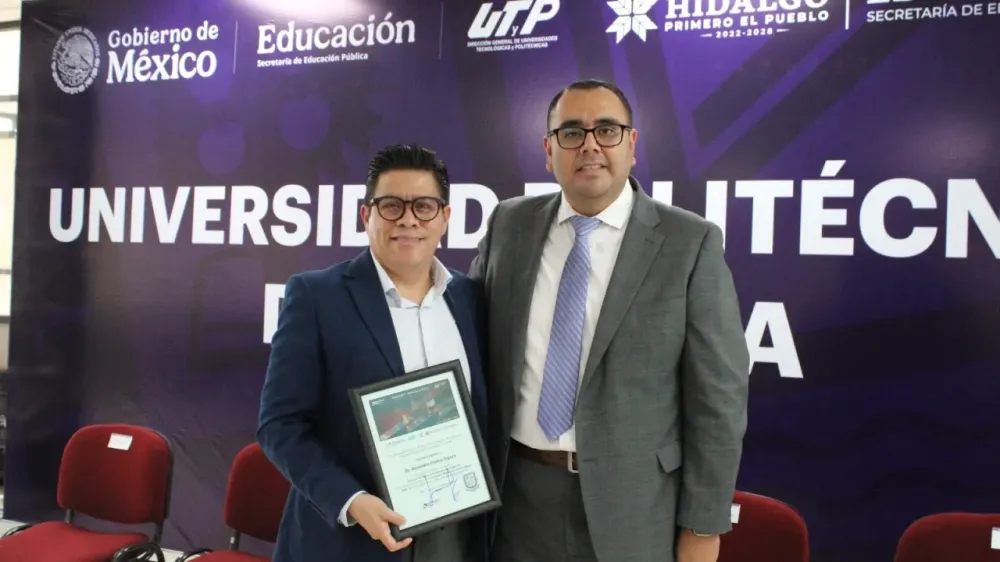
At the event, Alejandro Franco Segura, coordinator general of Hidalgo's District of Education, Science, Technology and Innovation (DESCTI), outlined the assets the state could offer aerospace companies: its location, logistics infrastructure and research capabilities. He said participation in aerospace supply chains would require linking those assets with specialized talent and technology development.
The discussions also examined research and development work at UPP that could support future aerospace projects. Turning that capacity into commercial products and manufacturing opportunities will require stronger ties between universities and industry. Through DESCTI, state officials are seeking better coordination among educational institutions, government agencies and businesses to develop the advanced engineering, specialized manufacturing and ongoing innovation the sector requires.
AEXA Aerospace President Fernando de la Peña Llaca joined remotely for a presentation on aerospace projects involving NASA. A native of Tulancingo, Hidalgo, he discussed his work in space technology and holographic communication solutions. His participation illustrated possible paths for local talent through research, education and entrepreneurship.
Engineering, technology development, specialized components and research partnerships are among the opportunities Hidalgo could pursue. Those prospects depend on how its capabilities develop and whether they meet companies' needs; the UPP discussions remain an early step in identifying partners rather than a confirmed industrial expansion.
Regional groundwork
Hidalgo has already joined neighboring jurisdictions in a regional aerospace effort. In February 2024, economic development authorities from Hidalgo, Mexico City and the State of Mexico signed an agreement at Felipe Ángeles International Airport (AIFA) to establish the Air Space Cluster, also known as the Metropolitan Aerospace Cluster. The agreement sought to support central Mexico's aerospace industry through specialized industrial parks, technical training and closer academic-industry collaboration, Mexico Business News reported.
In June 2026, Hidalgo inaugurated the First International Congress on Aerospace Innovation. Participants included international delegations, NASA's Space Center Houston, the Embassy of the Russian Federation and scientists from Samara State University. Executives from SAFRAN Mexico Group and the Mexican Federation of the Aerospace Industry (FEMIA) also attended, alongside representatives of the Metropolitan Aerospace Cluster.
Mexico's aerospace market
Hidalgo is pursuing opportunities in a national sector that exported roughly US$11 billion in aerospace goods in 2025. That record placed Mexico fourth among the world's aerospace exporters, according to Economy Ministry data cited by The Rio Times. About 386 companies operate in the sector across roughly 19 states, while the United States receives around 80% of Mexico's aeronautical component exports.
The same report cited FEMIA's forecast of about 7% sector growth in 2026, compared with close to 10% in 2025. The federation attributed the expected slowdown to the USMCA (T-MEC) trade review and tariffs on materials such as aluminum.
A role at FAMEX 2027
Hidalgo also has a confirmed role at an upcoming aerospace gathering. During the Tulum Air Show in April 2026, the state was named guest of honor for Feria Aeroespacial México (FAMEX) 2027. The seventh edition will take place at Base Aérea Militar No. 1 Santa Lucía, with Italy serving as the international partner.