What brings productions back
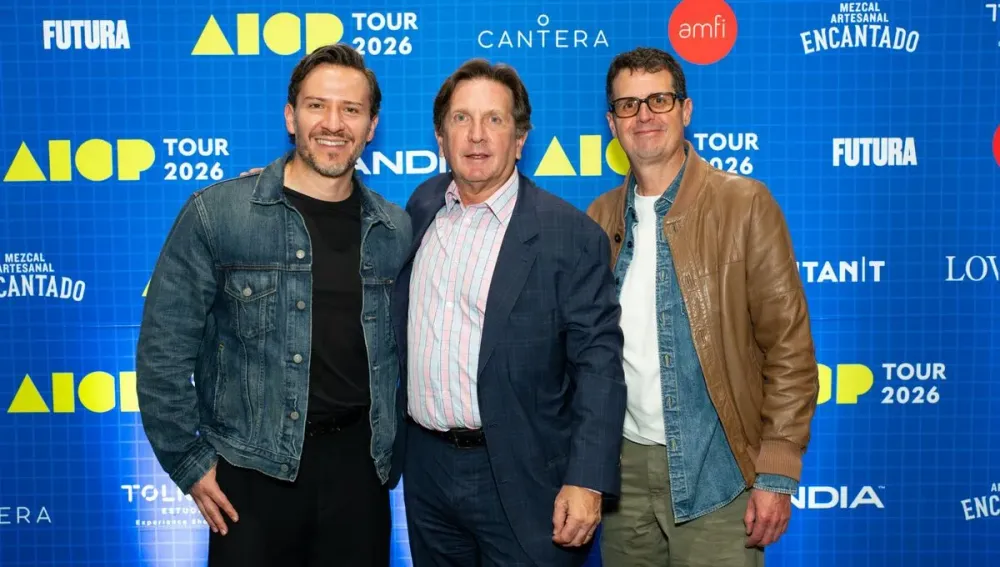
The fireside chat took place last week during events surrounding the AICP Awards, as Mexico begins offering its first federal production incentive and the United States considers a federal proposal. The Lift used the gathering to connect international producers with people working in Mexico's production industry and to examine what turns an initial shoot into repeat business.
Participants included RadicalMedia president and co-founder Frank Scherma; Katherine Oliver, a principal at Bloomberg Associates and former New York City film commissioner; Sergio Fuentes, creative industries director at Mexico's Ministry of Economy; and Mexico City film commissioner Guillermo Saldaña Puente.
Oliver, who helped develop New York's production infrastructure and incentive programs, said a financial offer cannot substitute for the conditions crews encounter on the ground. Beyond the credit, producers assess suitable and accessible locations, trained workers and whether a city welcomes filming.
"The tax credits are really important, but the real important piece is the ecosystem, the community, and the relationships that you have," Oliver said. "There's always going to be another territory that has a better tax credit."
Scherma emphasized the practical value of dependable local partners. "Relationships are everything to my business," he said. "When we have issues, we have people that we trust." For an international producer, that confidence extends to equipment, casting and shoot logistics, as well as the depth of the crew base. A destination needs enough experienced people to handle simultaneous productions, not just a few strong teams.
From permits to usable locations
Commercial shoots can develop quickly, making approval times a factor in whether a location is workable. Saldaña Puente said Mexico City's Film Commission can turn around permits in 12 to 24 hours for productions needing a fast response; the average process takes about 36 hours.
Scherma also pointed to diverse casting options and locations that can represent other markets. Mexico City can double for New York, Los Angeles, Paris and other major cities, while Mexico offers deserts, jungles, coastlines and mountains. Accessing those settings, however, requires local knowledge and coordination.
Gabriel Stavenhagen, The Lift's managing partner and executive producer, described that work through the problems a production might need to solve: locating a particular cave, arranging to paint trucks and send them across a desert location, or replacing a street when an unexpected demonstration prevents filming.
"The Lift's role is to make creative ideas possible," Stavenhagen said. "People return to places where they've had good times, where they trust the people and where they feel creatively stimulated."
Luis Garcia, CEO of The Lift affiliate Filmland Hunters, said scouting involves more than matching a setting to a director's vision. His team works with residents to understand their schedules and rules and plans for what a crew will need. He described making a location genuinely available, then returning it with care, as a way to preserve access for future shoots.
"That's how we make Mexico a film-friendly country: film shoot after film shoot, relationship after relationship," Garcia said.
Where advertising fits in the incentive debate
The discussion also addressed a gap between the volume of commercial work and its treatment in incentive policy. Saldaña Puente put advertising's share of Mexico City filming permits at around 60%, compared with roughly 30% to 35% for television and 5% to 10% for features. Commercial work employs crews, equipment suppliers, studios and craftspeople who also serve film and television, sustaining activity between larger projects.
Advertising is not covered by Mexico's federal incentive, though it is included in the Morelos program. Scherma argued that commercials have likewise received insufficient attention in the US federal incentive debate and said Mexico City could distinguish itself by recognizing their contribution alongside film and television.
Mexico enacted its national film and audiovisual incentive in 2026. According to Entertainment Partners' Spring 2026 roundup, it offers a transferable income tax credit worth up to 30% of qualifying spending in Mexico. Covered work spans development through final delivery, including pre-production, production, post-production, animation and VFX. The limits are MXN 40 million per production or beneficiary and MXN 400 million annually, with availability scheduled through September 30, 2030.
Mexican residents and foreign producers may apply, but projects must be produced through a Mexican production company. Technical Committee approval is required, and at least 70% of suppliers must be national. Minimum spending in Mexico is MXN 40 million for narrative or animated features and series episodes, MXN 20 million for documentaries, and MXN 5 million for animation, VFX and post-production work.
In the United States, the proposed Motion Picture, Television, and Entertainment Revitalization Act, H.R. 10582 and S. 5552, was introduced in late September 2026, according to the AICP. The current draft explicitly leaves out commercial advertising productions, an exclusion the association is campaigning to change.
The US proposal would provide a base federal credit of 20% on qualifying domestic production labor expenses. Stackable increases could bring the rate to 30% for independent productions, multi-state shoots or investments in rural and disaster-declared areas. Eligibility would require at least $1 million in spending and at least 75% of shooting days in the United States.
Other incentive measures include advertising. Entertainment Partners reports that California's proposed AB 2403 would introduce a qualified commercial production credit for taxable years beginning on or after January 1, 2027. The proposed rates are 20% for qualified commercial production costs within the Los Angeles zone and 30% for qualified commercials filmed outside it, with a proposed annual allocation cap of $15 million.
Serbia's revised rules, effective March 21, 2026, provide a 20% cash rebate for TV commercials. They also offer 25% on qualifying Serbian spending for features, television series, documentaries, animation and post-production, and 30% for projects spending at least €5 million in Serbia.
Keeping communities on board
Oliver described benefits from filming that can extend beyond a production's immediate spending. She cited "Sex and the City" as an example of television shaping New York's image abroad and encouraging viewers to visit, while the city's support helped productions reach the locations they needed.
She also recalled helping persuade Mexico City authorities to allow "Spectre" to close the Zócalo plaza for its opening sequence, which recreated a Day of the Dead parade. Officials initially resisted the closure. The resulting scene helped inspire the annual parade now held in the city, illustrating her view that screen production can support tourism and contribute to a place's cultural identity.
That relationship can also deteriorate. Scherma said years of intensive street filming in Los Angeles had prompted resistance from residents tired of disruption in their neighborhoods. The discussion emphasized the need to care for community relationships and make production's economic contribution understood outside the industry.
Developing the capacity for more work
For Mexico City, attracting international projects is only part of the task. Saldaña Puente described a strong production-services market but said the relatively small share of feature-film permits pointed to a need for greater investment in local creative development. The city has gathered audiovisual industry data since 2019, publishing an annual statistical yearbook to help producers understand the market and its economic performance.
Oliver drew on New York's experience to stress workforce investment. Its tax credit attracted more work than the existing workforce and film commission resources could initially support, leading to training programs at universities and high schools. Scherma similarly argued that expanding production requires deeper crews and the infrastructure to support them.
Stavenhagen said The Lift's purpose at AICP was to turn Mexico's rising international profile into relationships that lead to work, giving visiting producers a clearer understanding of the possibilities and the people who can help realize them.
"We want people to leave with a real sense of what's possible here and the relationships to come back and make something," he said. "The best outcome isn't just a good conversation. It's the next project that comes out of it."