Groups and suspects identified in the report
The state Secretariat of Security and Citizen Protection names the Jalisco New Generation Cartel (CJNG), the Sinaloa Cartel and Los Caborca, as well as smaller local organizations and cells. Its arrest records cover municipalities including San Miguel Soyaltepec, Teotitlán de Flores Magón, Santa María Xadani, Matías Romero and Juchitán de Zaragoza.
Men account for 85% of those arrested and women for 15%. Most of the people listed were between 15 and 30 years old. Some investigations also involve allegations against current or former security officers.
The organizations described in the report are linked to activities ranging from drug trafficking and fuel theft to intentional homicide, kidnapping, extortion and demands for protection payments. Extortion, protection rackets and homicide affect residents, merchants and economic activity in the communities involved.
Weapons, drugs and cash seized
Authorities confiscated handguns, AK-47 and AR-15 rifles, UZI submachine guns, magazines and ammunition. The inventory also includes bulletproof vests, radios, phones, drones, motorcycles and other vehicles, including larger units.
Crystal meth was the drug most frequently seized; authorities also recovered cocaine, heroin, crack and marijuana. In Santa María Mixtequilla, in the Isthmus of Tehuantepec, one operation yielded fentanyl, other substances, a rifle and equipment associated with criminal activity.
Cash seizures totaled 5,206,099 pesos. One of the largest came on May 27, 2025, when authorities in Oaxaca City arrested a man suspected of operating shell companies that issued fraudulent invoices.
Tuxtepec arrests and statewide searches
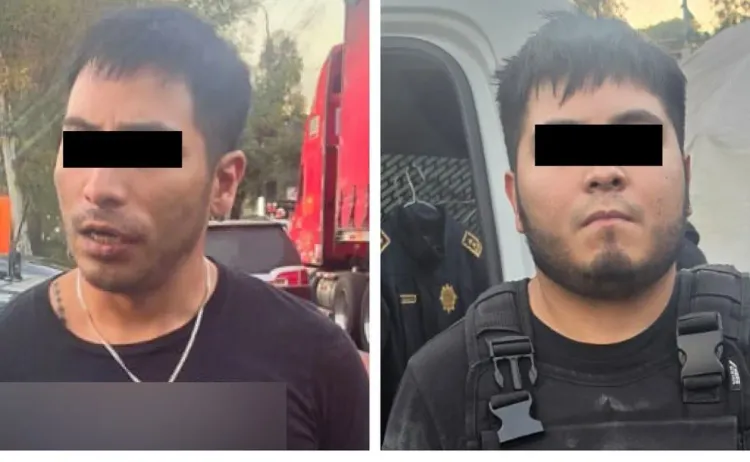
The report follows an Oct. 28 announcement by the Navy, the federal Secretariat of Security and Citizen Protection and the Attorney General's Office that Carlos "N" had been arrested in San Juan Bautista Tuxtepec. Known as "El Semáforo," "Semo" or "Señor de las Luces," he was identified by federal authorities as an alleged regional leader of a criminal group active in Boca del Río and San Andrés Tuxtla, Veracruz, and along the Oaxaca border.
Ana Gabriela "N," described as the group's alleged logistics operator, was arrested in the same operation. Authorities seized drugs, weapons, grenades, vehicles, motorcycles and all-terrain vehicles. The federal statement said the operation followed earlier arrests of suspected members in Veracruz and Oaxaca.
An August operation brought together the Navy, Oaxaca's prosecutor's office and the federal security secretariat to execute 21 search warrants across the state. Ten people were arrested, and four rifles and two handguns were seized. Investigators associated that case with alleged extortion, protection rackets and unlawful occupation of land.
Operation Sable and Los Cromos
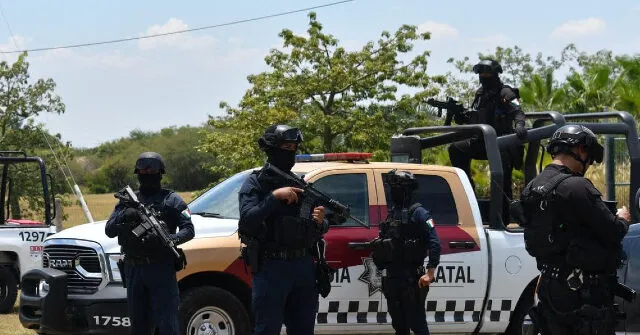
The enforcement effort includes Operation Sable, a joint state-federal campaign in the Isthmus of Tehuantepec. Chief prosecutor Bernardo Rodríguez Alamilla said it had yielded more than 250 arrests by late September 2026 after roughly 11 months of intelligence work that began in 2025. Participants include the army, navy, National Guard, federal security ministry and Oaxaca state police. That operation's tally is separate from the four-year count presented in the Nov. 1 report.
Among the groups targeted is Los Cromos. According to Oaxaca prosecutors and Mexican media, it started as a local organization and later allied with CJNG. Prosecutors accuse it of extortion, collecting protection payments, small-scale drug dealing, kidnapping and illegal weapons possession.
Prosecutors place the group's operations in seven municipalities: Juchitán, Tehuantepec, Salina Cruz, Ciudad Ixtepec, El Espinal, Magdalena Tequisistlán and Unión Hidalgo. Rodríguez Alamilla estimated that Los Cromos was connected to about 70% of the 957 intentional homicides recorded in the Isthmus over four years.
That homicide attribution is the prosecutor's estimate from open investigations, not a court finding. The published statements neither identified the exact beginning of the four-year period nor explained how investigators linked each killing to the group.
Iván "N," known as "El Cromo" and identified as the group's alleged leader, was arrested in Guadalajara on Oct. 14, 2026, as part of Operation Sable. Tribuna Sonora, cited by Cartel Insider Wire, reported that intelligence work had tracked him from Oaxaca and Chiapas. He faced multiple aggravated-homicide arrest warrants, and authorities had offered a reward of up to 2 million pesos for information leading to his capture.
Former mayor faces charges in Juchitán
Prosecutors also accuse Miguel Sánchez Altamirano, the former mayor of Juchitán de Zaragoza and a Morena party member, of providing Los Cromos with political and financial cover. He was arrested on Sept. 23, 2026.
Two days later, Oaxaca's state congress approved Governor Salomón Jara's request to dissolve Juchitán's town council by a unanimous 35-0 vote. A state-appointed commissioner now runs the town.
On Sept. 29, a judge ordered Sánchez Altamirano to stand trial on charges of aggravated extortion and crimes against state security and kept him in pretrial detention at the Altiplano maximum-security federal prison. The decision is not a verdict; he remains presumed innocent.
Separately, figures from the Executive Secretariat of the National Public Security System, cited by La Razón, show that recorded homicides in Juchitán increased from 46 in 2021 to 83 in 2025.
Other criminal groups and the extortion law
Rodríguez Alamilla has also identified threats from groups based in neighboring states: Los Rusos from Guerrero, Los Rojos from Puebla and CJNG cells moving into the Papaloapan Basin from Veracruz. He said they compete over retail drug sales, extortion and kidnapping. His office has identified 80 local criminal groups, with the most lethal based in the Isthmus of Tehuantepec.
Nationally, Mexico launched its National Strategy Against Extortion in July 2025 and published the General Law for the Prevention, Investigation, and Punishment of Crimes Related to Extortion in the Federal Official Gazette on Nov. 28, 2025. The Executive Secretariat of the National Public Security System recorded more than 83,000 extortion reports that year.
The law makes extortion an offense requiring mandatory pretrial detention, permits legal entities to be held liable and provides for prison sentences of up to 25 years.