Enrollment and early participation
Mayor Cecilia Patrón Laviada announced Comercio Seguro at her weekly press conference on November 17. The network focuses on the Historic Center, where municipal figures put the number of commercial establishments at more than 3,000 and daily foot traffic at about 350,000 people.
Businesses can sign up through their chamber or at police headquarters to receive access to a dedicated mobile app. Municipal officials said 54 restaurants affiliated with the National Chamber of the Restaurant and Seasoned Food Industry (CANIRAC) already had the program's official designation at its mid-November launch.
José Enrique Molina Casares, president of both the Mérida Chamber of Commerce (CANACO Servytur) and the Yucatán Business Coordinating Council (CCE), said the organizations had invited more than 800 Historic Center business owners and merchants to participate. He emphasized that joining is entirely voluntary.
Alerts, cameras and preventive services
Comercio Seguro has five components: an alert button connected directly to the Municipal Police's Centro de Control y Mando; regulated access to exterior surveillance footage; preventive training for employees; registration and supervision of police proximity patrols; and accredited businesses offering initial reception and guidance to women.
The camera component allows businesses to connect their own equipment to monitoring centers operated by the Municipal Police and the Secretariat of Public Security (SSP). Cameras must meet specified technical requirements. The arrangement is intended to strengthen cooperation between businesses and public security agencies.
Municipal authorities estimate that police can respond to a network alert in approximately five minutes. Patrón Laviada said the button is not a substitute for calling 911 and will supplement the ten existing Alerta Segura buttons at locations throughout the Historic Center.
Officials said they developed the program using a street-by-street census that documented downtown businesses and their existing security equipment. The network also uses QR codes to georeference establishments.
Crime figures and extortion prevention
At the November 18 meeting, Marsh Ibarra reported that no downtown extortion cases had been reported during the recent Buen Fin shopping event. He attributed that result to greater awareness of extortion schemes among merchants and residents, while calling for continued sharing of prevention advice with the commercial sector.
José Luis González Cabañas, deputy director of Social Crime Prevention and Citizen Participation, explained the operating guidelines. He also said security operations already in place downtown had reduced crime rates by 12%.
Separate statewide figures provide a broader view of extortion reports. According to En Cambio Diario, Coparmex's Security Monitor analyzed SESNSP data showing that Yucatán recorded five extortion victims from January through June 2026, compared with one in the same period of 2025—a 400% increase. Despite that rise, the state remained among those with the lowest absolute incidence.
The same analysis cited INEGI-based estimates that 97% to 98% of extortion cases go unreported. It also reported that more than 400 Mérida business owners received extortion calls in 2025, primarily owners of restaurants, bars, cantinas and beauty salons. At least 40 businesses paid, with payments averaging about 30,000 pesos.
Business groups propose closer ties with police
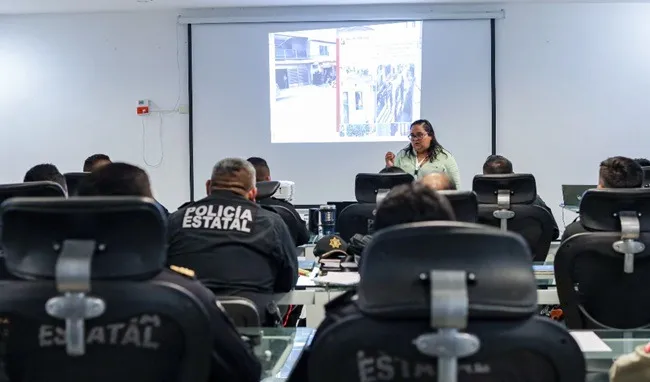
Merchants used the meeting to offer suggestions and feedback. Business groups represented included CANIRAC, the Yucatán Tourism Business Council (CETUR) and the Gastronomic and Tourism Professionals Collective (COGATUY).
Molina Casares placed the initiative within a longer history of cooperation between the city government and the chamber, which is approaching its 120th anniversary. He pointed to the guardias mercantiles, or merchant guards, that operated nearly eight decades ago.
CETUR President Jordy Abraham Martínez announced that his organization, CANIRAC and COGATUY would promote the distribution of 300 to 400 thermoses to municipal police officers. Participating businesses would offer officers free water or coffee in them, an effort intended to build closer relationships between merchants and police.
Police officials said they would keep meeting periodically with businesses to expand participation in the prevention network.