Restoring a natural coastal defense
Dunas Vivas, or "Living Dunes," combines dune restoration with temporary paid work for residents. The project addresses erosion along a coast where climate change and rising sea levels threaten Santa Ana and neighboring communities. Between Boca de Santa Ana and Boca de Panteones, 85% of a 30-kilometer stretch has been affected by erosion, with shoreline losses reaching up to 3.5 meters a year.
Beach width varies sharply across the Barra de Santa Ana area. According to UNESCO, the project's feasibility study found stretches exceeding 50 to 60 meters in width and others narrower than 10 meters. The organization cited those findings as a reason for urgent collective mitigation efforts.
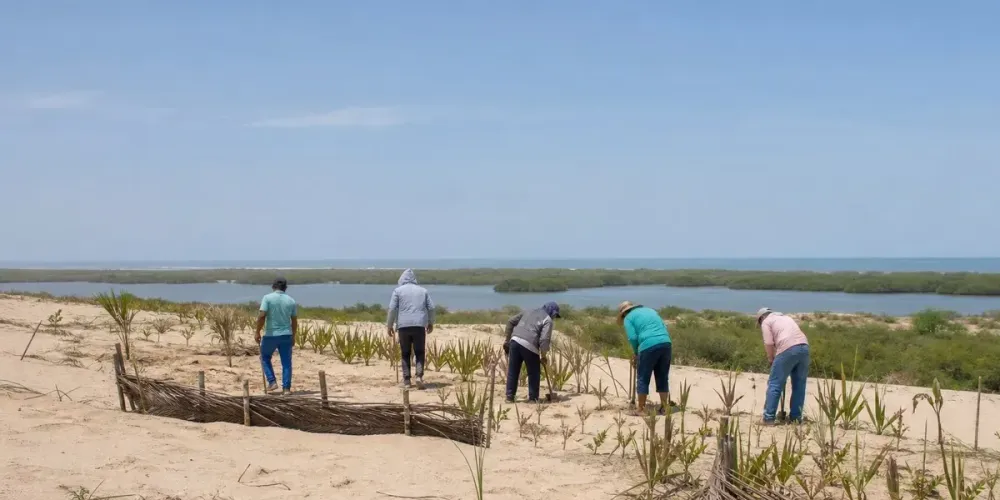
Restoring dunes helps maintain a major natural defense against hurricanes and storm surges for communities, infrastructure and mangrove forests. Alongside planting, brigade members will put in organic-material sand traps designed to encourage dune formation.
From training to community nurseries
The brigade includes 23 women. Its members volunteered and were selected by community agreement, UNESCO said in an October 29, 2026, article. They began with training on October 12-14, 2026, led by Frank Ocaña Borrego and Diana Laura García Báez of the Autonomous University of Carmen (UNACAR).
Local universities, ejido representatives and officials participated in the accelerated plant-cultivation course, according to Mexico News Daily. Practical work included preparing growing substrates, sowing seeds and transplanting, UNESCO reported.
Members will collect seeds and other plant material in the Sinaloa and El Alacrán ejidos, then propagate them in two community botanical nurseries in Sinaloa Primera Sección. Established through an ejido agreement, the nurseries will also be operated by the brigade. The work involves collecting and maintaining germplasm, which includes seeds, plant tissues, pollen and DNA, for controlled propagation of suitable species.
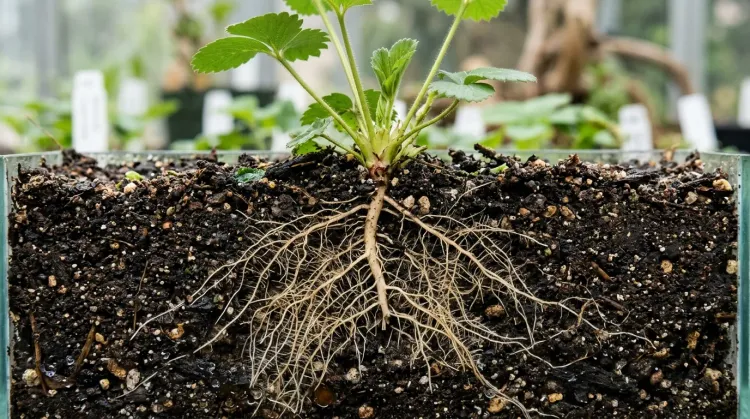
A scientific assessment identified native plants suited to the restoration work, including Amaranthus greggii (Gregg's amaranth), Canavalia rosea (bay bean) and Commelina erecta (dayflower), UNESCO said. Their roots hold sand in place, while the plants slow the movement of air and water, helping sediment accumulate and new dunes form.
Erosion risks beyond Santa Ana
Tabasco's roughly 191 kilometers of coastline lie on nearly flat terrain, according to an October 24, 2025, report by Mexican weather outlet Meteored. The outlet estimated that sea levels in the Gulf of Mexico are rising by about 1 centimeter annually. In a scenario involving a 1-meter sea-level rise, it said, Tabasco would have the largest affected surface area of any Mexican state, covering more than 21% of its territory.
Meteored also reported that the advancing sea in El Bosque, another Tabasco community, had left more than 60 families facing the loss of homes, schools and small businesses. In November 2022, residents publicly asked all three levels of government to relocate them. The outlet described El Bosque as Mexico's first official case of climate-change-driven internal displacement.
A broader Eni-UNESCO partnership
The dune work belongs to a wider effort to reduce disaster risks and strengthen community resilience through science-based measures and sustainable stewardship of natural and cultural heritage. Eni says its partnership with UNESCO began with a memorandum of understanding in early 2022, followed by four specific project agreements.
For the dune-restoration initiative, a feasibility study was completed in 2023 and a project agreement followed in 2024. Eni lists training and follow-up support for 68 primary school teachers among the results, along with construction of a community warehouse and nursery to support revegetation across 14 hectares of coastal dunes.
UNESCO says the broader Tabasco strategy also supports development of the Water Security Plan for the Mezcalapa-Samaria sub-basin and improvements to the state's Early Warning System, including work with local media and journalists. In Sánchez Magallanes, it includes community-led management of cultural and natural heritage through activities such as community tourism.
Separate work to restore mangroves
Tabasco has 50,044 hectares of mangrove forest, according to El Heraldo de Tabasco, but substantial coastal tidal areas have little vegetation. The newspaper reported that state mapping conducted last year identified 2,179 hectares of disturbed mangrove land, up from 406 hectares recorded in 2020.
Apart from the dune project, Eni Mexico is working with the Juárez Autonomous University of Tabasco to reforest 70 hectares of mangrove habitat between Villahermosa and the coastal region. Eni says planting and monitoring started on 12 hectares in 2024, with planting on the remaining 58 hectares completed by the end of 2025. Maintenance and monitoring are planned for 2025 through 2030.