New forensic insights reveal precision and meaning behind ancient Maya sacrifice practices
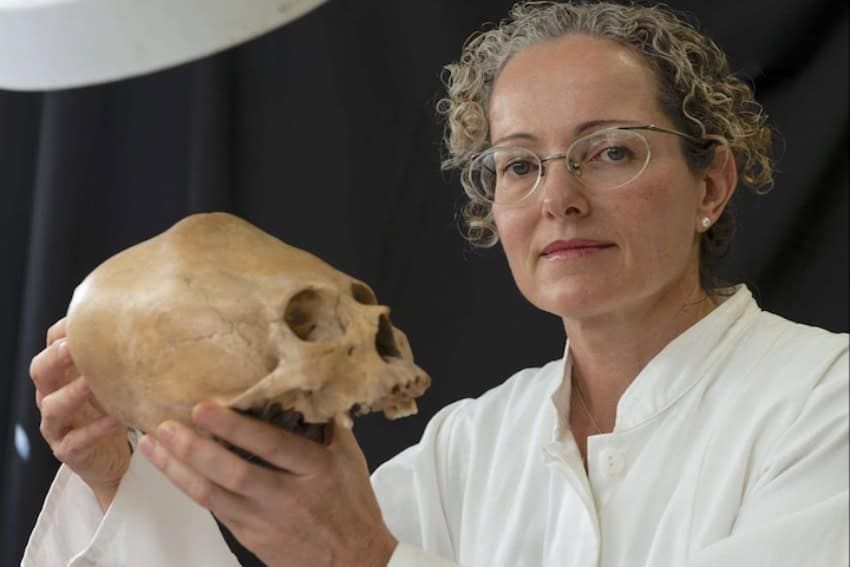
Professor Vera Tiesler, who heads the Laboratory of Bioarchaeology at the Autonomous University of Yucatán, has spent more than three decades investigating the ritualized violence of ancient Mesoamerican civilizations. Her latest work, a 438-page volume published by BAR Publishing in March 2026, brings together contributions from 36 researchers to examine ritual sacrifice through multiple lenses: forensic analysis, archaeology, genetics, isotope studies and historical texts.
The book represents a culmination of research that has been cited by over 4,900 scholarly works, establishing Tiesler as a leading authority on bioarchaeology, mortuary practices and body modifications in Maya culture.
Forensic evidence reconstructs ancient procedures
Tiesler's team began documenting decapitated individuals at major Maya urban centers like Palenque and Calakmul in the 1990s. Cut marks on bones allowed researchers to reconstruct sacrificial procedures with anatomical precision. The most significant discovery involved heart extraction, a practice long debated among scholars.
Cut marks on the lower thoracic vertebrae — around the 10th through 12th vertebrae — suggested that priests made incisions beneath the rib cage to reach the heart. To confirm this interpretation, researchers conducted experimental replication on modern corpses, validating that this transdiaphragmatic approach was anatomically the most practical method. This technique avoided bone obstruction and allowed direct access to the heart, which could then be separated from the aorta and surrounding structures.
"The marks led us to reconstruct the anatomy of the procedure. The most plausible route was an incision beneath the thorax, directly under the lower rib margin, using a flint or obsidian blade."
Archaeological documentation has identified multiple heart extraction methods, including vertical axial sternotomy, left transverse thoracotomy and transverse bilateral sternothoracotomy, though the transdiaphragmatic method remained preferred due to its efficiency.
Modern technology reveals unexpected patterns
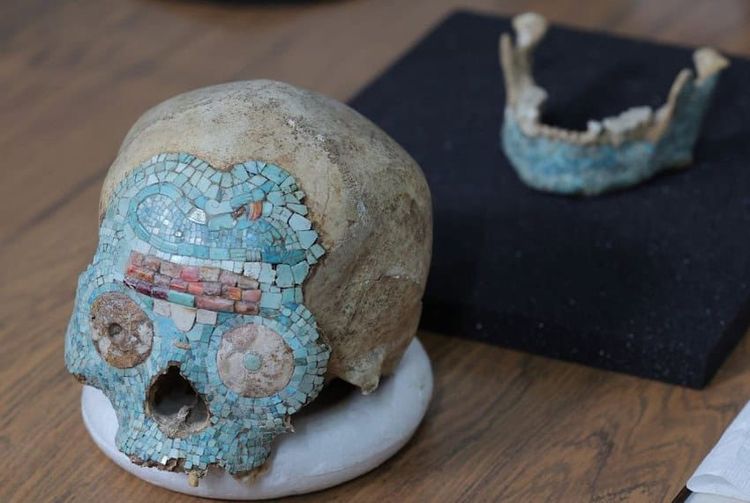
Recent archaeological discoveries have dramatically expanded understanding of Mesoamerican sacrifice. The Huey Tzompantli skull tower at Templo Mayor, excavated starting in 2015, contains over 650 skulls mortared together. Contrary to earlier assumptions that only male warriors were sacrificed, approximately 25% of the skulls belong to women and children.
Even more surprising findings emerged from DNA analysis of remains from a subterranean chamber near the Sacred Cenote at Chichén Itzá. The chamber, discovered in 1967, yielded skeletal remains of 64 individuals. Recent genetic testing revealed that all were male, with about half aged between 3 and 6 years. The analysis also identified two pairs of identical twins among the victims, overturning long-held beliefs that primarily young women were sacrificed at the site.
The Sacred Cenote itself has been a source of archaeological evidence since the early 1900s, when Edward Herbert Thompson dredged the site between 1904 and 1910, recovering over 200 individuals' skeletal remains along with artifacts of gold, jade, pottery and incense.
Isotope analysis of human remains from Chichén Itzá indicates that victims came from diverse regions across Mexico and possibly beyond, revealing extensive population movement and social networks centered on the ceremonial site.
Advanced techniques distinguish ritual from symbol
Tiesler emphasized that contemporary research combines multiple methodologies. Electron microscopy now allows researchers to test stingray spines and obsidian blades for human red blood cells, muscle tissue and other biological material. Objects once dismissed as purely symbolic offerings can now be confirmed as actual ritual instruments.
"We can examine the cut surfaces of stingray spines or obsidian blades that were found at the sacrificial site. What was once dismissed as merely a symbolic offering can now be tested for human red blood cells, muscle remains or any other human tissue."
The research also considers ergonomics and spatial analysis, examining how victims would have been positioned and which altars might have served specific ritual functions.
Understanding ritual logic versus violence
Tiesler stressed that modern terminology fails to capture how these practices were understood within Mesoamerican cosmology. The word "violence" carries negative connotations in European languages, but in Indigenous contexts, these acts represented merit-making, debt payment and sacred nourishment.
"Bloodletting was not simply a sign of brutality. It was the primary offering, the most sacred substance, surrounded by these bodily essences. It possessed great power."
The procedures required precise execution by ritual specialists operating within established liturgical frameworks. Mistakes carried serious consequences for practitioners, whether priests or musicians. Yet the acts also involved deliberate excess — an "overkill" meant to dramatically release bodily essences understood as sublime substances communicating with the gods.
"This was not uncontrolled, psychopathic violence. It was highly controlled, yet excessive violence, carried out within a ritual choreography, the highest expression of ritual debt making there was."
Elite ceremonies with public witness
Human sacrifice represented the highest form of religious expression in Mesoamerican societies, generally institutionalized and centralized within political and religious power structures. While ordinary people could attend as spectators, the actual performance belonged to elite circles and trained specialists.
Tiesler cautioned against generalizing across the vast temporal and geographic expanse of Mesoamerican culture. "Mesoamerica was not one uniform culture," she noted. "It is more like speaking of Europe over a stretch of 3,000 years. You cannot say 'the Europeans did this' as though every person, place and century followed one practice."
Colonial encounters and cultural continuity
Spanish chroniclers reacted to sacrificial practices with horror but also impressed by the sophistication they encountered: complex writing systems, specialized crafts, elaborate calendrical knowledge and sophisticated political structures. In Maya regions, conquest took significantly longer than elsewhere in Mesoamerica, with some areas like the Central Petén resisting full Spanish penetration for approximately 150 years.
Tiesler suggested that elements of ritual logic may persist in contemporary practices. Some bullfighting festivities in former Maya regions incorporate features reminiscent of older ceremonial patterns: the ceiba tree planted in bullring centers representing the cosmic axis, the ritual drawing of first blood, heart removal and communal consumption of the entire animal in dishes like Yucatán's chocolomo.
"The Spanish may not have recognized these meanings, or they tolerated them," Tiesler observed, noting how Indigenous communities assimilated foreign elements into existing ritual frameworks.
Throughout her career, Tiesler has also documented cranial modification practices among the ancient Maya, where infants' skulls were intentionally reshaped during the first two years of life when cranial bones remained malleable, serving as markers of social identity and cultural expression.
Her comprehensive approach to studying ritual violence and body treatments continues to reshape scholarly understanding of Mesoamerican civilizations, demonstrating how multidisciplinary research methods can illuminate practices that remained controversial or misunderstood for centuries.