A contested historical figure reimagined
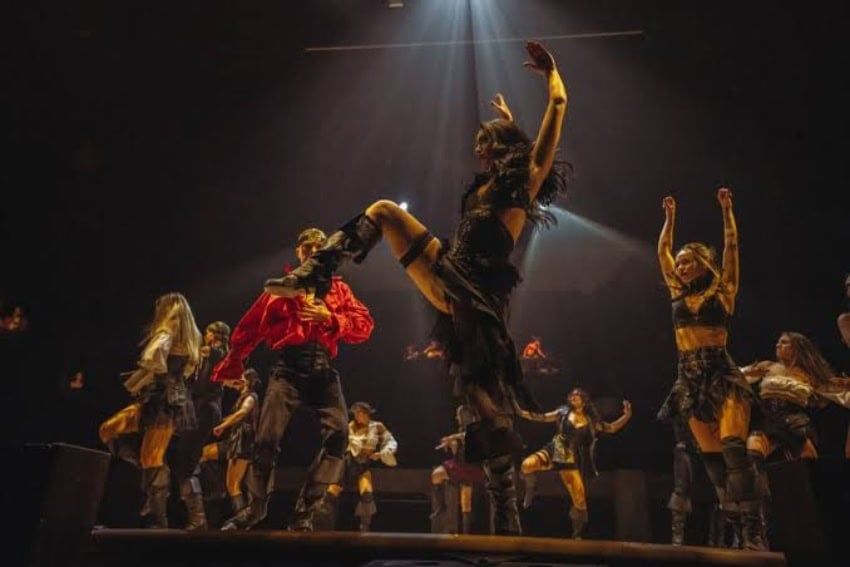
Every evening for the past year and a half, more than 1,000 people have filled El Frontón, the historic Art Deco theatre in Mexico City's Tabacalera neighborhood, to watch "Malinche," a musical that has become as much about politics as performance.
The production, created by Spanish pop icon Nacho Cano, launched in Mexico City in March 2025 after a two-and-a-half-year run in Madrid. With more than 80 cast members performing flamenco, hip-hop and contemporary choreography in elaborate costumes, the show occupies the venue that first opened its doors on May 10, 1929. Designed by architects Teodoro Kunhardt and Joaquín Capilla, El Frontón was Mexico City's first roofed enclosure for large-scale sporting events before closing in 1996. It reopened in March 2017 following a US $35 million restoration.
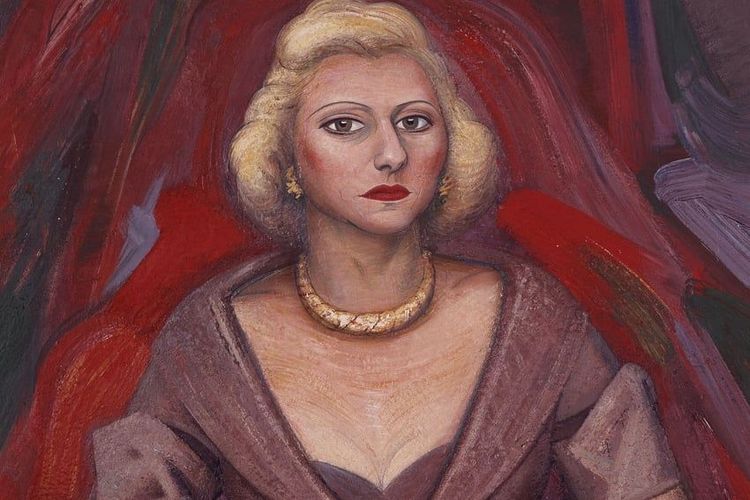
The musical centers on Malintzin, known as La Malinche or Doña Marina, the Indigenous woman who served as interpreter to Spanish conquistador Hernán Cortés during the 1519 conquest of Mexico. In 1519, she was one of 20 enslaved women given to the Spanish by the natives of Tabasco. Her ability to speak both Nahuatl and Mayan made her invaluable as a translator, and she eventually bore Cortés a son. She died in 1529 during a smallpox outbreak at approximately 29 years old.
Competing interpretations of Malinche
No account exists in Malinche's own voice. Her story has been reconstructed from fragmentary Spanish and Nahuatl sources, making her one of Mexico's most contested historical figures. Traditional nationalist interpretations cast her as "La Chingada," a traitor who betrayed Indigenous peoples to the conquistadors. The term "malinchista" — referring to Mexicans who favor foreign cultures over their own — derives directly from her name, demonstrating her enduring role as a symbol of perceived betrayal in Mexican society.
Feminist and Chicanx scholars have challenged this narrative, arguing that Malinche was a victim of colonial patriarchy who made choices to survive. Others question whether she possessed genuine autonomy at all, given the brutal context of conquest and enslavement. A more recent pro-Hispanic interpretation, embraced by some contemporary commentators, portrays her as a willing romantic partner whose love for Cortés enabled the birth of Mexico's mestizo population, making her the symbolic "mother" of modern Mexico.
Cano's musical adopts this last interpretation, presenting Malinche as a passionate lover rather than a coerced translator. In his 2021 Netflix documentary "Making Malinche," Cano argued that Mexico's history has been "deliberately poorly" told and claimed his production offers greater historical accuracy.
Political backing and controversy
The former Mecano frontman is no stranger to commercial success or political controversy. His band's 1982 debut album sold 1 million copies in Spain within three months of release, and Mecano has since sold more than 25 million records worldwide, making them the best-selling Spanish band in history. Cano later created "Hoy No Me Puedo Levantar," one of Spain's most financially successful musicals.
But Cano has also established himself as a controversial political figure, maintaining close ties to Isabel Díaz Ayuso, the right-wing president of the Community of Madrid and member of the People's Party. Ayuso, who awarded Cano the Order of the Second of May in 2021, has defended the Spanish Conquest as a civilizing mission and openly admires Cortés. In May 2026, she made a controversial 10-day visit to Mexico to defend the conquistador and the colonial project. The trip, which sparked protests from Indigenous groups and generated over 21 million social media impressions — 60% of them negative — was cut short after tensions with President Claudia Sheinbaum's administration.
Sheinbaum has firmly rejected Ayuso's characterization of "conquest as salvation," while members of the ruling Morena party have labeled Ayuso "the heir to the Spanish Falange," referencing the far-right fascist movement founded in Spain in the 1930s. Cano echoes similar sentiments, arguing that "without Cortés there would be no Mexico."
The musical's arrival in Mexico was orchestrated by Ricardo Salinas Pliego, the television magnate and chairman of Grupo Salinas. His wife, María Laura Medina de Salinas, served as executive producer for the Mexico City opening. The show is officially presented by Banco Azteca, part of Salinas' business empire, and promoted heavily on TV Azteca, Mexico's second-largest television broadcaster after Televisa. Salinas acquired the broadcasting license from the Mexican government in 1993 for US $643 million.
Forbes currently estimates Salinas Pliego's net worth at approximately US $4.3 billion as of April 2026, down sharply from previous estimates near US $10 billion. The decline followed a Mexican Supreme Court ruling in November 2025 against Grupo Salinas companies in major tax cases worth more than US $2.6 billion. In early 2026, Grupo Salinas agreed to settle the tax dispute for 32.3 billion pesos. Adding to the financial pressure, TV Azteca announced voluntary bankruptcy proceedings in February 2026.
Once labeled "the newest face of the Mexican new right," Salinas is an outspoken critic of President Sheinbaum and a supporter of the opposition National Action Party (PAN), with a political temperament aligned with figures like Argentina's President Javier Milei and U.S. President Donald Trump.
Intellectual defense and historical revisionism
Both Cano and Salinas maintain close ties to Juan Miguel Zunzunegui, a Mexican historian who rejects what he calls the "Black Legend" — a school of thought suggesting anti-Spanish narratives deliberately position the Spanish Empire as uniquely cruel. Zunzunegui defends the colonial project and dismisses accounts of Indigenous suffering and mass sexual violence. "The Spaniard who thinks they did horrible things in America does so out of ignorance," he told El Mundo. Cano wrote the prologue to Zunzunegui's book "Hernán Cortés," and Zunzunegui now makes special appearances in "Malinche" as Spanish friar Jerónimo de Aguilar.
In July 2024, Cano was arrested for alleged improprieties and poor working conditions for performers in the Madrid production, including issues involving undocumented immigrants. The charges were dropped the following year, with Cano insisting he had been the target of a coordinated attack by left-wing political leaders.
Divided critical reception
Left-wing critics have accused the musical of erasing Indigenous trauma by perpetuating a Eurocentric narrative that sanitizes colonial violence. Some have described it as a "spectacle of postmodern Falangism." Conservative critics, meanwhile, have faulted Cano for not pushing the pro-Catholic, pro-Spanish narrative far enough, arguing he failed to deliver an authentic celebration of Spanish imperial history.
The controversy extends beyond artistic interpretation to broader questions about who controls historical narratives. The debate recalls similar criticisms of Disney's 1995 "Pocahontas," which romanticized colonial relationships. Critics argue that depicting conquest as a "mutually satisfying encounter" legitimizes historical violence and serves contemporary ideological purposes — in this case, sublimating Spain's imperial legacy and supporting right-wing political narratives in both Spain and Mexico.
Despite the fierce debate, "Malinche" has proven commercially successful. The second season, which began Aug. 15, 2026, continues through January 2027. With performances nearly every evening to audiences of more than 1,000, the show's popularity demonstrates that questions about historical memory and representation remain deeply divisive in contemporary Mexican society — and profitable in the theatrical marketplace.