Biodiseño MX at the Franz Mayer Museum explores more-than-human design
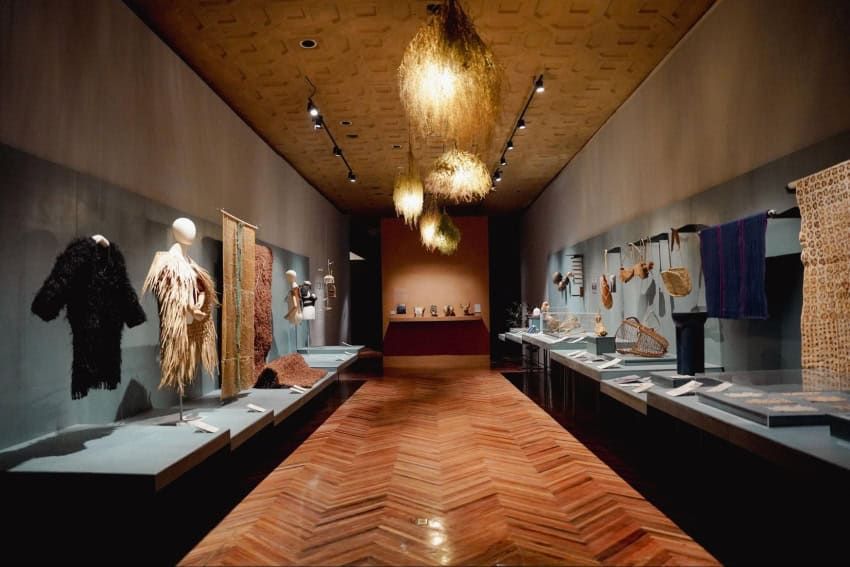
Walking into the Biodiseño MX exhibition at Mexico City's Franz Mayer Museum feels like entering a living ecosystem. Earthen tones and organic elements surround visitors before the space gradually transforms into a bright, laboratory-like environment where color shifts toward white and sterile precision replaces natural textures.
The exhibition, which runs through Oct. 25, 2026, presents more than 74 works by over 60 creatives who approach design not as a purely human endeavor, but as a collaboration with nature itself. Organized into five thematic sections — Flora, Fauna, Microbia, Funga, and Bioinspiration — the show spans from popular art rooted in ancestral Indigenous knowledge to cutting-edge technological innovations like memorial reefs created from human ashes.
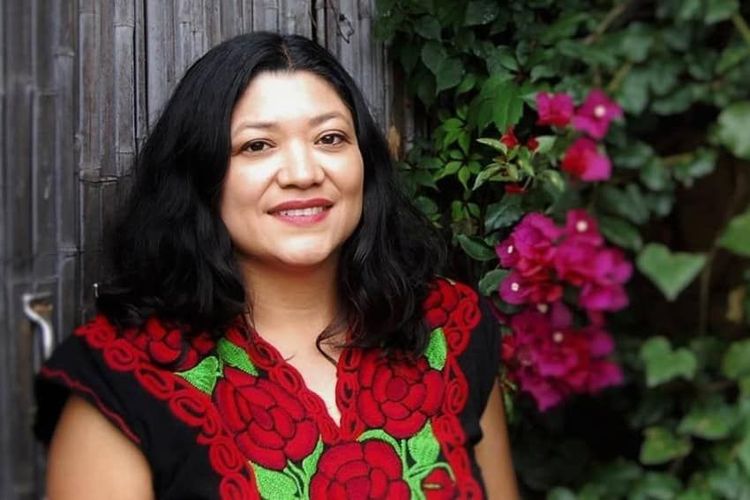
Curator Taina Campos, an industrial designer and professor who graduated from UNAM and has taught at Iberoamericana University, CENTRO, and Tecnológico de Monterrey, brings her expertise in ecodesign and biomaterials to this exploration of what she calls "more-than-human" design. In 2021, Campos co-founded Diseña Colectiva (formerly Diseña Mexicana), Mexico's first design festival with an inclusive approach that amplifies projects by women and gender dissidents.
Redefining design beyond human needs
Biodesign represents a fundamental departure from conventional design thinking. As an interdisciplinary field, it focuses on cooperation with living organisms such as algae, bacteria, and fungi to create sustainable, regenerative, and adaptive materials, products, and systems. Since the Industrial Revolution, Campos argues, designers have primarily served market demands. Biodesign shifts this paradigm from an anthropocentric approach toward a symbiotic worldview where nature becomes an active participant rather than merely a resource to exploit.
The exhibition includes functional objects for human use, such as tableware crafted from eggshells and biofashion pieces. But certain works push beyond utilitarian purposes to explore truly regenerative design. The "Memorial Reef" by U.K.-based company Resting Reef exemplifies this evolution. These 3D-printed artificial reef structures incorporate human ashes mixed with calcium carbonate. Human ashes consist primarily of calcium phosphate, one of nature's main fertilizers, which helps various marine species attach to and grow on the reef surfaces.
The company's pilot project in Bali, Indonesia, demonstrated remarkable ecological results. Twenty-four memorial reefs made from pet ashes attracted 84 fish species within six months, achieving fish diversity 14 times greater than nearby degraded areas. The phosphorus-rich sculptures nourish marine communities, transforming mortality into regeneration.
From pollution to oxygen
"Jardín lacustre" by Mariana Paredes and Molecular Lab addresses Mexico City's environmental crisis directly. The installation harvests microalgae from Lake Texcoco, which sits in the heart of Mexico City's metropolitan area and has suffered severe environmental degradation from industrial, urban, and agricultural pollution. The piece feeds these algae carbon dioxide extracted from the capital's contaminated air. Through photosynthesis, the microalgae convert pollutants into oxygen, elevating biodesign from aesthetic expression to ecological intervention necessary for urban survival.
This project exemplifies how biodesign moves beyond creating objects for human consumption toward addressing environmental restoration and regeneration.
Indigenous knowledge meets innovation
The exhibition deliberately juxtaposes works grounded in Indigenous traditions with technological innovations. Pieces of popular art created by Indigenous peoples reflect worldviews where nature remains "intrinsic to us" rather than separate from human experience. This ancestral understanding contrasts with but also complements the laboratory-born innovations filling the "Microbia Room," where white light and cool tones create a clinical atmosphere.
The Franz Mayer Museum, which opened in 1986, provides an apt setting for this dialogue between tradition and innovation. Housed in a building that served as a hospital operated by the order of San Juan de Dios until 1966, the museum now contains Latin America's largest collection of decorative arts. The collection was assembled by German-Mexican financier Franz Mayer (1882-1975), who began seriously collecting in 1923 and established a cultural trust in 1963, managed by Banco de México, to preserve his holdings.
Design as worldview
For Campos, biodesign transcends problem-solving or product development.
For me, biodesign is the language or practice — the material expression of design — that can lead us toward this other pursuit of design. It is no longer only about solving human problems or making beautiful products to sell; it is about generating another understanding of the world.
She references Arturo Escobar's "Designs for the Pluriverse," which argues that "design designs worlds, and the worlds it designs design us back." Through this lens, biodesign becomes not just a methodology but a philosophical framework for reimagining humanity's relationship with the living world.
The exhibition's power lies in its ability to present both the beauty and urgency of this shift — from objects that serve human needs to systems that restore ecosystems, from extracting resources to participating in natural cycles, from designing for humans to designing with and for the more-than-human world.