Middle schools face the sharpest gaps
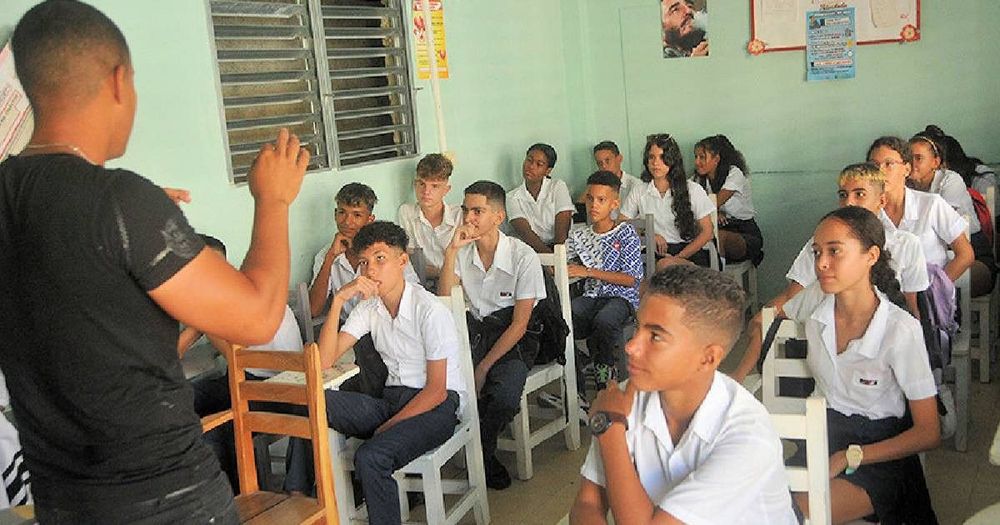
The state-run newspaper 26 reports that middle schools are particularly affected: specialized instruction means one missing teacher can leave students without lessons in an entire subject.
The shortages are most acute in the municipalities of Jesús Menéndez, Puerto Padre and Las Tunas. Conditions are more stable in Amancio, while Jobabo, Colombia and Manatí have maintained some continuity of instruction despite their own staffing deficits.
Nearly 200 fourth-year students at the Rita Longa pedagogical school are already teaching. They receive more than 6,000 Cuban pesos a month before graduating, helping fill immediate vacancies while the system relies on staff who have not yet completed their qualifications.
Other temporary measures include pay incentives authorized by Ministerial Resolution 10/2024 and university students recruited through the Educating for Love program. The Revolutionary Armed Forces are teaching certain grades, and professionals from Citma, Minint and other entities are working under hourly contracts.
These arrangements have allowed some schools to fill every teaching post. Itavis Marrero Martínez, director of ESBU Jesús Suárez Gayol, said the interventions had brought her school, which serves 412 students, to full staffing.
Recruitment and retention pressures
Magloiris Turruelles López, the provincial official responsible for Basic and Higher Secondary Education, describes a chronic problem rooted in declining interest in teaching careers and the departure of educators for other occupations or countries.
"We face a significant gap when students don't choose teaching careers, compounded by an exodus not only abroad but also to other sectors," she said. Families can also deter prospective teachers, she added: "Many times, families discourage these career choices."
Low pay adds to the difficulty of retaining educators. Resolution 18/2026 sets monthly salaries at 6,130 to 7,735 Cuban pesos, compared with an estimated basic living cost of 96,000 pesos. In a separate measure, CiberCuba puts average monthly pay across the education sector at about 5,824 pesos, equivalent to roughly $7 at the informal exchange rate. The outlet says that pay gap pushes teachers toward private employment or emigration.
Active teachers can now earn money through private tutoring. MINED Resolution 30/2026, published September 2, 2026, and effective September 9, lifted the prohibition imposed in 2022 on active teachers offering tutoring through the non-state sector.
A persistent national shortage
Across Cuba, approximately 24,000 teaching positions were unfilled at the start of the school year, representing 12.5% of planned posts. More than 380,000 students lacked a regular teacher. A Granma report put national teacher coverage at about 73% when classes opened on September 1, 2026.
By mid-October, coverage had reached 86%, but Education Minister Naima Ariatne Trujillo Barreto reported that 11,000 students were still not attending classes regularly. Camagüey had begun the academic year with nearly 3,000 vacancies, and Holguín with more than 2,000.
CiberCuba reports that the roughly 24,000-teacher deficit has persisted since the 2024-2025 school year. In September 2023, a Ministry of Education official had acknowledged a smaller nationwide shortage of 17,278 teachers on television, citing the search for better income, emigration and absences for personal reasons.
For the current school year, the government sought to move about 3,000 teachers from eastern Cuba to Havana to address the capital's staffing needs. Critics say this only relocates the problem because the teachers' former posts in their home provinces remain vacant.
Material shortages and private-sector help
Staffing is not the only pressure on schools. In May 2026, UNESCO warned that Cuban education was "at risk," identifying more than 2,000 schools in need of urgent support and over 400,000 students studying on shortened schedules. By mid-October, just 49% of students in the priority group had school uniforms.
On October 18, Education Minister Naima Trujillo acknowledged publicly that private companies and small and medium-sized enterprises had filled gaps left by the state during the 2026-2027 school year.
She cited donations of food, shoes and clothing, along with transportation routes for students and teachers. Businesses had also provided energy alternatives for children without parental care and helped restore deteriorated school infrastructure.
Education bill due before lawmakers in December
The shortages coincide with preparations for a new Education Law. As of October 2026, the government is working on a 243-article draft that would replace Law 680, which has been in force since 1959.
More than 25 organizations participated in preparing the proposal under the coordination of the Ministries of Education and Higher Education. The draft opened for public consultation on October 21, 2026, and is scheduled to go before the National Assembly in December.