Major projects secure approvals and contracts
The developments span environmental applications and approvals, generation permits, equipment orders and long-term electricity contracts. They include a conditionally authorized 621.17 MW plant in Veracruz, a proposed 400 MW facility in Jalisco and a 269 MW solar-plus-storage project in Coahuila backed by a corporate buyer.
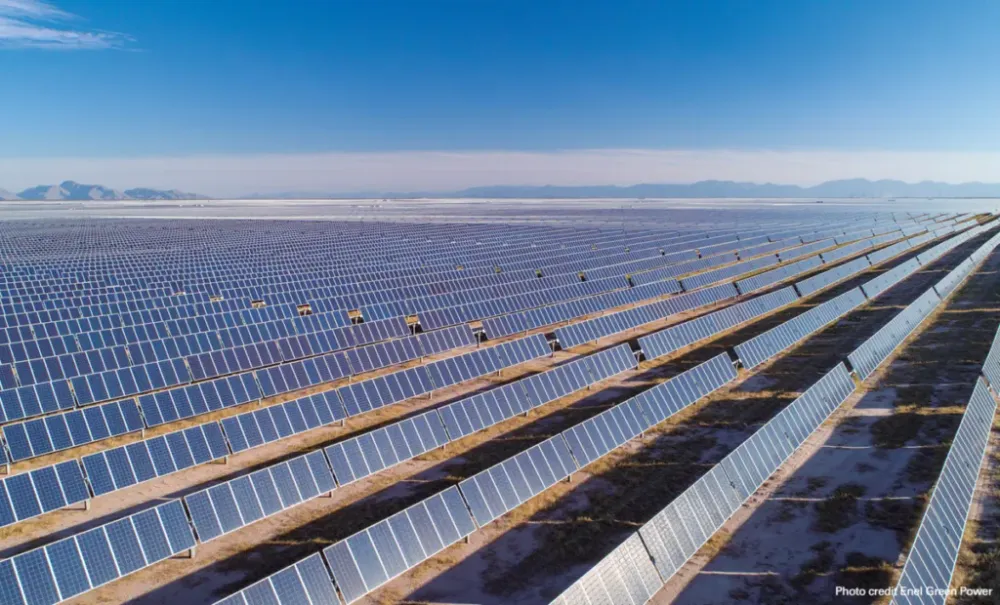
Desarrollos y Soluciones Energéticas Eirene received conditional environmental authorization from Mexico's environment ministry, Semarnat, for Cerro Colorado Solar in Veracruz. The 621.17 MW project calls for 941,166 solar modules rated at 660 W, 1,803 Huawei inverters and a battery system whose capacity has not been disclosed. The developer expects construction to take two years.
For Teuchitlán Solar in Tala, Jalisco, Negocios Renovables Inteligentes submitted plans combining 400 MW of solar with a 30 MW/60 MWh lithium iron phosphate battery system. A 9.3 km transmission line would connect the plant to the La Vega substation. The proposal carries an estimated investment of $150 million and a 24-month construction schedule.
In Coahuila, a 20-year power purchase agreement between Atlas Renewable Energy and mining group Industrias Peñoles supports a 269 MW solar-plus-storage development. Electricity deliveries are scheduled to start in the first half of 2029, with expected annual supply of 550 GWh. Neither the project's official name nor its battery capacity has been disclosed.
Battery plans range from three to ten hours
Storage is a recurring feature of the applications. Transformaes Creación Sostenible has submitted Parque Solar Peñasco in San Luis Potosí for environmental assessment, proposing 190.94 MW of solar, a nominal capacity of 150 MW and a 60.19 MW/240.77 MWh battery system. In Baja California, Invenergy Solar Development México has filed environmental documentation for Bura Energy Center, pairing a 38 MW grid injection target with 238 MWh of batteries.
Two Campeche developments illustrate the scale and duration of some storage plans. Copenhagen Infrastructure Partners signed a supply agreement with CATL for a 313 MW/1,639.45 MWh system at La Alegría Solar, using CATL's TENER technology. The pv magazine México review identifies the deal as one of the largest battery procurement commitments associated with a Mexican solar project. Solarig México's conditionally approved PV Moquel Solar, rated at 104 MWdc/75 MWac, includes a 15 MW battery capable of discharging for ten hours, equivalent to 150 MWh.
National rules also require storage at new intermittent generation plants. According to Mexico Business News, the National Energy Commission's General Administrative Provisions require new wind and solar facilities to co-locate batteries with power capacity equal to at least 30% of installed generation capacity and a discharge duration of at least three hours.
At the Federal Electricity Commission's Puerto Peñasco complex in Sonora, battery deployment and solar construction have reached separate milestones. Mexico Business News reports that the battery rollout at the 1,000 MW complex became operational in July 2026. CFE, meanwhile, reported that construction of the 300 MW third solar phase had passed 27%. That phase will use about 563,000 modules and is scheduled to begin commercial operation in December 2027.
Private permits and CFE partnerships
Green Park Energy, part of Spain's Cox group, secured generation permits for three projects. FV Cuquío in Jalisco is rated at 120.71 MWac and includes 31.09 MW/96.23 MWh of batteries; construction is scheduled to start in June 2027, followed by commercial operation in December 2028. The other permits cover the 145.31 MWac FV Villa Juárez project in Aguascalientes and the 156.78 MWac FV San Diego de la Unión project in Guanajuato.
Those three developments are part of a six-project private-sector portfolio approved by the CNE in November. Together, the six have 649 MW of net generation capacity, 751.08 MWac of declared photovoltaic capacity and 627.94 MWh of storage. They are expected to enter service in 2028 and 2029.
CFE's mixed-investment arrangements feature in other recent environmental decisions. Los Girasoles in Quintana Roo received conditional authorization for 132.57 MWp/110 MWac under an agreement involving Polaris Renewable Energy and CFE. In Campeche, Global Solar América 3 obtained conditional approval for Planta Fotovoltaica Campeche, previously selected under CFE's mixed-investment scheme. Its two-phase plan would raise installed capacity from 130.026 MWp to 180.08 MWp.
Under the mixed-investment model introduced by Mexico's 2025 Energy Reform, CFE contributes land, permits and the power purchase agreement in exchange for a stake of at least 54%, according to Chambers Renewable Energy 2026. Private partners hold 46% and provide all capital and debt financing. CFE agrees to purchase 70% of the electricity, leaving 30% available for sale in the wholesale market.
Mexico Business News reports that, as of November 2026, CFE's clean-energy investment portfolio had reached $10.6 billion across 38 mixed-investment renewable projects, with more than 2,500 MW of storage power.
Grid access limits the pace of development
The recent project milestones follow a substantial tender round. Chambers Renewable Energy 2026 reports that CFE's first mixed-investment tender closed in June 2026 with awards totaling 7,411 MW across 37 wind and solar projects, or 114% of the original 6,500 MW goal. Solar accounted for 6,710 MW and wind for 700 MW. Forty-six tenders were declared void, and a second round is being prepared toward a 16,500 MW target.
An award does not necessarily mean a project can connect immediately. Mexico Business News reports that only 17 of the 37 projects awarded in June, representing roughly 7.4 GW including 6.7 GW of solar, had viable interconnection at the time. The other 20 relied on transmission infrastructure that was either still being built or had not yet been tendered.
GlobalData identifies the grid as the binding constraint on new solar development. It points to transmission and distribution losses of about 11.5%, along with congestion between the sunny north and electricity demand centers in central Mexico and the Bajío.
Some individual project details also remain unresolved. Tepetate Solar in the State of Mexico will determine its final battery capacity after a grid impact study. In Puebla, Impala Solar's generation permit gives December 30, 2026, as its planned commercial operation date, but its construction status remains unconfirmed.
Standalone storage and investment outlook
Beyond batteries attached to generation plants, Mexico's energy ministry, SENER, is seeking registrations for 935 MW of standalone storage with three-hour duration across seven regions. According to Mexico Business News, the program prioritizes projects that begin commercial operation before 2030, and the registration deadline has been extended to March 1, 2027.
The same outlet cites the International Renewable Energy Agency as estimating that Mexico needs 8 GW to 9 GW of operational storage by the mid-2030s to maintain baseline reliability across fast-growing manufacturing corridors.
GlobalData has raised its forecast for Mexico's cumulative installed solar capacity to 43.8 GW by 2035, citing the expanding project pipeline. Many facilities in the latest pv magazine México review target commercial operation between 2027 and 2029, spanning private developments, CFE-led construction and mixed-investment projects.
In its November 2026 power market report, GlobalData projects that Mexico's total installed generation capacity will rise from 104.2 GW in 2025 to 156.0 GW in 2035, a compound annual growth rate of 4.1%. The firm expects about $21.1 billion in new generation investment during 2026–2030, with solar receiving 44.0%, gas 29.4% and wind 20.9%.