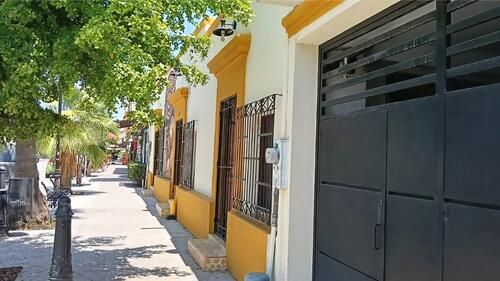
Los Cabos Ranked Among Mexico's Most Expensive Municipalities for Rent
A comprehensive analysis by the Instituto Tecnológico y de Estudios Superiores de Occidente (ITESO), a Jesuit university in Jalisco founded in 1957, has revealed significant disparities between housing costs and average household incomes across Mexico, with Baja California Sur emerging as a key focal point in the national affordability crisis.
The study, which analyzed 742,373 housing listings across seven digital platforms during June 2026, places Baja California Sur in 11th position nationally for average monthly rent at 24,070 pesos, below the national average of 27,273 pesos. However, this figure masks considerable regional variation and accelerating price pressures within the state.
Los Cabos specifically was identified as the 39th most expensive municipality among Mexico's top 50 rental markets, with average monthly costs reaching 25,102 pesos. The municipality's elevated prices are driven substantially by tourism demand, with 1.64 million visitors arriving between January and May 2024, fueling investment in second homes and vacation rental properties. Short-term vacation rentals in the area average $584.20 per night according to AirDNA data, creating strong financial incentives for property investors that push residential rental costs upward.
The economic analysis bulletin for July 2026 indicates national monthly housing rent ranges from 1,500 pesos to 160,000 pesos, while Baja California Sur's range extends from 1,500 pesos to 130,000 pesos. Mexico City, the State of Mexico, and Nuevo León continue to command the highest rental prices nationally.
Sales Market Reflects Premium Positioning
In the housing sales market, Baja California Sur ranks 30th nationally with an average price of 3,507,149 pesos. More recent data from the Federal Mortgage Society (SHF) Housing Price Index shows the state's average home price reached 2.813 million pesos in the first quarter of 2026, substantially above the national average of 2.024 million pesos, placing Baja California Sur among Mexico's most expensive markets alongside Mexico City and Querétaro.
Housing prices in Baja California Sur increased by 11.1% during the first quarter of 2026 compared to the same period in 2025, outpacing the national average increase of 8.7%. This acceleration is supported by nearly US$900 million in luxury hospitality projects announced for completion between 2025 and 2028, alongside airport expansions and new direct flights from Europe and North America.
Nationally, average sale prices reached 6.8 million pesos, with a median of 4.3 million pesos. The highest average sale prices are concentrated in Nuevo León (11.2 million pesos), Mexico City (9.1 million pesos), and the State of Mexico (8.5 million pesos).
Structural Barriers to Housing Access
The ITESO study underscores a critical barrier to homeownership: acquiring a property at the median price requires a monthly income of approximately 131,000 pesos—more than six times the national average income of 21,355 pesos. This gap is compounded by Mexico's informal labor rate of 54.8%, equivalent to 32.8 million people, which limits access to formal mortgages and stable rental contracts according to the National Housing Program 2026-2030.
The research reveals sharp market segmentation, with exclusive neighborhoods often exceeding 100,000 pesos per month for rent, while more affordable areas hover around 10,000 pesos. This widening divide restricts property access for the majority of Mexican households and increases pressure on the rental market.
These affordability challenges unfold against a backdrop of severe housing scarcity. Mexico faces a housing deficit estimated between 8.2 million to 8.86 million homes as of 2024, affecting more than one in five households according to government sources including INFONAVIT's Single Housing Register.
In response, the Mexican government's Housing for Wellbeing program targets construction of 400,000 homes in 2026 and 1.8 million homes over six years, with a 20% allocation for affordable rental housing for young people. However, the scale of intervention remains modest compared to the magnitude of the deficit.
The ITESO analysis highlights a growing disconnect between real estate market evolution and the economic capacity of Mexico's population, with implications for social mobility, urban development, and regional economic stability across the country.